What Is Eurovision? Why Is It Important? And Why Is Australia In It? Your Questions Answered…


Without fail on an annual basis, the haters, curious enthusiasts and music purists ask these questions. We see them in the comments on social media and we’re asked them around the coffee machine. Strap in, because DNA’s Eurovision correspondent Cain Cooper is about to mansplain why The Eurovision Song Contest should be part of your gay agenda each year!
Eurovision sprang from a need to unite European countries after The Second World War… but officially to promote the new medium of television. It was set up by the European Broadcasting Union to “stimulate the output of original, high-quality songs in the field of popular music by encouraging competition between authors and composers through the international comparison of their works”.
It first appeared on my radar during a BBC broadcast in 2005 when I was on a working holiday in London. Greece won. More on that later. But my flatmates were a mix of return watchers, the casually disinterested, and visiting Antipodean travellers like myself who had zero clue what we were in for. And I said to myself, “Where’ve you been all my life?”
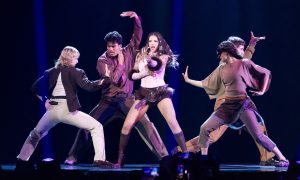
Superficially, Eurovision’s universal appeal to the colourful, often odd, costumes, props, sexy, scantily-clad performers, state-of-the-art lighting, audio and tele-voting technologies. But it is so much more.
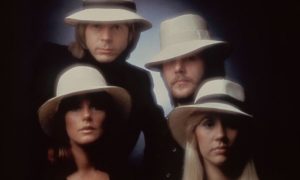
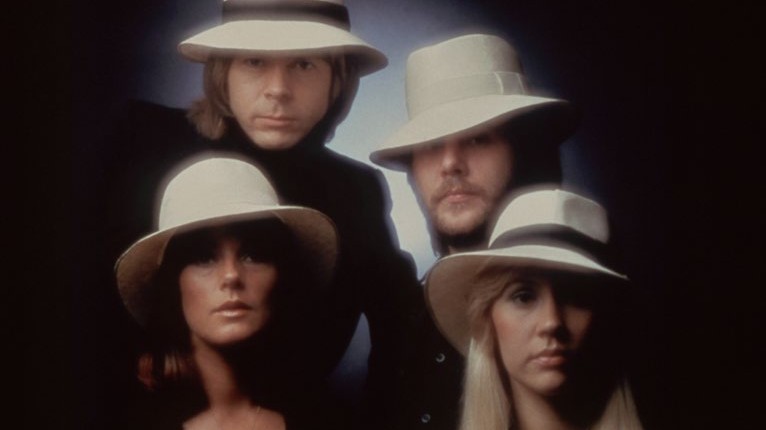
Cast an eye across the pop world and you start to see Eurovision on some familiar résumés. Canadian Celine Dion won for Switzerland in 1988 with Ne Partez Pas Sans Moi. Australian Olivia Newton-John came third for the UK with Long Live Love, a year that was won by a song called Waterloo by ABBA. Heard of them?
Flicking through my own CD single collection, I see another Australian. Gina G’s poptastic anthem Ooh Ahh… Just A Little Bit had been the UK entry in 1996, and also a Grammy-nominated commercial hit in the charts. Being just 15 at the time this song was on repeat in my bedroom, I choreographed a similar dance routine.
In recent years, we’ve seen a trend for Americans to be more involved in this global phenomenon. Superstars like Madonna and Justin Timberlake have performed halftime shows. Will Ferrell released the much-criticised-but-enjoyable Netflix comedy Eurovision Song Contest: The Story Of Fire Saga (“The elves went too far!”), with cooperation from the EBU in place of the covid-cancelled 2020 competition. While fictional, with a few stretched truths, Ferrell filmed live audience backgrounds during the 2019 contest in Tel Aviv, with actual fans live in the arena.
Kelly Clarkson and Snoop Dogg hosted the less successful, spin-off The American Song Contest in 2022. Not enough musical or cultural diversity between states? It’s likely the reasons were that the production was poorly promoted, poorly timed (airing right before actual Eurovision), and that audiences didn’t see it any differently to the established programming of The Voice or American Idol. Eurovision purists were offended that Americans had tried to recreate what is already sacred. One wonders what will become of Eurovision Canada, waiting quietly in the wings…
For American gays who make the pilgrimage to Europe each year, their interest is piqued by being exposed to a spectrum of vocal stylings and musical genres that exist outside the United States.
Nick from Chicago says: “You can often get a taste of a country’s (one most Americans haven’t heard of) unique musical style and culture via their performance. Each one is like a Superbowl commercial–each country invests a lot of time and money into creating a short performance that advertises themselves to the world.”
Andrew from San Francisco, agrees. “In 2019 for example, you had an industrial song in Icelandic, Portuguese art-pop, and Italian hip-hop. The year Conchita Wurst won (the “bearded lady” in 2014) spiked interest in America, and it’s slowly getting traction in social media and other channels.”
It seems odd to refer to an eclectic music event in the same vein as a football match but the sports comparison works. I’ve referred to Eurovision this way with my friends for ages: Pride is Gay Christmas, Eurovision is the Gay Olympics. We cheer on songs, performers, dancers, songwriters, or war-torn countries… like they’re beloved athletes. They’re all vying to win a glass trophy in the shape of a microphone, and whoever wins hosts the following year.
This year, the United Kingdom (who came second last year), is hosting on behalf of Ukraine, who are engaged in defending their country from Russia’s invasion and cannot invite everyone to just come to theirs for party-time. This display of solidarity is the real prize, where at the end of the day, we’re all “united by music” which is this year’s theme. In my experience covering the contest, I see 40 countries of varying wealth and talent crushing on each other. This year my luggage is weighed down with packets of Tim Tams [popular Australian biscuit] for my Eurovision family; there might as well be a glass trophy in there.
So, why is Australia in Eurovision? Australia’s multicultural TV channel, Special Broadcast Service, has been broadcasting the contest for 40 years (initially via the BBC feed). For many migrant communities who hail from Europe and now live in Australia, watching the show has been one of the few connections a family has held to their homeland. Andrew Lambrou, who this year competes for Cyprus, is a Sydney boy who grew up in a Greek-Cypriot household. His passion for Eurovision began watching Helena Paparizou win in 2005. His family gathered around the television, eating flaounes and baklava… his γιαγιά (grandmother) said to this boy, “One day Andrew, you will be on the Eurovision stage!”
I discovered Eurovision in London the same year the Lambrou family were watching in Sydney. The appeal for them was less the sexy male Greek dancers accompanying this hot-ass diva, but whatever…
It was in 2009, SBS began using homegrown commentators. We weren’t yet a competing nation, but we were building a reputation.
Commentators Julia Zemiro and Sam Pang engaged with all the artists humorously, equally and without political allegiance. Then suddenly Australia was offered an invitation to produce the halftime show in 2014. It was camp and featured Indigenous pop star Jessica Mauboy. The following year, Australia began competing. Dami Im even came in second in 2016 with Sound Of Silence – Australia’s highest result to date.
We saw the creation of our own national finals with Eurovision – Australia Decides, where emerging and established local talent could sing an original song to a live and local audience, and compete for the opportunity to represent Australia at Eurovision in Europe a few months later.
So what if geographically Australia isn’t in Europe? Australia’s national arts identity is enriched by a multicultural blend of influences, many from Europe. It’s no biggie for Andrew Lambrou to travel 24 hours to compete for a country that is featured on the European map.
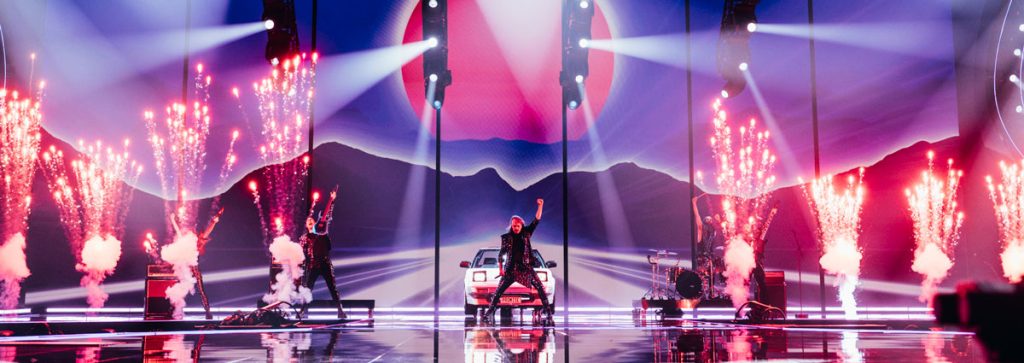
This year, Perth-based synth-metal quintet Voyager represent Australia. They live in the most isolated city in the world, wrote their song on home soil, and yet get the opportunity to showcase their works to an audience of millions they would not usually have access to.
For me the real win is being exposed to music I wouldn’t have sought out. In the same way that I will meet people I wouldn’t have met, and eat food I can’t pronounce, and so on. The Eurovision canon is nourished every year with new songs added to playlists – winners, unsuccessful songs or other obscure favourites that you can geek-out with to other fans. Some artists re-emerge in different ways in subsequent years… they are Eurovision royalty, after all.
There’s a book on my shelf, authored by John Kennedy O’Connor, who became a fan in 1970, but an obsessed one in 1971. This book was published in 2005, when I became a fan, and this quote is relevant to close:
“To the puzzlement of all those who continue to decry the banality of the songs and the quality of the performers, the Eurovision Song Contest remains one of the most watched and most popular music event in the world. It all began in a tiny theatre before a tiny audience in 1956 and yet has grown into a multi-day event featuring upwards of 40 nations, billions of viewers and thousands of dedicated fans.”
Why The Gays Love Eurovision…