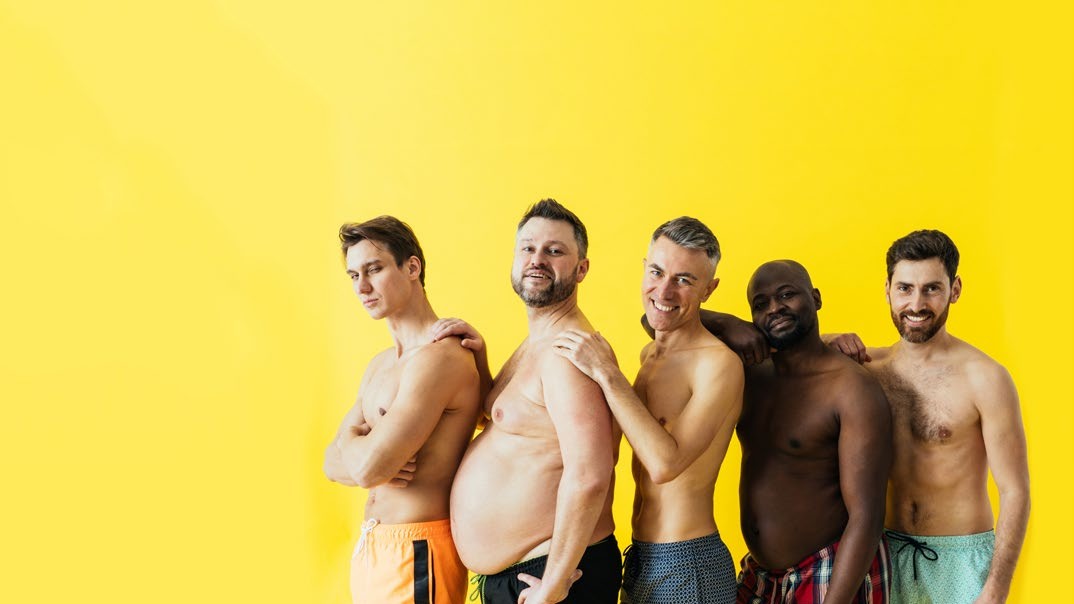
How To Actually Lose Belly Fat, And The 8 Questions Gay Men Keep Asking


Every gay man knows the season. Shirts come off at the party, the apps fill up with torso shots, and your stomach becomes the only thing you can see in the mirror. So the question lands: what’s the fastest way to lose belly fat?
Here’s the honest answer. You can’t spot-reduce it. Your body breaks down fat from all over through a process called lipolysis, then burns it as fuel, so no amount of crunches will melt the bit you don’t like.
What does work is boring, and it’s the same for everyone. A moderate calorie deficit, around 500 calories a day below what you burn. Enough protein to hold onto muscle. Weights plus some cardio. Then the part most men skip: sleep and stress.
Chronic stress keeps cortisol high, and high cortisol can push fat toward your middle, though your total calories matter more than the hormone.
There’s a reason this lands harder on us. The look we’re sold is lean and muscular at the same time, a body that’s hard to build and easy to obsess over. Gay men report more body dissatisfaction than straight men. In one population study, more than 15% had experienced symptoms of anorexia, bulimia or binge eating, against under 5% of straight men (Feldman and Meyer, 2007).
So before the tips, one thing worth saying. The aim is a body you feel good in, not a number that runs your weekend.
Here are the questions we get asked again and again.
How many calories should I eat to lose weight?
Start about 500 below your total daily energy expenditure (TDEE), which is what you burn in a day. That gives roughly half a kilo of loss a week. Going harder feels productive, but it costs you muscle and rarely lasts past the second week.
Should I do cardio or lift weights?
Both, and keep the weights. The lean-and-muscular look most gay guys chase is built in the weights room, not on the treadmill. Lifting holds your muscle while you eat less, and more muscle keeps your metabolism higher. Cardio adds to the calorie burn and looks after your heart.
Why am I not losing weight even though I’m eating less?
Usually one of four reasons. You’re eating more than you think, your protein’s too low, your sleep is wrecked, or your deficit is so steep you’re shedding muscle instead of fat. Sleep is the quiet saboteur. In one trial, dieters on 5.5 hours a night lost just 0.6kg of fat, while those on 8.5 hours lost 1.4kg on the same diet (Nedeltcheva et al., 2010). Crash-dieting two weeks out from a trip to Sitges does the same thing.
Is intermittent fasting effective?
It can be, as a way to eat less overall. It’s not magic. A 2024 review of randomised trials found fasting was no better than plain calorie counting once total intake was matched (Nutrition, Metabolism and Cardiovascular Diseases, 2024). If a late first meal helps you eat less, run with it. If it makes you raid the fridge at midnight, drop it.
How much protein do I need?
Roughly 1.6 to 2.2 grams per kilo of bodyweight while you’re cutting. That range protects your muscle when calories are low (International Society of Sports Nutrition). Leaner guys dieting hard can sit at the top of it, or just above.
Do I have to cut carbs?
No. Going low-carb helps some men eat less without counting, which is the whole trick when it works. Carbs aren’t the villain. The calorie deficit drives the fat loss, whether those calories come off your plate as rice or anything else.
Why do I lose weight fast at first, then stall?
Because the early drop is mostly water. When you cut carbs and calories, you burn through stored glycogen, and glycogen holds a lot of water in your muscles (Cal State, Nutrition and Physical Fitness). Lose it and the scale dives. After that, real fat loss settles to a steadier half a kilo or so a week. The slowdown is the system working, not failing.
Can I lose weight without a gym?
Yes. Diet does most of the work. Walking, home workouts and simply moving more all count. A gym helps you keep muscle, but it isn’t the thing that empties your fat stores. Your kitchen is.
None of this is fast, and that’s the part nobody wants to hear. Pick a deficit you can live with, eat your protein, lift, sleep, and judge it in months rather than weekends.
And if your body or your eating is starting to run your head, talk to someone. In Australia, the Butterfly Foundation helpline (1800 33 4673) and QLife’s LGBTQIA+ peer support (1800 184 527) are both free and confidential.