Bulgaria Wins Eurovision 2026 With “Bangaranga”

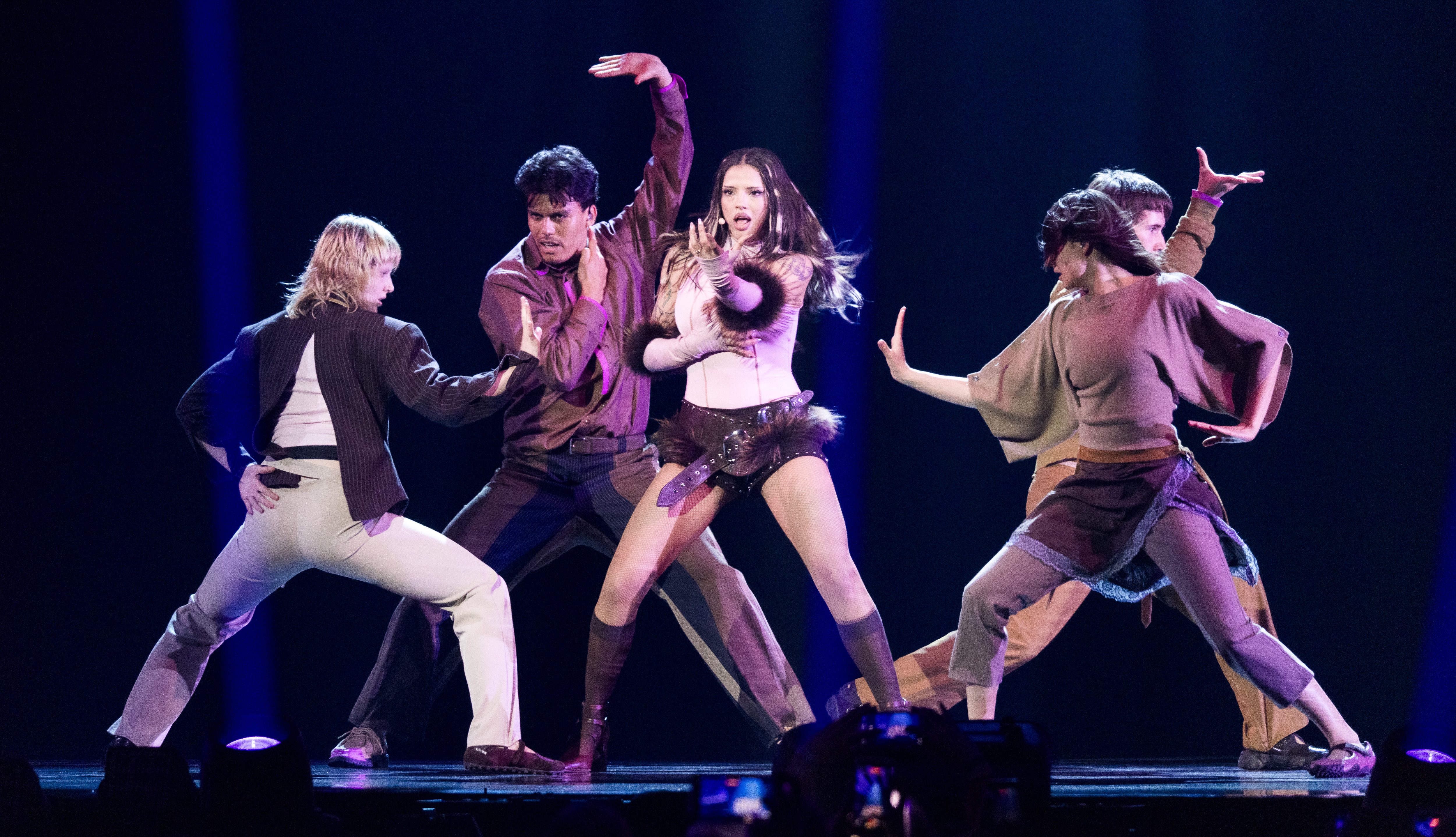
The 70th Eurovision Song Contest in Vienna has bangaranga’d its way into the winners’ circle. Dara celebrates a historic first win for Bulgaria, collating 516 points, with this wild and cheeky, genre-bending anthem Bangaranga. It is a victory that feels emblematic of the modern Eurovision spirit: bold, unapologetic, and completely bonkers. But what does it mean?
“I just want to give Eurovision a new thing,” Dara said during her winner’s conference. “We chase perfection, but we can just be real to each other.” Whatever that means, but perhaps that’s the idea.

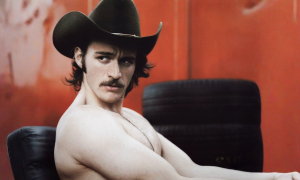
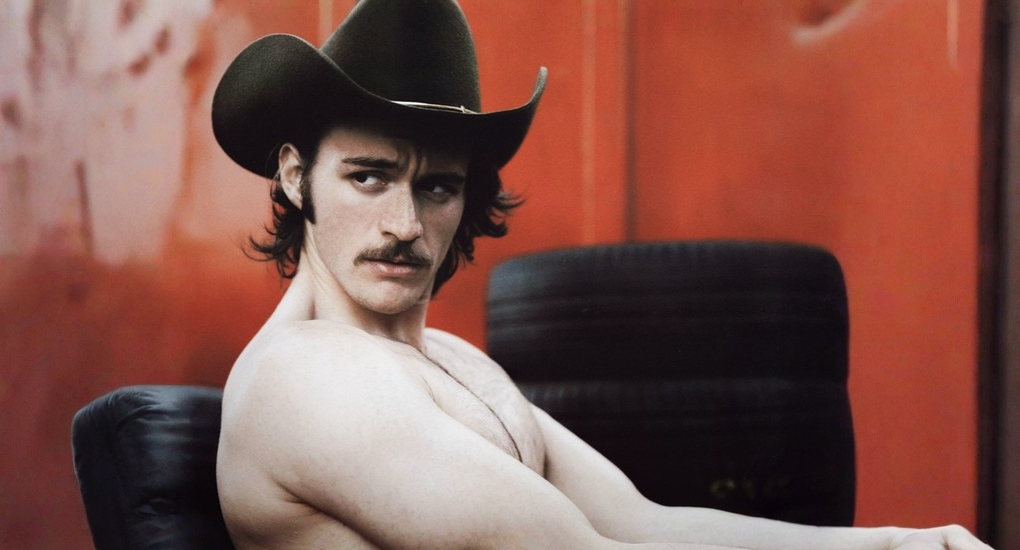
Finland’s entry was expect to win but finished 6th with 279 points. In a collaboration that few saw coming but everyone now craves, violin virtuoso Linda Lampenius joined forces with pop himbo Swayze look-a-like Pete Parkkonen for the explosive Liekinheitin (Flamethrower). With Pete’s raw, rock-edged vocals set against the soaring, classical-meets-techno strings of Linda’s violin, it was an obvious favourite from the beginning of the national final season. And they do it all while looking flawlessly hot as! Interestingly, Linda altered Eurovision rules, insisting that audiences would hear her violin live rather than recorded.
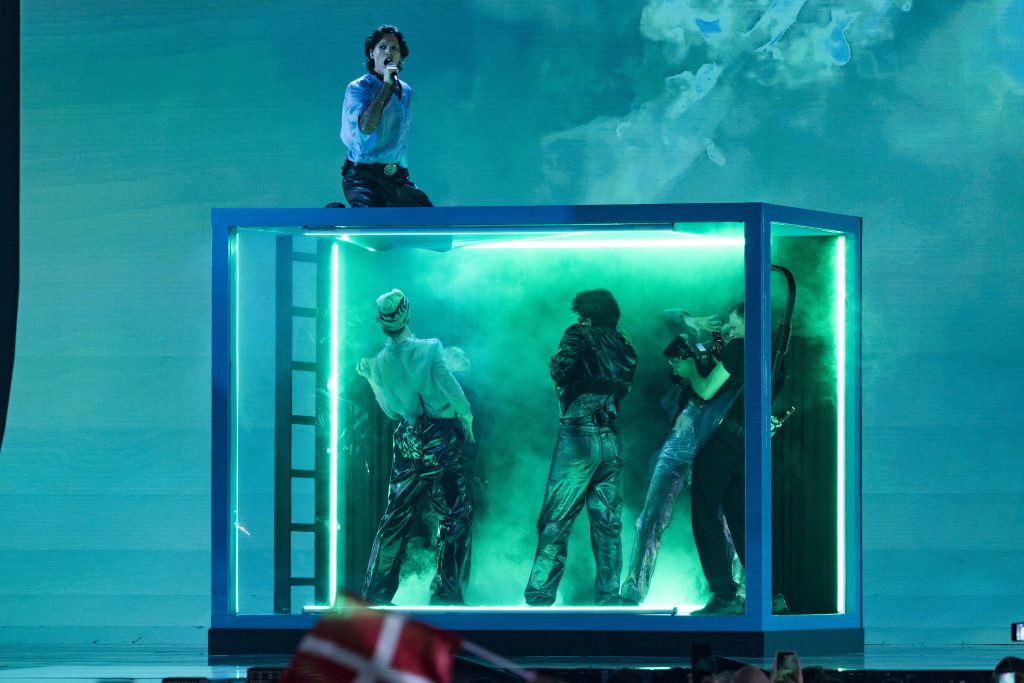
Denmark’s Søren Torpegaard Lund’s Før vi går hjem finished just behind with 243 points. The song’s English lyric translation describes an intoxicating late-night affair. Onstage, it is an intoxicating, claustrophobic fever dream with writhing sexy dancers, low-lit club strobe lighting, and a costume reveal.
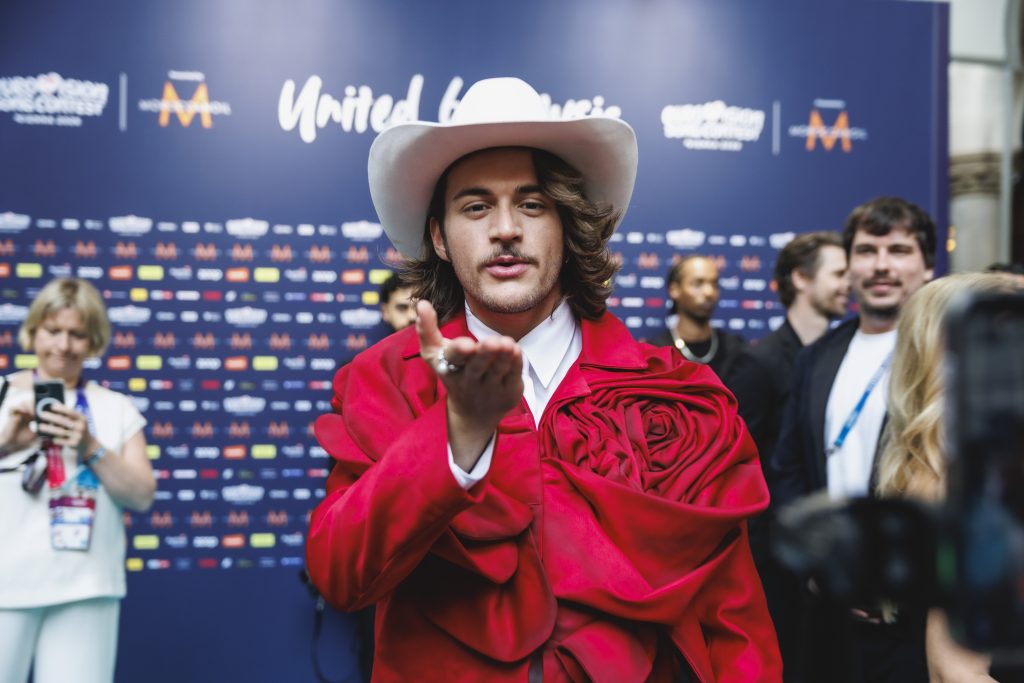
Malta’s Aidan, whose song Bella proved why he is a perennial fan favourite, and why we’ve followed his journey at DNA early. A lesson in pride, persistence and strategy, he was the first Eurovision artist to travel to Australia in his competing year to meet fans. “I said to myself, one day I will be representing my own country. I was imagining it: Aidan Cassar, Malta,” he said. “That was a dream for me.” Drawing directly from the Maltese flag, Aidan made a bold play for our vote, wearing a flamboyant cowboy-meets-matador outfit on the Turquoise Carpet.

Meanwhile, Czechia’s Daniel Žižka provided the emotional anchor with Crossroads, showcasing a vocal range beyond his years, the result of nearly a decade of rigorous training. “I could never write a song like this, or even know that this is something my voice allows, and he [my coach] helped me unlock my potential,” Žižka shared in our interview with him. Sadly, his grand final performance was hampered by a technical issue with the steadycam.
Australia / Austria In Case Of Confusion!
One of the most decisive moments of Eurovision week occurred during the first semi-final’s interval. In a cringe piece of self-aware comedy titled Kangaroo, the producers leaned into the decades-long joke about the international confusion between Austria and Australia. The segment featured a high-octane performance by Go-Jo, who represented Australia last year with the viral Milkshake Man. His return to the Eurovision stage alongside Austrian dancers was a playful nod to comparisons between the two nations.
In 2015, Guy Sebastian took the stage in Vienna as Australia’s first-ever wildcard entry, a historic moment that turned a one-off invitation into a permanent seat at the table. Now, 11 years later, the circle is complete as Delta Goodrem took the same stage, as one of the favourites to win.
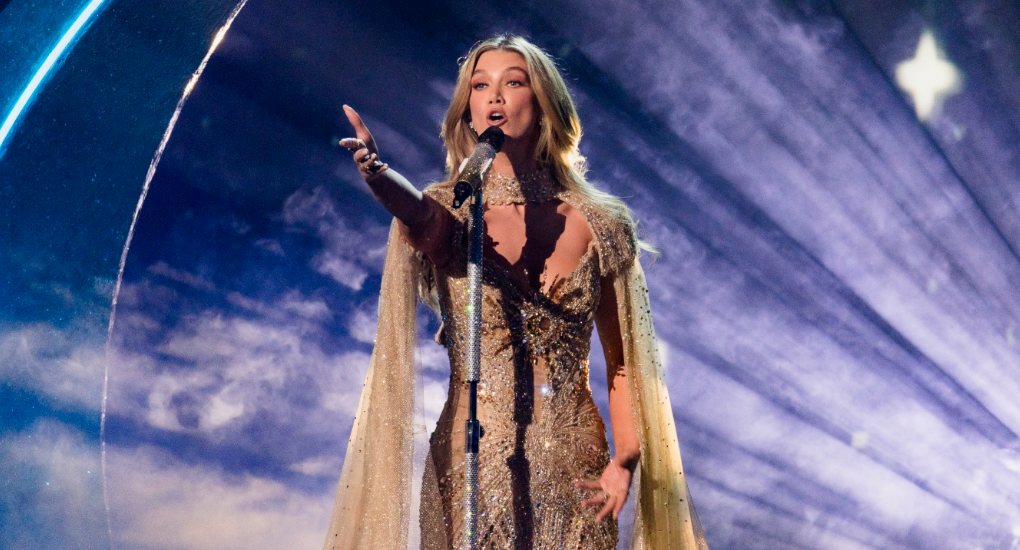
Delta’s inclusion in Eurovision 2026 with the song Eclipse has been met with a level of queer fervour rarely seen. Finishing 4th with a respectable 287 points, Australians already revere her fiercely. For many, Delta is more than a pop star; she is a survivor whose career has mirrored the community’s resilience. From her early days on Neighbours to her battle with cancer and her subsequent rebirth as a piano-ballad powerhouse, Delta has always projected a sense of grace under fire, like her Eurovision mentors Celine Dion and Olivia Newton-John. On stage, she sparkled in Swarovski, striking the keys of and then ascending above, her beloved piano.
She is no imposter. Lost Without You and Wings are anthems in gay clubs across the globe, not just for their melodies, but for their emotional resonance. In 2026, she represented a polished blend of artistic musicianship and genuine star power. It has been exciting watching the odds rise, flirting with the idea that Australia could bring the trophy Down Under.
“I’ve never been lifted out of a piano before. It’s raised the bar. I may have to do it at my next arena show,” Delta told us after the show wrapped. “Everybody supporting me is huge, and I’m excited to continue with new music. This was a truly once-in-a-lifetime experience, and very much magical.”
The Invisible Engine: Making The Magic
The narrative of Eurovision often focuses on producing three minutes of competitive magic. But the collaboration between host broadcaster ORF and the EBU (European Broadcasting Union) acts as an umbrella for a plethora of creatives, volunteers, and crew to unite in music, in artistry, in queerness.
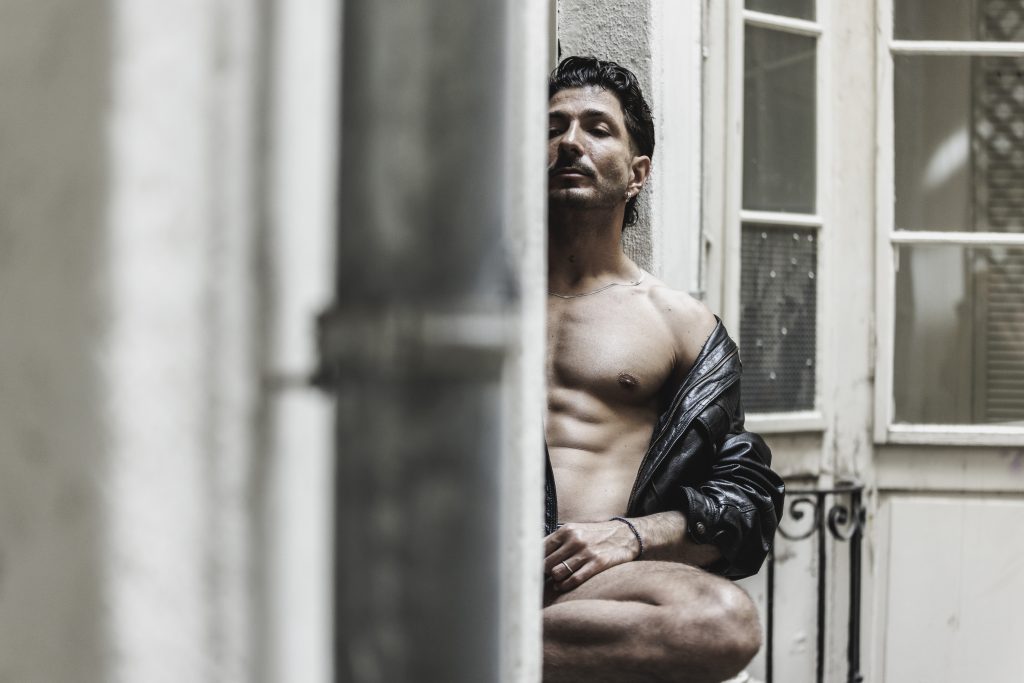
Teodor Munjas is a Viennese resident from Serbia and this year a Eurovision stand-in. Because every delegation has very few rehearsals, it makes sense to have one to help with preparations. We met Teo at San Marino’s delegation party and made plans to shoot stills of his physique at the workplace of costume designer Carlo Josef, who himself is providing stage outfits for various interval performers.

Teo featured in the first semi-final’s opening act that chronicled the contest’s 70th anniversary. Seventy people lined the stage, each with a year displayed on their clothing. Teo was 1985. It followed a short video cycling through the years as a gay Eurovision fan watches the contest, from a child through to relationships, and finally arriving at this year’s contest.
“I was the main vocalist stand-in for Israel, for example, and a guitar player for Serbia. Plus Malta, Austria and San Marino. Usually, stand-ins and live shows are separate, different projects. But this year, all the stand-in singers were invited to be part of the live shows.”
United By Queerness
Perhaps the brashest moment of the week came during the second semi-final’s interval. Hosted by heiress Victoria Swarovski, the segment introduced the character of Professor Swarovski, an academic expert on all things Eurovision. Addressing the camera with a wink, the professor took on the elephant in the room by answering the question: “Why are there only gays at the Eurovision Song Contest? Have they taken over?”
While meant to highlight queer artists in its pool, the Professor’s response landed flat, with many feeling misrepresented. If they really wanted to address the elephant in the room, perhaps a video explaining where all our friends from Spain, Ireland, the Netherlands, Slovenia and Iceland are.
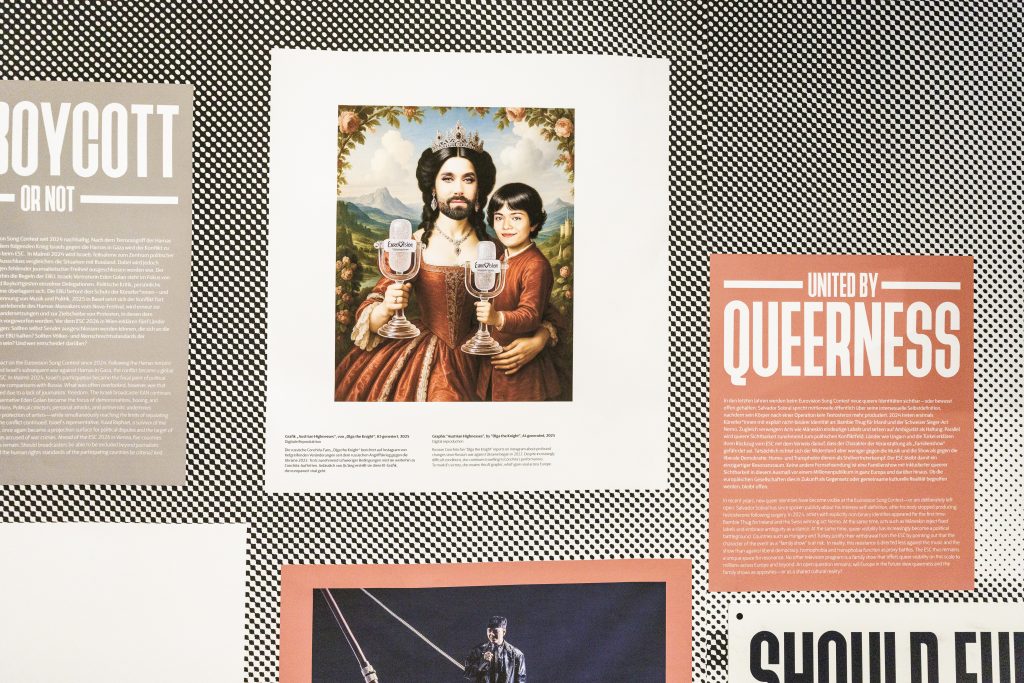
Vienna’s Qwien museum does a better job of this. Their exhibition, United By Queerness, highlights the tensions between individual responsibility and international solidarity, between political stances and the desire for collective celebration. After Conchita Wurst won, host city Vienna wanted to celebrate, question and rethink the contest as a queer cultural space. Pedestrian traffic lights with same-gender couples are scattered throughout the city and remain in place today.
Eurovision is pretty gay, but that is merely the surface. Deep-dive, and you’ll find sexy, scantily-clad dancers whose choreography defines a winner; stand-in performers who rehearse for weeks in the shadows; tireless hairdressers and costume designers who transform a singer into a legend; and the fan-media and media journalists whose love for the contest keeps the pyro alight!
When the army of creators and fans descends upon a host city, it transforms from a tourist destination into the ultimate gay cruising ground. From the public viewing spaces of the EuroVillage, to the EuroClub, the historic steam rooms of the Kaiserbründl sauna, or elsewhere, our community finds more than just entertainment; we find each other. The contest brings people together through its glamour and protest, and there is a catharsis and a euphoria. In a world that frequently others us, Eurovision creates a temporary autonomous zone where we are not only seen but celebrated as the architects of the culture.
Eurovision 2026 has proven that the contest is more than a TV show. It is a mirror. It shows us a version of Europe that is inclusive, creative, and brave. Delta Goodrem may not have totally eclipsed the Eurovision Song Contest, but one thing is certain: “bangaranga” can be used as an umbrella term for anything you want moving forward. Welcome to the riot!