
Cheyenne Jackson Finally Loves His Gay Voice After Decades Of Hiding It

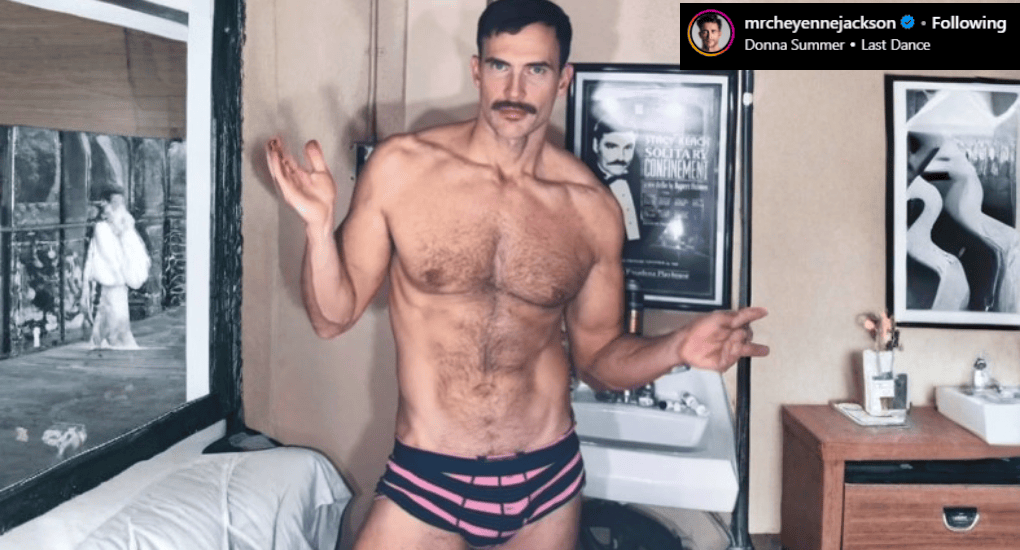
Actor Cheyenne Jackson recently opened up about something that hits close to home for many of people in the LGBTQIA+ community. In a candid Instagram story from his dressing room during his Broadway run in Oh, Mary, the 50-year-old admitted he’d spent years feeling ashamed of his voice. Writing for Psychology Today, therapist Chris Tompkins explores why this struggle resonates with so many men and what it says about how we see ourselves.
“Who the f*ck is that? ‘Cause that ain’t me.”
Jackson rates his voice as “moderately gay” on what he calls the gay voice spectrum. He’s finally good with that, but it took decades to get there.
While preparing for his performance in Cole Escola’s hit show, Jackson stumbled across an old interview from his Altar Boyz days. His voice sounded noticeably deeper, more traditionally “masculine.” The contrast made him pause.
“The first thought I had was, ‘Wow, I sound really gay,'” he said. “And then I thought, ‘I am gay. What’s wrong with sounding gay?'”
According to Tompkins, Jackson’s experience isn’t unusual. Many of his clients describe their own voices with what he calls an “almost disdainful” tone, as if something about them is inherently wrong. They soften their speech or adjust inflections without thinking about it. These small corrections add up over time, reinforcing beliefs about masculinity and worth.
Where does voice shame actually come from?
Research backs up what many already know. In a study of 382 people (187 LGB, 195 heterosexual), more than 58 per cent of LGB participants reported feeling dissatisfied with their voice. That’s not a small number.
Tompkins argues these feelings stem from early lessons about what it means to be a man. We learn a narrow set of rules: be tough, stoic, athletic, emotionally contained. If you didn’t naturally fit those expectations, you probably felt like you were less than.
That sense of inadequacy doesn’t disappear with age. It shapes self-esteem, dating patterns, and the way we connect with others. The “masc for masc” culture on apps like Grindr reflects those same rigid ideals we grew up with.
“Passing” as straight used to feel like winning.
Jackson admitted that when people told him they didn’t know he was gay, it used to make him feel good. Looking back, he calls that “a little f*cked up.”
For years, he tried to sound less stereotypically gay, aligning his voice with masculine ideals. But something shifted. Now, he’s married to Jason Landau, a 48-year-old who, according to Jackson, “everybody from here to Beirut can tell” is gay when he speaks.
“That’s what I love about him,” Jackson said. “He knows who he is and doesn’t give a f*ck. And that is so hot to me.”
Tompkins spent years navigating similar terrain. Growing up around men whose world centered on hunting, camping, baseball, and beer, he learned that his own way of being didn’t fit. He internalized messages from his stepdad and religious upbringing that labeled being gay as deviant or “a cross to bear.”
He spent years hiding, trying to act “straight” to fit in. It wasn’t until later that he realized masculinity isn’t about fitting into someone else’s box.
What changes when we stop judging ourselves?
“If you’re in the gay community, you are on the spectrum of gay voice,” Jackson explained. “Everybody’s on the spectrum.”
That kind of acceptance doesn’t happen overnight. Tompkins suggests asking where our judgments come from. What do we really mean when we say someone sounds “too gay”? What are we actually afraid of?
Breaking free from rigid expectations starts with awareness. Noticing how we speak, move, or hold ourselves, and questioning the beliefs behind those patterns, opens space for something more honest.
Jackson’s currently performing in what Variety described as a “big queer romp” alongside his former 30 Rock colleague Jane Krakowski. Writer and actor Cole Escola crafted a show that, according to the publication, “deftly folds in gender commentary and nonbinary experience, highlighting the ways we use both fashion and performance to explore and embody our genders.”
Backstage at the Lyceum Theatre, Jackson closed his voice rumination with a declaration.
“My internalized homophobia is done,” he said, alight in the mirror’s glow.
Tompkins echoes that sentiment. True masculinity comes from strength in vulnerability, authenticity, and defining yourself on your own terms. It’s fluid and personal, not rigid or one-size-fits-all.
At DNA, we think that’s worth talking about. Because learning to accept ourselves fully, without judgment, matters more than sounding like anyone else’s idea of acceptable.



