The Indigenous Voice To Parliament: A Seat At The Table


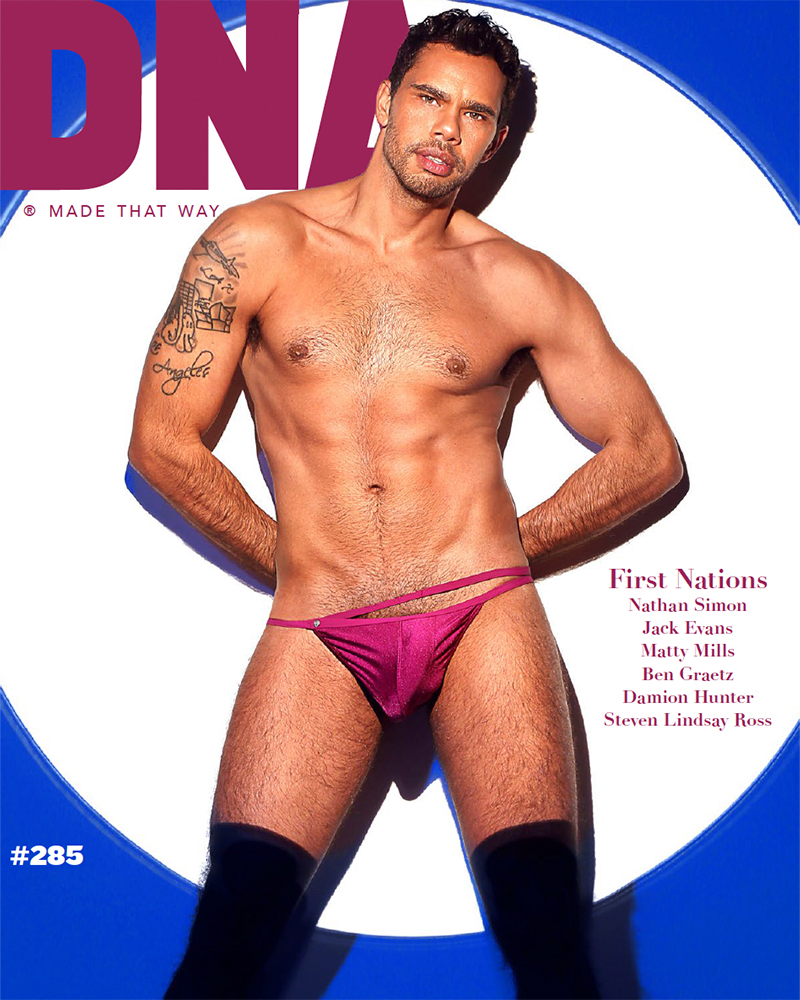
ISSUE: DNA #285 – First Nations Issue 2023 | SHOP
…but scraps for dinner? Steven Lindsay Ross is a reluctant Yes voter but, he says, a Voice To Parliament is the least Australia can do. This opinion piece appears in DNA #285, DNA First Nations 2023 issue.
First Nations peoples are always so gracious and patient. I was brought up by a staunch black mother and a collective of aunties who dragged their kids to community meetings – co-op meetings, Land Council meetings, community interagency meetings and the agenda went on – land rights, water rights, police community relations, local council, logging in the forest, policies and program consultations of every government department imaginable.
It was a formidable childhood watching the Elders in action, ripping into feckless public servants and demanding, and often getting, a better deal for community, and certainly changing perceptions of our black community.
This experience was also an excellent training for young people, learning how to stand your ground or agitate and advocate and one repeated countless times across the country in all First Nations communities.

What dawned on me later in life, with successive governments breaking promises or winding back the rights and gains of the black movement of ’70s and ’80s, was a realisation from Elders that what they were fighting with the government for, were scraps.
All too often we were supposedly handed power over our lives, but it was a house of cards, built on a foundation of false autonomy and at the whim of political agendas. History is littered with decisions from governments that promised to deliver real and lasting change for First Nations peoples; Whitlam’s National Aboriginal Consultative Committee, The National Aboriginal Conference, Hawke’s promise of Treaty, Keating’s Native Title regime, the First People’s Congress, The Prime Minister’s Indigenous Advisory Council, and the list goes on.
Perhaps the biggest rug pulled from underneath the attempts at self-determination was the establishment and subsequent gutting of the Aboriginal And Torres Strait Islander Commission. For all its faults, ATSIC was, at least, an attempt at Aboriginal community control, which had some power to administer resourcing where it was required. But instead of reforming the body, John Howard killed it stone dead. If ATSIC was a white organisation, would it have been cast away so easily with the stroke of a pen?
The impending referendum on the establishment of a First Nations Voice To Parliament has led to a reflection in community of this history of failed attempts, broken promises, race baiting and paternalism, while the repugnant disparity in social outcomes for First Nations gets worse and worse.
I have oscillated wildly on my position on the Voice To Parliament since it was first proposed six years ago, and even more since the starting gun was fired on the referendum campaign.
My people are the Wamba Wamba, and all along the Murray River there are First Nations of double-talk peoples. Wamba Wamba means “no-no” in my language, as it does for other double-talk nations like my grandmother’s people, the Mutthi Mutthi.
I’ve often wondered about this in terms of permission and protocol. Our first point of negotiation is often “no”, so when you enter our Country, instead of just being allowed in, you must go through protocol to enter. We must come to an agreement regarding safe passage and the sharing of resources. You must first establish trust and build real relationships beyond transaction, and we must know that you respect our Country.
In that way, “no-no” is an invitation and a provocation for something deeper, where we end up with something more meaningful, based on trust and respect.
That approach to developing deeper non-transactional relationships is relevant for the queer community in this national project. Of course, I want queer people to vote Yes but more than that, it is vital for the queer community and the queer organisations that represent them, to build relationships that go beyond utilising our culture and images for black cladding. Real coalitions provide important protection from the frustration, erosion or abolition of rights.
We only need look to the USA to see the power of coalitions in protecting hard fought for rights or keeping out right wing homophobes from power. The 2020 US Election win for Biden was achieved, in large part, by a coalition of African Americans, queer community, many women, Native Americans and some Latino communities.
The case for the Yes and No sides are readily available on the Australian Electoral Commission’s website, so I won’t go into detail on each, but I’ll address some of the key points of their arguments and provide an alternative perspective.
One of the main arguments is the lack of consultation at the Uluru gathering six years ago. This argument is true and the failure of the gathering to include strong Traditional Owner representation in its participation list, structure, protocols and the proposal moving forward, is a major concern. This is particularly relevant if we move to Treaty processes, which will largely be negotiated with Traditional Owners. This concern has been articulated by countless groups and has not been adequately addressed by the Uluru Statement leadership.
On the other hand, the need for consultation in the design and delivery of services has been stock standard in every report from the Royal Commission into Aboriginal Deaths In Custody, the Bringing Them Home Report, Closing The Gap reports, productivity commission reports and implicit in every Native Title or land rights process for the last 50years and advocated for in the United Nations Declaration On The Rights Of Indigenous Peoples, which Australian First Nations activists were instrumental in writing and to which Australia is a signatory.
Embedding that consultation in the Constitution, whatever the flaws with that racist document, means the body cannot be easily abolished. There is also something powerful, I think, about imbuing that dry anachronistic document with First Nations recognition and voices – juxtaposing us against outdated, soulless colonial language would be a constant reminder of this country’s colonial past and present, and it would represent a line in the sand about the moral direction Australia should go – an invitation and a provocation.
Another potent argument is around sovereignty and Treaty. The Uluru Statement has always proposed that Treaty should be part of this process and many State jurisdictions have committed to those processes. A national Treaty process, though, is where the legitimacy of Treaties through national ratification lies and it’s here that I think the Voice becomes important.
Agreement making without a national standard is dangerous. Some Traditional Owner groups may not have the resources to negotiate like others and we don’t want a patchwork of First Nations rights where one group is worse off than another. The Voice To Parliament could provide that national benchmark. Without that, Treaty processes could be where the real potential threat to Sovereignty occurs. Many First Nations peoples in North America have been duped by bad Treaties and regretted negotiating such permanent arrangements. Even the Treaty Of Waitangi in Aotearoa is not universally loved by our Maori cousins.
If the No campaign prevails in October, it will not be because the vast majority want to move to Treaty before Voice, as many First Nations people propose. It will be because of a potent mix of another range of views, many of them racist, and many not interested in the advancement of First Nations peoples. This means that when Treaty processes are advocated for, jurisdictions could be armed with a mandate not to advance negotiations or to play hard ball with Traditional Owners.
At the very least, if Yes gets up, there is a pathway to Treaty and jurisdictions will have the backing of the majority of Australians behind them. But the least is precisely why a lot of First Nations peoples will vote No. Let’s be clear, The Voice To Parliament is a low bar. It is the least Australia can do given the diabolical and unjust social outcomes First Nations endure in our own Country.
But we know the history of referenda in Australia and that change, by and large, is hard to come by, particularly for First Nations peoples. Colonial institutions rarely give up power and rarely invite real progressive change that benefits the original peoples.
What I do know is that if Australia votes in favour of the proposal, there is a pathway to something potentially greater and, like the countless Elders before, no matter the result, we will roll up our sleeves and get on with the hard work of advocacy. Without a Voice it is more of the same and potentially worse. Worse on top of worse should not be an option.
Someone once asked me why First Nations people did not write. Perhaps we had no need for writing because our voice is sacred. Everything from the Dreaming is made manifest by storytelling and by song. We layer and etch that onto Country and into memory.
I know that given the opportunity, First Nations people will build upon it and create real and lasting change, our way. I’ve seen it countless times ever since I sat at the feet of my mother in a community meeting, surrounded by the voices of my patient and gracious peoples
__________________________________________________________________________________