
Vale David Malouf, The Gay Australian Author Who Gave Us “Johnno” And “Ransom”

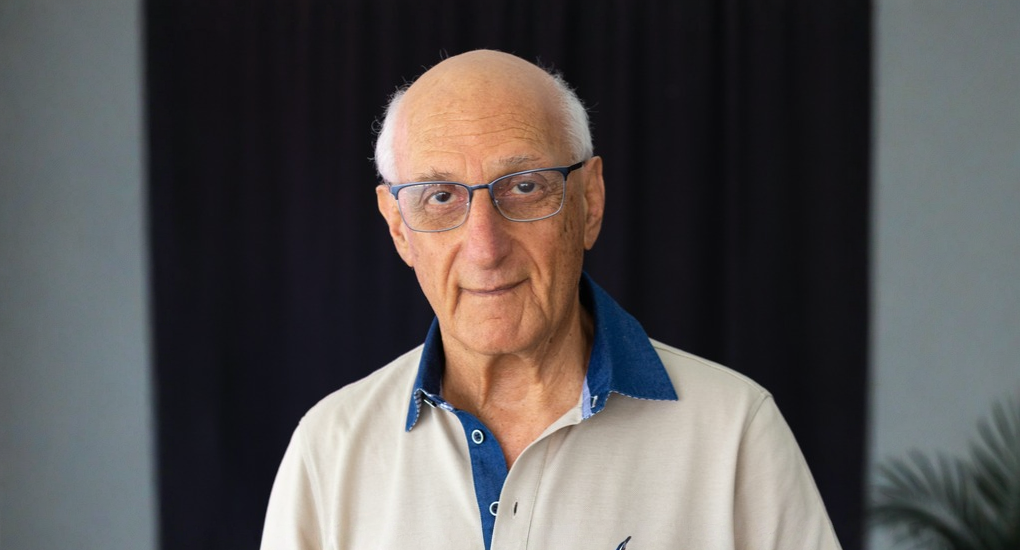
Australian literature lost one of its defining voices on Wednesday, 22 April 2026, when David Malouf died peacefully at a Gold Coast hospital after a short illness. He was 92. His publisher, Penguin Random House Australia, confirmed the news, calling him a giant whose work will continue to shape the country long after his death.
Malouf was a Brisbane-born poet, novelist, and essayist whose books reshaped how Australians wrote and read about themselves for more than half a century. The ABC described him on Thursday as a national treasure, a tag he would have politely waved off.
A quietly trailblazing life
Born on 20 March 1934 in Brisbane, Malouf grew up between worlds. His father came from a Lebanese Christian family. His mother was an English-born Jewish woman of Portuguese and Sephardic heritage. That mixed inheritance sat at the centre of his fiction, where belonging was always a question rather than a given.
He was openly gay and never made a performance of it. In a generation where many Australian artists kept their private lives well away from the page, Malouf got on with his life and his work. He did not march under banners or write polemics. He did the quieter, longer thing: he was visibly himself, in print and in public, decade after decade.
That quiet honesty mattered for queer readers. For a young gay man picking up Johnno or Remembering Babylon in the 1980s or ’90s, knowing the writer was one of us, and that nobody at the literary lunch needed to argue about it, was its own kind of permission.
Malouf resisted labelling his books “gay”. His work frequently explored same-sex desire through the lens of mateship, male identity, and spiritual epiphanies. He often focused on the “extraordinary behind the ordinary,” using lyrical language to map the internal lives of men who long for tenderness in a rigid environment.
One of Australia’s most celebrated literary figures, David Malouf, has diedhttps://t.co/OblYD5FlDh pic.twitter.com/J9i5ViGy13
— The Sydney Morning Herald (@smh) April 23, 2026
The books that built the legend
Malouf began as a teacher and lecturer before turning to writing full-time in 1977. His debut novel, Johnno (1975) painted mid-century Brisbane with such lyrical precision that the city has never quite read the same since. The book is often read as a love story between two men, the narrator Dante and his wild friend Johnno. Malouf depicts their relationship through “coy critical circumlocutions” about adolescent crushes and emotional intensity. The novel uses the Australian tradition of mateship to hide deeper erotic desires, where Johnno’s “larrikin” behaviour masks a queer identity for which society has no space.
Malouf later clarified that while the characters have same-sex experiences, they do not see themselves as defined by them, preferring to keep their identities fluid rather than fixed by labels.
Then came the run that put him in the canon. The Great World (1990) won the Miles Franklin Award and the Prix Femina Étranger. Remembering Babylon (1993) was shortlisted for the Booker Prize and took out the International Dublin Literary Award.
Ransom (2009) reimagined the closing of Homer’s Iliad with a stripped-back grace that few writers attempt and fewer pull off. This retelling focuses intensely on the love between Achilles and Patroclus. Malouf describes their connection as a “new centre” for Achilles, suggesting that Patroclus was the mirror through which Achilles became “fully himself”.
The honours kept coming. He received the Neustadt International Prize for Literature in 2000 and the Australia Council Award for Lifetime Achievement in Literature in 2016, alongside a long list of other awards at home and abroad.
A legacy that stays open on the shelf
We remember him as one of the greats. He wrote about identity, memory, and place with calm authority, and he proved, by example, that a gay Australian writer could sit at the very centre of his country’s literature without ever pretending to be anyone else.

