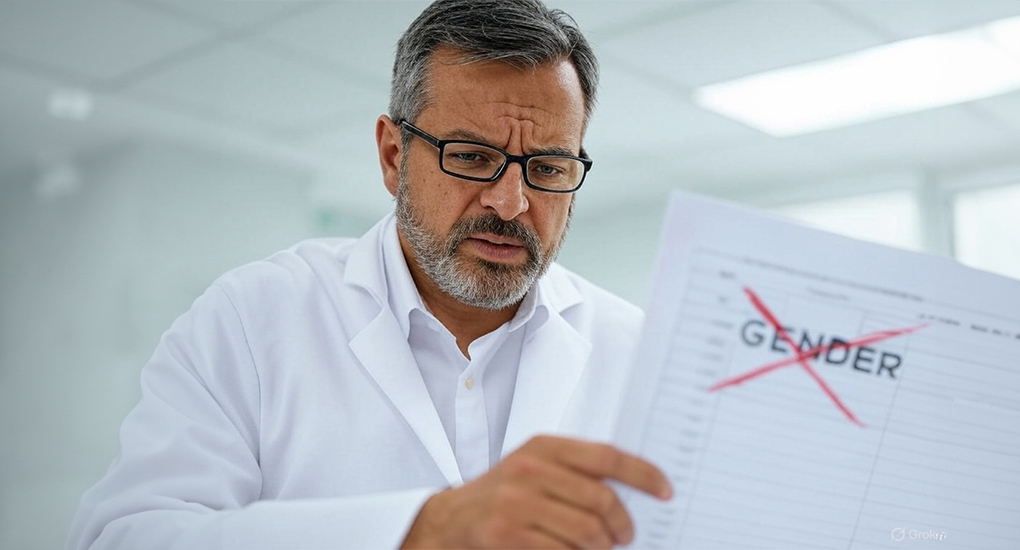
A report published in the New York Times by journalists Sarah Mervosh, Larry Buchanan, Alicia Parlapiano, Aatish Bhatia and Margot Sanger Katz reveals a shocking side to President Trump’s anti-LGBTQIA+ agenda that also dramatically affects women and People Of Color.
Can healthcare research work without basic words like “gender,” “transgender,” or “non-binary”? Under the Trump administration, hundreds of words are being erased from official government documents, websites, and school materials, according to the The New York Times report. This removal of language directly impacts communities that rely on these terms for accurate healthcare and policy planning.
Donald’s banning 7 words*, so let’s use them while they’re still legal & play:#TrumpsBannedWordsInFilm
The Trump administration is targeting terms they regard as “woke”. But as you’ll see from the list below, some words, such as “woman”, “at risk” and “disability”, are words that are not just not “woke” but necessary in a health context. Government documents obtained by The New York Times reveal hundreds of flagged words. Agencies are either limiting or completely removing these terms from their websites, reports, grant proposals, and educational resources.
These banned words include:
accessible
activism
activists
advocacy
advocate
advocates
affirming care
all-inclusive
allyship
anti-racism
antiracist
assigned at birth
assigned female at birth
assigned male at birth
at risk
barrier
barriers
belong
bias
biased
biased toward
biases
biases towards
biologically female
biologically male
BIPOC
Black
breastfeed + people
breastfeed + person
chestfeed + people
chestfeed + person
clean energy
climate crisis
climate science
commercial sex worker
community diversity
community equity
confirmation bias
cultural competence
cultural differences
cultural heritage
cultural sensitivity
culturally appropriate
culturally responsive
DEI
DEIA
DEIAB
DEIJ
disabilities
disability
discriminated
discrimination
discriminatory
disparity
diverse
diverse backgrounds
diverse communities
diverse community
diverse group
diverse groups
diversified
diversify
diversifying
diversity
enhance the diversity
enhancing diversity
environmental quality
equal opportunity
equality
equitable
equitableness
equity
ethnicity
excluded
exclusion
expression
female
females
feminism
fostering inclusivity
GBV
gender
gender based
gender based violence
gender diversity
gender identity
gender ideology
gender-affirming care
genders
Gulf of Mexico
hate speech
health disparity
health equity
hispanic minority
historically
identity
immigrants
implicit bias
implicit biases
inclusion
inclusive
inclusive leadership
inclusiveness
inclusivity
increase diversity
increase the diversity
indigenous community
inequalities
inequality
inequitable
inequities
inequity
injustice
institutional
intersectional
intersectionality
key groups
key people
key populations
Latinx
LGBT
LGBTQ
marginalize
marginalized
men who have sex with men
mental health
minorities
minority
most risk
MSM
multicultural
Mx
Native American
non-binary
nonbinary
oppression
oppressive
orientation
people + uterus
people-centered care
person-centered
person-centered care
polarization
political
pollution
pregnant people
pregnant person
pregnant persons
prejudice
privilege
privileges
promote diversity
promoting diversity
pronoun
pronouns
prostitute
race
race and ethnicity
racial
racial diversity
racial identity
racial inequality
racial justice
racially
racism
segregation
sense of belonging
sex
sexual preferences
sexuality
social justice
sociocultural
socioeconomic
status
stereotype
stereotypes
systemic
systemically
they/them
trans
transgender
transsexual
trauma
traumatic
tribal
unconscious bias
underappreciated
underprivileged
underrepresentation
underrepresented
underserved
undervalued
victim
victims
vulnerable populations
women
women and underrepresented
When key terms vanish from the official language, entire groups become invisible in health research. Without these words, researchers can’t accurately describe people’s experiences or health risks, making it difficult to provide effective healthcare.
For example, the Centers for Disease Control (CDC) website removed vital health information about HIV prevention for transgender individuals. Public health data disappeared overnight. Entire pages went blank. Links to essential guidelines were broken or deleted altogether.
Dr Natasha Martin from UC San Diego explained how serious this issue is for researchers. Her team had their research paused because they used banned terms like gender. UC San Diego also lost a $35 million global reproductive health grant due to this censorship.
“If I can’t say the word ‘women,’ I can’t tell you that an abortion ban is going to hurt women,” said Dr Fielding Miller from UC San Diego in a KPBS news interview.
Joseph J. Amon from the Health and Human Rights Journal says this isn’t just about language control; it’s an attack on science and decades of progress in public health.
Experts argue that Trump’s actions violate basic rights protected by international human rights laws and the US Constitution’s First Amendment freedom of speech protections.
Lawrence Gostin from Georgetown University’s World Organization Center on Global Health Law stated clearly that this censorship crosses legal boundaries protected by the First Amendment.
How can we ensure everyone’s health needs are met if we can’t openly discuss who they are? And what happens when essential research papers vanish overnight?