This US Judge Says It Is Legal To Harass LGBTQIA+ Employees

A federal court just gave the green light to discrimination at work.
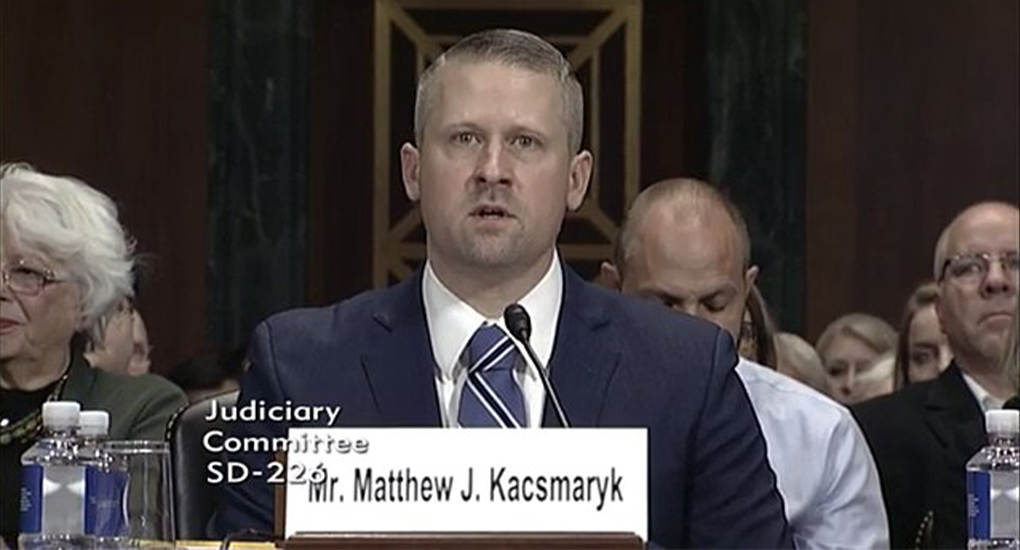
In a ruling that’s left legal experts stunned and workers exposed, anti-LGBTQIA+ federal judge Matthew Kacsmaryk has decided that it’s perfectly legal for employers in the United States to harass LGBTQIA+ staff as long as they don’t fire them for it.
Yes, you read that right.
The ruling, handed down in Texas, claims that Title VII of the landmark 1964 Civil Rights Act doesn’t protect LGBTQIA+ employees from workplace mistreatment, as long as they remain employed. That interpretation flatly contradicts the U.S. Supreme Court’s 2020 decision in Bostock v. Clayton County, which held that anti-LGBTQIA+ discrimination in the workplace is a form of sex-based discrimination.
So what’s changed? And who benefits from the shift?
Texas Takes Aim at Federal Protections
The case began when the state of Texas sued the federal Equal Employment Opportunity Commission (EEOC), objecting to its 2021 guidance that employers must respect a person’s gender identity when it comes to dress codes, pronouns, and access to facilities like restrooms.
Texas argued that this guidance clashed with its “sovereign right” to base employment policy on a person’s sex assigned at birth, not their gender identity. At the centre of this legal challenge was the Texas Department of Agriculture (TDA), whose policies were introduced by Commissioner Sid Miller. He’s made headlines before for calling trans identity “leftist social experimentation” and voicing support for the military ban on trans service members.
With backing from the right-wing Heritage Foundation, Texas challenged the EEOC’s authority to protect queer and trans employees. And Judge Kacsmaryk agreed.
In his ruling, he stated that the TDA’s policies, which restrict access to pronouns, dress codes, and restrooms based on sex assigned at birth, don’t violate any protections. According to him, these policies apply “equally” to everyone, regardless of gender identity. That logic effectively erases the existence of trans identities and legitimises a system where workplace rules are built to ignore the lived realities of gender-diverse people.
Who Is Judge Kacsmaryk…And Why Does He Keep Showing Up?
Matthew Kacsmaryk, appointed in 2019, has become a go-to judge for conservative and religious legal groups trying to gut civil rights laws. He’s ruled against LGBTQIA+ protections before, including a 2022 decision that blocked Section 1557 of the Affordable Care Act, which bans discrimination in health care. That case was led by America First Legal Foundation — founded by Trump advisor Stephen Miller — and centred on doctors who refused to treat LGBTQIA+ patients.
There’s a reason Republican lawmakers and Christian legal groups keep filing cases in his district: they know what result they’re likely to get. Before taking the bench, Kacsmaryk removed his name from an article he co-authored condemning transgender health care, avoiding public scrutiny during his confirmation hearing. That article appeared in a far-right law journal at the University of Texas, where he was once editor. He also worked with The First Liberty Institute, a Christian conservative law firm that has defended businesses that refused service to LGBTQIA+ people.
Now, from his bench in Texas, Kacsmaryk has effectively ordered the EEOC to erase any reference to sexual orientation and gender identity from its federal guidance — a chilling rollback of protections once considered settled law.
What Does This Mean for LGBTQ Workers?
This ruling sets a dangerous precedent. If employers can discriminate against LGBTQIA+ employees by denying pronouns, enforcing gendered dress codes, or blocking access to appropriate bathrooms without fear of federal enforcement, then the door is open for even more overt hostility in the workplace.
So what now?
The ruling is likely to be appealed, and legal battles over Title VII will continue. But in the meantime, it sends a message and not a subtle one. That in some parts of America, it’s open season on queer workers, and the law might not be on their side.