
The Shame Gay Men Don’t Talk About Because It Feels Like Betrayal

Coming out does not finish the job. That is the argument from Chris Tompkins, a therapist in West Hollywood who works with gay men, and who says his clients keep arriving with a version of the same line.
“I’ve done the work, I’ve come out, I’m successful, and yet I still feel like something’s missing.”
Writing for Psychology Today on 26 July, Tompkins put a name to the distance between how far the movement has travelled and how a lot of gay men privately feel. Visibility went up. Shame did not automatically come down.
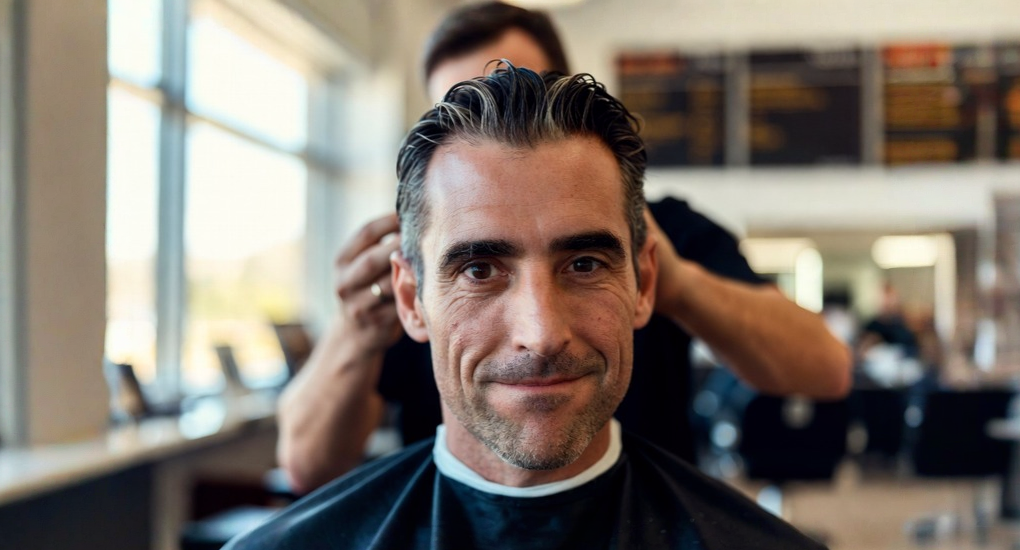
Tompkins opens with a friend who got a haircut during an airport layover. The barber asked whether he had a wife. He is married to a man, and he let it pass.
He didn’t feel unsafe. It was simply easier not to interrupt the barber’s assumption, and Tompkins says he left disappointed in himself, wondering why hiding could still be the path of least resistance after all this time. He went back to the barbershop afterwards to say that he was gay and happily married.
Most gay men have their own version. The pronoun quietly swapped at a work lunch. The spare room that materialises when the plumber comes round. The reflex is old and it does not switch off because the law changed.
Why It’s Hard To Say Out Loud
Tompkins argues that naming internalised homophobia carries its own penalty inside the community, because saying it can feel like conceding a point to people who spent decades calling you broken.
He gives that reflex a name. Protective silence, which he defines as “a pressure to safeguard our image by avoiding narratives that might be seen as airing our dirty laundry”. Men keep the harder material to themselves so the collective story stays a triumphant one. What is actually a shared wound gets carried around as a private failure.
The distinction worth holding onto is between shame that does a job and shame that does damage.
The useful kind, Tompkins writes, “keeps us connected to empathy and conscience”. The other kind says “There’s something wrong with who you are.”
He is direct about where that second kind takes root, calling toxic shame “the spiritual core of internalized homophobia” and pointing at religious upbringings in particular. If you were taught your existence was sinful, he argues, you learned more than a fear of punishment. You absorbed the idea that you were fundamentally broken, “or worse, that we could go to hell”.
That framing matters, because his proposed repair is spiritual as much as clinical. Worth, in his account, is not something you argue yourself into intellectually.
The section most likely to sting is about what shame does between gay men rather than inside one.
Left unexamined, Tompkins says, it gets projected outwards onto other gay men, who get judged for being “too feminine, too sexual, or too much”. His reading is that the discomfort is recognition. We are “uncomfortable seeing a part of ourselves reflected back that we haven’t made peace with yet”.
It travels, he writes, “disguised as standards or taste or ‘preference'”. Anyone who has spent ten minutes on the apps knows exactly which word is doing the heavy lifting there.
Tompkins writes from the consulting room and cites nothing, so it is worth asking whether the core claim survives contact with the literature. Broadly, it does.
Ilan Meyer’s minority stress model, published in Psychological Bulletin in 2003, remains the framework this field runs on. It treats concealment and internalised homophobia as stress processes in their own right, sitting alongside outright discrimination. On that account the hiding is not a side effect of the injury. It is part of it.
A meta-analysis by Newcomb and Mustanski, published in Clinical Psychology Review in 2010, pooled 31 studies covering 5,831 people and found a small to moderate association between internalised homophobia and internalising mental health problems. The link to depressive symptoms was stronger than the link to anxiety.
The Australian figure is stark. Private Lives 3, run by La Trobe University’s Australian Research Centre in Sex, Health and Society, surveyed about 6,800 LGBTQIA+ people in 2019 and found 57.2 per cent reported high or very high psychological distress in the previous four weeks.
That is several times the rate general population surveys record. One caveat the researchers make themselves, and participants were recruited online and opted in, so the sample is not representative of all LGBTQIA+ Australians.
What the evidence does not test is protective silence, or the projection argument, or the spiritual claim. Those remain Tompkins’ clinical observation, offered as such.
Fault Is Not The Same As Responsibility
The line Tompkins builds to is the one under his headline. Shame may not be our fault, but healing it is our responsibility. Nobody chose the messages they absorbed in childhood. Whether those messages get handed on is a separate question, and his blunt version is: “If we don’t tend to our wounds, we pass them on.”
He closes by asking readers where their sense of worth comes from, offering three options. An achievement. An external marker of success. Or something inherent within you.
Sitting with which one you reached for first is probably the whole exercise.
Tompkins expands the argument in Becoming Worthy: A Gay Man’s Guide to Healing Shame and Loving Himself, which he says is due from Bloomsbury in 2027.
If Any Of This Brings Something Up For You…
QLife offers free, anonymous LGBTIQ+ peer support on 1800 184 527, and webchat at qlife.org.au, from 3pm to 9pm daily in your local time. Lifeline is available 24 hours on 13 11 14. In an emergency in Australia, call 000. Readers elsewhere can find support through their national crisis line.

