
The Gay Doctor Who Nearly Beat The Nazis And Changed History Forever

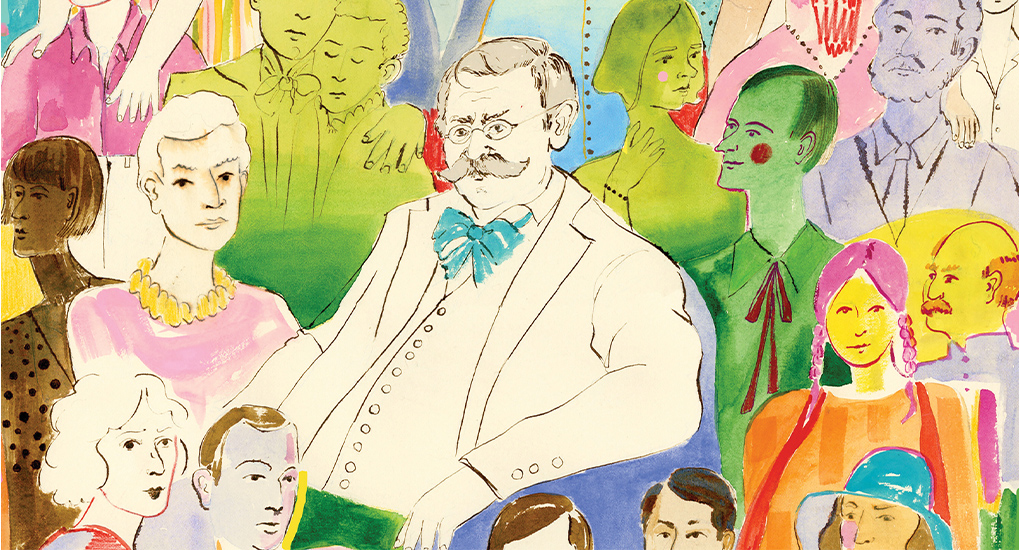
Writer Andrew Gooding‑Call’s long‑read for Current Affairs tells the story of Dr Magnus Hirschfeld, the early‑1900s physician who put queer lives before politics. The story explains who Magnus Hirschfeld was and about his work, tracing how one determined doctor turned Berlin into a haven for people who felt outside society’s rigid boxes.
His grand plan began in 1897 with a campaign to scrap Germany’s anti‑sodomy Paragraph 175. It grew into the Institute for Sexual Science (ISS), a Berlin clinic, archive, museum, and social hub that offered mental‑health support, gender‑affirming care, and some of the world’s first surgeries for trans patients. Hitler soon branded Hirschfeld “the most dangerous Jew in Germany” and twice sent thugs to kill him, but the doctor kept teaching colleagues that queer identity is natural and healthy.
When Berlin bloomed…
By the mid‑1920s, Hirschfeld’s lectures had traveled from Buenos Aires to Shanghai, turning Weimar‑era Berlin into a magnet for artists, scholars, and anyone keen to dance without shame. His silent film Anders Als Die Andern (Different From the Others, 1919) put a violinist’s queer romance on the big screen and closed with a shot of Paragraph 175 struck through in chalk. Crowds came for the scandal, then left with empathy.
The night the bonfires started.
On 10 May 1933, Hitler’s militia thugs, the SA or “brown shirts”, stormed Hirschfeld’s ISS, tossed thousands of case files, photos, and sexological texts onto a bonfire in Bebelplatz, and posed for press photos beside the flames. Hirschfeld, lecturing abroad, watched a newsreel and recognised his bust being paraded through the smoke. The raid gutted global queer research and drove many of his colleagues to suicide. Within two years, the 67‑year‑old died in French exile, his diabetes unchecked and his life’s work reduced to ash.
What can Hirschfeld teach a world where culture wars recycle the 1930s talking points about gender? He demonstrated that rigorous data, fearless visibility, and broad coalitions can shift public opinion more quickly than courts alone. Two recent books, Brandy Schillace’s The Intermediaries and Daniel Brook’s The Einstein Of Sex, trace how Hirschfeld linked queer liberation with anti‑racism and women’s autonomy, a stance that terrified fascists then and now.
Gooding‑Call’s feature unpacks Hirschfeld’s clashes with gay “masculinists”, the rise of Section 175, and the echoes we hear in today’s culture wars. Lose yourself in the 6,000‑word deep dive, then share it with someone who thinks progress is permanent: The Gay Doctor Who Fought Nazis – Current Affairs.
