
The City That Banned Pride Flag Just Got The Green Light From A Judge

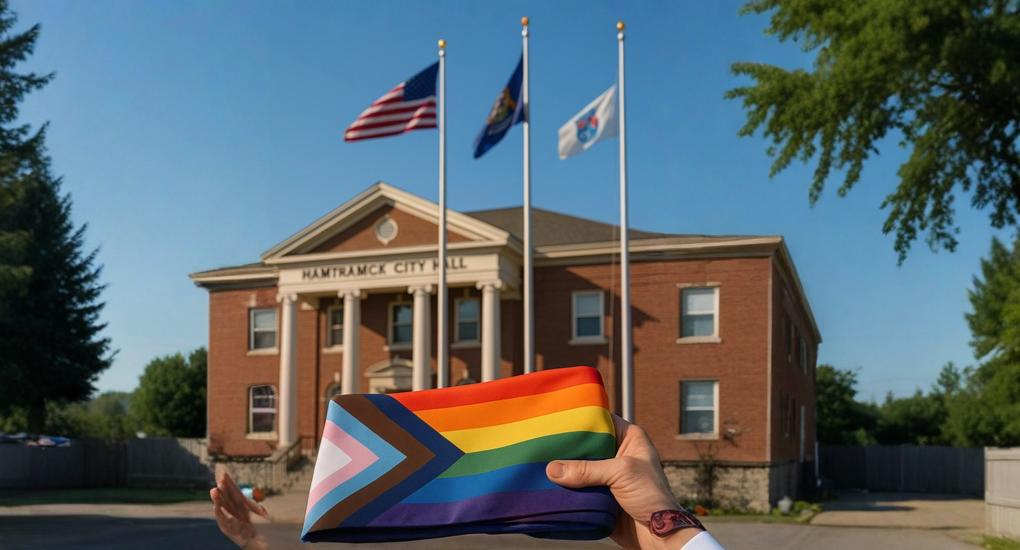
In June 2023, the City Council of Hamtramck, Michigan approved a “neutrality” resolution that bars political, religious, racial and similar group flags on public property. The change followed years when community flags, including a Pride flag, had been raised along a downtown stretch. Two former Human Relations Commission members, Russ Gordon and Cathy Stackpoole, sued after they were removed from their posts following an unauthorised Pride flag raising, arguing the policy violated the First Amendment and the Equal Protection Clause.

Hamtramck allows only a defined set of flags on its public poles: the U.S. flag, the Michigan state flag, the city flag, the Prisoner of War flag and national flags that reflect the community’s international character. The court found that, after the 2023 vote, the city had “closed” the poles to private expression and reclaimed them for government speech, which is permitted under Shurtleff v. City of Boston (2022). The judge also concluded the rule is viewpoint-neutral because it excludes all advocacy flags equally.
What was said about Pride flags?
News reports quote Judge Lawson stating, “Hamtramck’s refusal to display the Gay Pride flag did not violate the Constitution.” That line reflects the court’s government-speech reasoning, not approval or disapproval of Pride itself. Residents and businesses may still display Pride flags on private property.
The city’s leaders, including an all-Muslim council, have said the rule protects religious freedom and keeps city property neutral. Plaintiffs and their supporters say the policy chilled expression linked to identity and equality. The judge’s order closes this lawsuit, but debate about Pride visibility in public spaces will continue in civic forums and at the ballot box.
What this means for future Pride seasons?
Practically, do not expect rainbow flags on Hamtramck’s public poles during June unless the council changes its rules. The ruling does not affect street parades with permits or flags on private venues. It also signals how courts may read similar disputes: if a city tightly defines its poles as government speech and applies rules evenly, courts are likely to uphold those limits.
Pride flags flew on city poles in 2021 and 2022. The council adopted the neutrality resolution in June 2023. The plaintiffs lost an early bid for judgment in July 2025. The court then granted the city’s motion and dismissed the case on 8 September 2025.
Could a different policy, one that opens flagpoles to all groups equally, pass legal muster? Possibly, but that political choice would revive the very forum the city chose to close. For now, advocacy will keep moving through marches, storefronts, banners and people, not the city’s flagpoles.
