
Sydney’s Historic Oxford Street Gay Bars Set For Heritage Protection

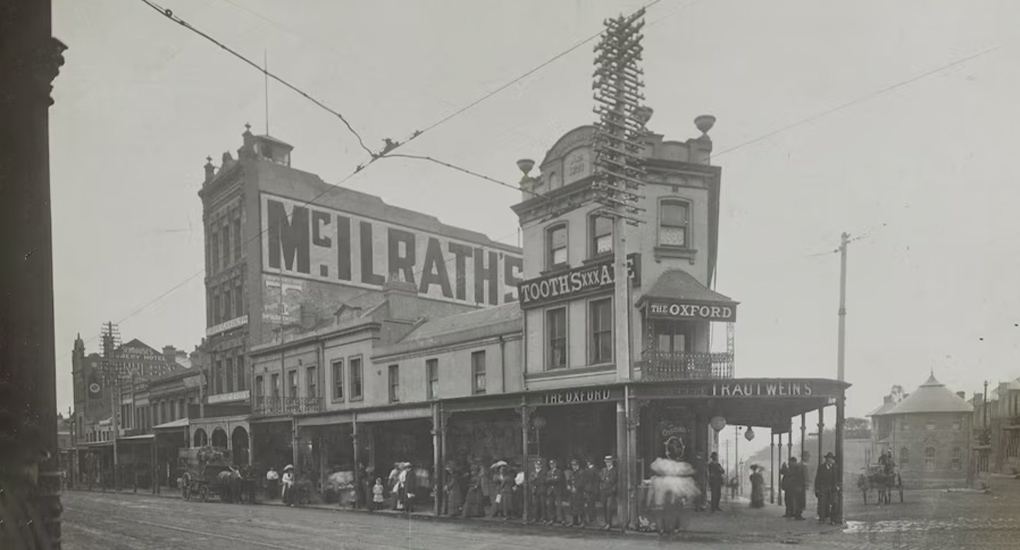
Three famous Oxford Street gay bars are on track to heritage status. This move will protect their role in Sydney’s LGBTQIA+ history. The City Of Sydney Council has put forward the Oxford Hotel, Palms, and Universal (formerly the Midnight Shift) for this special status.
City of Sydney Backs Cultural Protection
Lord Mayor Clover Moore AO says these venues form a key part of Oxford Street’s identity.
“We know how important it is to our LGBTQIA+ communities to protect, preserve and recognise the rich cultural history along Oxford Street,” Moore says.
The Council chose these three bars after studying places that matter most to the LGBTQIA+ community in Sydney. What makes these venues so special? They’ve each been central meeting spots since the late 1970s and early 1980s.
Oxford Street: The Heart of Sydney’s Gay History
Garry Wotherspoon, historian and board member of Sydney’s queer history museum, Qtopia, supports this move.
“Oxford Street is such an important part of our city’s queer history and culture, and its venues were important places where our communities could develop their sense of identity in safety,” he says.
Wotherspoon marched in the first Mardi Gras in 1978. He reminds us that male gay acts were illegal in New South Wales until 1984.
“From the early 1970s to the early 21st Century, [Oxford Street] allowed our LGBTQIA+ peoples to explore opportunities and be themselves,” he notes.
The area also became vital during the HIV/AIDS crisis. It served as a hub where people shared info about safe sex and support.
The Oxford Hotel
The Oxford Hotel has served drinks since 1905. The site has been a pub under different names since 1859. It became an official gay venue in 1982. The bar promoted itself as “the latest gay pub on the [Oxford Street] strip.”
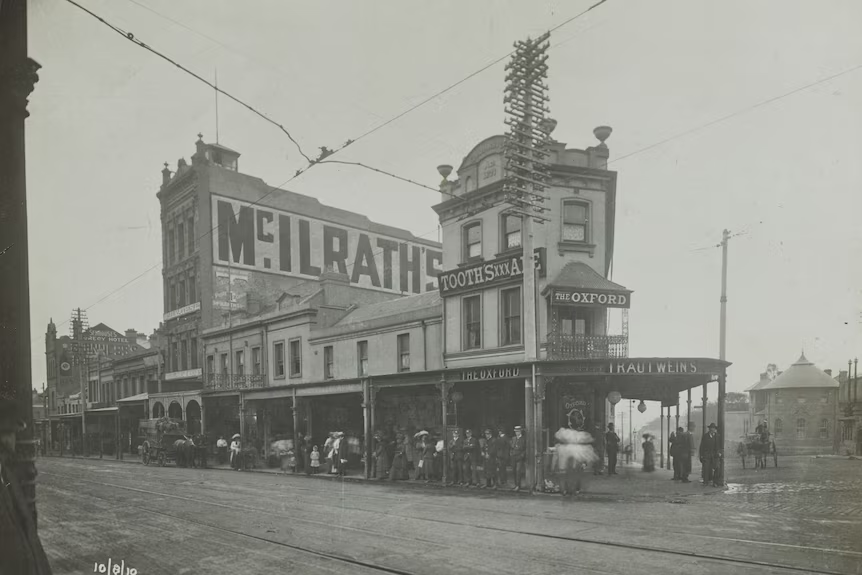
It’s one of Sydney’s oldest still-running queer venues. The Oxford has hosted many events, including the Bobby Goldsmith Foundation’s yearly fundraiser, Boys Own Bake-Off.
Palms
Built in 1855, Palms started as a gay club in 1977. It was first an underground cabaret spot. The venue was Scooters Bar and Diner in the late ’80s before reopening as Palms in 2000.

Palms quickly became known as a safe space for folks who didn’t fit usual gender and sexual norms.
Universal (Formerly Midnight Shift)
This venue opened as Tropicana in August 1978. It was a restaurant and gay disco. Two years later, it became Club 85, a “man’s disco”, but a fire damaged it shortly after.
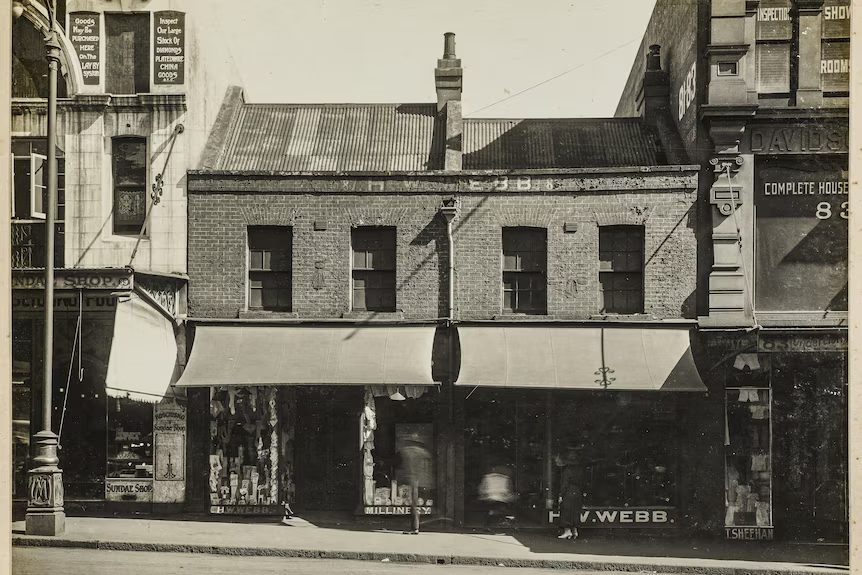
In November 1980, it reopened as the Midnight Shift. It kept this name until late 2017. Many locals knew it simply as “the Shift”.
The bar closed due to low numbers caused by Sydney lockout laws. After almost a year shut, it reopened as Universal in September 2018.
Why Heritage Status Matters
Some people argue that heritage listings can block change, but Wotherspoon believes they serve a crucial purpose.
“Getting a heritage listing is such an important part of acknowledging aspects of a city’s history,” he says.
He explains that history helps us create a more diverse society. This is vital when we see threats to sexual and gender diversity around the world.
“History can teach us how to avoid repeating the mistakes of the past,” Wotherspoon says. “[It reminds us] that we are not alone.”
Do we need this kind of protection for gay venues? How does preserving these spaces help future generations? We believe these questions matter as Sydney grows and changes.
Wotherspoon sums it up: “We are, and have long been, part of Sydney’s vibrant multicultural society, and have played important roles in its creativity and its campaigns for equality and social cohesion.”
