
Sydney Queer History Mural Taken Down At Surry Hills Police Station After Complaint

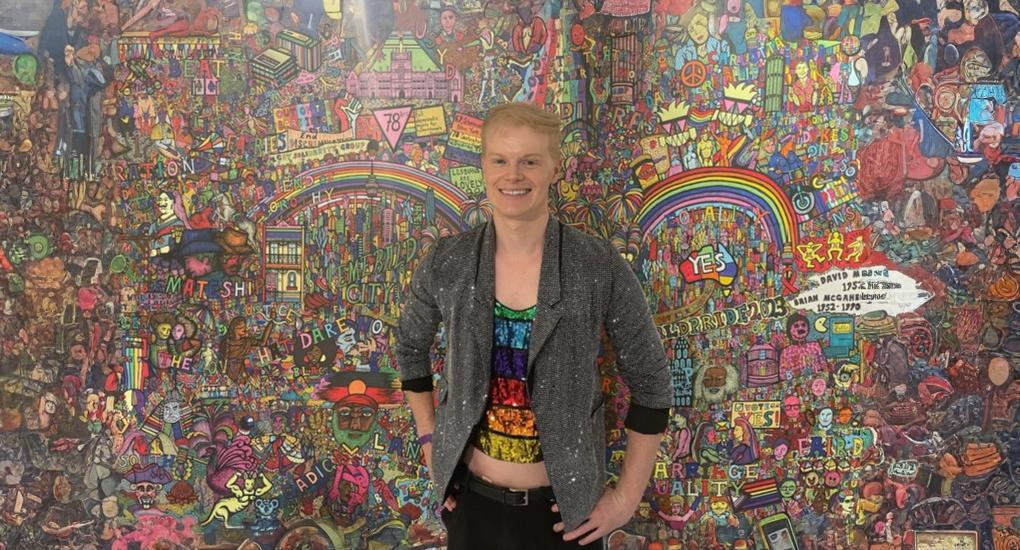
A mural celebrating Sydney’s queer past has been taken down from Surry Hills Police Station only days after it went up. NSW Police did not give a specific reason, though a spokesperson said workplaces must remain “professional and inclusive.” Reports say an officer complained.

Where the mural went and what it showed.
The artwork, Queer Sydney: A History, was hung in an internal room in the police centre, a short walk from Oxford Street. It featured well-known Australians, including Magda Szubanski, Courtney Act and former High Court justice Michael Kirby, and referenced the first Mardi Gras, the HIV/AIDS epidemic and the legalisation of marriage equality. The wall piece also depicted liberation-era protest scenes and a banner reading “Stop police attacks on gays, women and blacks,” along with a historical reference to Sydney being called the “Sodom of the south”.
The mural is by Jeremy Smith, an artist and researcher whose work often maps queer memory. Smith has described the drawing as a “love letter to queer Sydney” and said he accepted the police invitation to display it in the hope art could “build bridges.”
How police explained the decision.
NSW Police did not detail the reason for removal. A spokesperson noted that art is “subjective” and can “generate discussion and debate,” and added the need for a “professional and inclusive office.” The ABC reports two sources said an officer complained.
Community reactions and recent history.
Peter Murphy, who was assaulted by police during the first Mardi Gras in 1978, called the removal “another reflection of a bigger pattern,” warning it could dishearten queer-identifying officers. Writer Benjamin Law said police have treated queer people “heinously” in the past and suggested opposition to the mural was rooted in homophobia. Sydney MP Alex Greenwich called queer art in police stations “an important reminder of the work we all need” to keep communities safe.
Community reactions and recent history.
Peter Murphy, who was assaulted by police during the first Mardi Gras in 1978, called the removal “another reflection of a bigger pattern,” warning it could dishearten queer-identifying officers. Writer Benjamin Law said police have treated queer people “heinously” in the past and suggested opposition to the mural was rooted in homophobia. Sydney MP Alex Greenwich called queer art in police stations “an important reminder of the work we all need” to keep communities safe.
Queer Sydney: A History was first commissioned for the University Of Sydney’s Fisher Library, where a large-scale version is on display. Smith’s research drew on historian Garry Wotherspoon’s book Gay Sydney: A History.
The decision lands after a difficult year between police and march organisers. Officers were initially disinvited from the 2024 Mardi Gras following the charging of an officer over the deaths of Jesse Baird and Luke Davies, then later allowed to march out of uniform. At DNA, we care about how institutions engage with community history. Does removing a history lesson from a workplace build trust, or chip it away?

