
Slava Mogutin’s 25 Years Of Queer Photography Lands At The Bob Mizer Museum

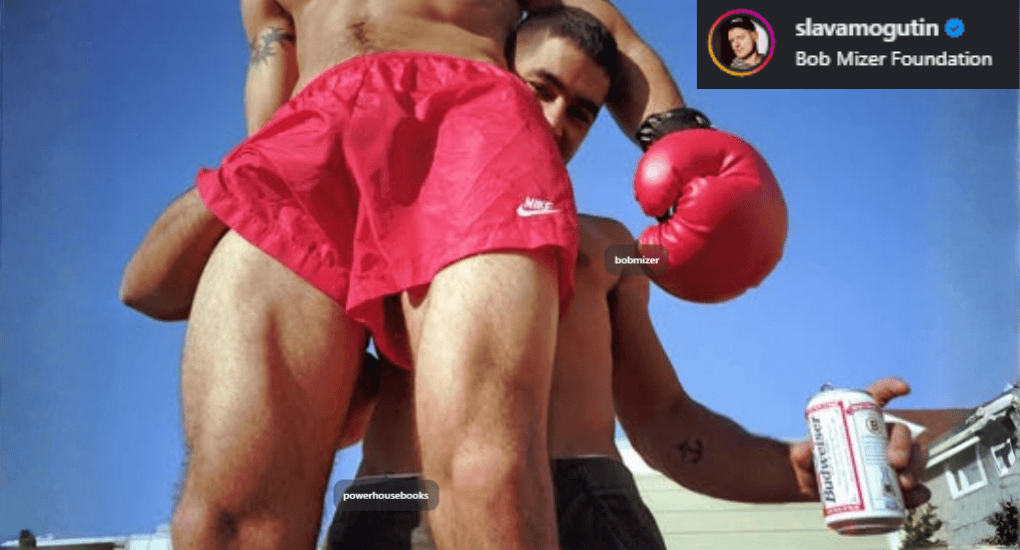
Slava Mogutin, the Russian-born artist who became the first person granted political asylum in the United States based on anti-gay persecution, has a new exhibition at San Francisco’s Bob Mizer Museum. Analog Human Studies: 25 Years of Photography runs from 2 April to 13 June 2026, and it’s a fitting home for work that shares DNA with the museum’s namesake.
The teenager who fled Siberia and picked up a camera
Born Yaroslav Yurievich Mogutin in Kemerovo, Siberia, in 1974, Mogutin left home at 14 and made his way to Moscow, where he built a reputation as a poet, journalist, and the only openly gay personality in Russian media. In 1994, he and his partner, Robert Filippini, attempted to register the first same-sex marriage in Russian history. The backlash was swift: criminal charges, threats of up to seven years’ imprisonment, and eventual exile.
With support from Amnesty International and PEN American Center, Mogutin was granted asylum in the US and settled in New York, where photography became his primary medium. Over the decades since, he has published more than a dozen books, won the Andrei Bely Prize for literature and the Tom of Finland Foundation Award, and worked alongside figures including Allen Ginsberg, Dennis Cooper, Edmund White, and Bruce LaBruce.
Film grain, boxing gloves, and radical trust
The exhibition, organised by Dennis Bell with De Kwok, draws from Mogutin’s analog archive: works shot on 35mm, 120mm, and Polaroid film from his Lost Boys and Analog Human Studies series. His subjects are friends, lovers, athletes, dancers, sex workers, and fellow artists, photographed with a closeness that feels earned rather than staged. Saturated colour, charged props (boxing gloves, jockstraps, religious iconography), and the grain of real film give the images a tactile quality that digital work rarely matches.
“Documentation, collaboration, and transformation, these are the main driving forces of my work,” Mogutin told Container Love. That collaborative ethos is clear in the photographs. His subjects aren’t being observed; they’re participating.
Hosting the show at the Bob Mizer Museum feels deliberate. Mizer’s physique photography in the 1940s and 50s carved out space for the male body at a time when showing it was a legal risk. Mogutin’s work picks up that thread, but with the added weight of autobiography, political exile, and 25 years of queer community documentation. Have we ever had a better reminder that the camera can be both a personal diary and a political act?
Get yourself to 920 Larkin Street
The opening reception kicks off tonight (2 April, 6pm PT) as part of the Tenderloin First Thursdays Artwalk, with Mogutin in attendance. An artist talk with art historian Hunter O’Hanian follows on 10 April (7pm), and there’s a screening of Gay Propaganda 3.0 on 15 May (7pm). Entry is free for members, $10 for everyone else. The Bob Mizer Museum is at 920 Larkin Street, San Francisco.
At DNA, we love it when an exhibition connects the dots between past and present like this. For a look at Mogutin’s work, his Instagram (@slavamogutin) is a good starting point. Fair warning: it’s not safe for work in the best possible way.

