
NAIDOC Week: The Storyteller, Ryan Pearson

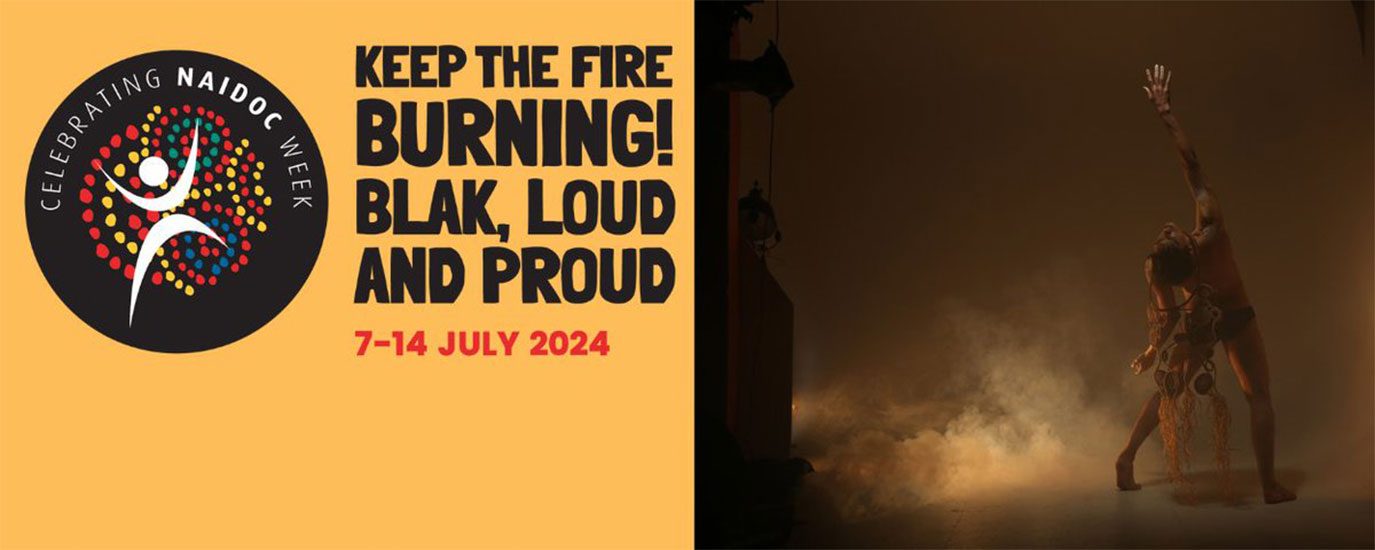
It is often said that, as the world’s, oldest, surviving, continuous cultures, First Nations peoples were the first dancers, artists, singers, storytellers, scientists and creatives.
That our deep understanding of the universe has sustained us from the first sunrise, through ice ages and invasion is no coincidence; our life and strength is founded on cultural expressions that are forged by and embedded in Country and the cycles of nature itself.
Country and people are one. That proud legacy relies on Elders who are deeply connected to those ancient practices and traditions imparting their knowledge to a younger generation.
To celebrate #NAIDOCWeek 2024 we’re posting articles from our First Nations issues.
Feature: Steven Lindsey Ross Photography: Christian Scott
Bangarra Dance Theatre’s Ryan Pearson is part of a new generation of young dancers who are proudly telling those stories with their bodies. Ryan spoke to DNA about his journey, his inspirations and challenges, and what’s in store for this young steward of Kin and Country. Ryan was photographed exclusively for DNA.

“We’re living between two worlds – the history of the Dreamtime and the Dreamtime now.”

DNA: At your DNA photo shoot, everyone was impressed by your creativity, fearlessness, and sense of freedom in your movements. How did you arrive at the place you are now?
I’ve always been a person who lives in fantasy. I think dance is quite a fantasy to live in and I’ve always had that innate in my body since I was born.
My grandmother was a ballet dancer and I have four sisters who loved to dance as well. So even at a young age, I always had a sense of fantasy. We always had that love for dance.
Here at Bangarra, we’re always living between two worlds – of the history of the Dreamtime and where the Dreamtime is now, in terms of the modern and urban. I always take on a level of spirit and fantasy and I want to make the best things out of every opportunity I have.
Where do you go in your head when you’re performing with Bangarra?
When I’m dancing a narrative work in history, I can feel and imagine myself in the dirt and the actual grass or sand and feeling it between my toes and picking it up from the ground or feeling what the natural wind was without buildings, concrete or pollution.
These images express ancient First Nations dance traditions as well as your connection to queer culture, and you as an individual. What’s Ryan Pearson like when you get to know him?
He is a little black boy who is just going around the world, loving what he does. He’s just a young man trying to explore who he is, and who he is in terms of the face of the world, who wants to represent, a person still learning, a person that’s still trying to find his true footing to the floor. And, hopefully, now being more mature, one who can be confronted with less judgement, and a person who just wants to explore the world and people’s opinions and where they come from.


“Heels represent strength more than a pair of footy shorts ever will.”
Tell us about those heels! And do you lean into your feminine side a lot?
One hundred percent! I identify as a male, but I do love that spectrum. And sometimes I wake up and I want to wear my dress and my heels and my stockings to work. And I think in terms of fashion, the things that we wear are the things we want to show to people and what I really show is a sense of freedom. I want to explore that freedom of choice and that freedom of expression.
My biggest influences growing up were my four older sisters. I only had Mum because my dad passed away, and I had two grandmothers who were just beacons of the family. And that was a huge influence in my life.
When I am in the heels and the stockings, they represent a lot for me – it represents strength. They represent strength more than a pair of footy shorts ever will. That’s where my strength lies – in the beautiful flowing dresses and skirts.
What would your drag persona be like?
She doesn’t know how to do makeup, she doesn’t know how to sew, so I have no grounds here. However, I have this drag persona and at every Christmas party I doll myself up and give performances because it’s the end of the year. I want to give something back and have the pleasure of performing for the company. Everyone gets a beautiful kick out of it.
My drag persona would be called Millie Ridgeway. The first name is my grandmother’s nickname; my ballet dancer grandmother on my father’s side. And Ridgeway is my other grandmother’s maiden name. So that’s my homage to them both. One of them is a beautiful Christian lady who goes to church every Sunday, and one is the Aunty who’s every second word is a fucking swear word – “fuck this, fuck that”. And it’s just this pure ’60s–’70s, sit down on the back porch, barbecue, cigarette, family yarn on a hammock… that’s what brings me joy.

Were you channelling characters or different aspects of yourself at the shoot?
Looking at the photos, I said, “Oh wow, that doesn’t even look like me.” As a physical artist you’re looking at mirrors every day, and you’re constantly judging but I always tend to judge myself a little bit too harshly. Doing that photoshoot, I just wanted to put my best foot forward and have fun with it. It was very freeing.
What music was a big influence on you? What was playing in your house?
Oh, it was Missy Elliot, Aalyiah, Beyonce… It was all these young, black, female artists. Rihanna was a big influence. I’ll love Missy Elliot ’til the day I die.
You mentioned your grandmother. She was part of the Stolen Generations and eventually became a classical dancer. Tell us a bit more about her and her influence on you?
She was born two hours north of Albany on Menang Country [south-west Western Australia] and when she was young, she was taken to Sister Kate’s in Perth.*
When you go to those homes, some horrible things happen. You’re stripped away from your family and you can’t see them at all. But to my knowledge, there were people who were coming in from the community and giving the kids workshops as they got older – sort of assimilating them into the community. A ballet teacher came in and taught a class and saw that Nan had natural abilities. The teacher applied to have Nan exit from Sister Kate’s to do two different classes externally. She continued her studies and there were families that provided funding for her to continue up until she was about 17 or 18.
Then in 1959, she was accepted into the Western Australian Ballet, and she was the first Indigenous dancer to do so at the time. I think her career lasted two years and her Artistic Director created a show for her. After that she left to get married and have kids. She doesn’t tell me too much about it all. She’s a Christian woman, so she gives me the soft version.
She gave me some amazing advice while I was at NAISDA [National Aboriginal Islander Skills Development Association], just in terms of technique, and making sure that if I am going to do this professionally, that I know it’s never ending. It’s every day. You don’t clock off. She needed to make sure that I was serious about this. She was a huge pillar. When I was in times of doubt I would think, “Oh my Nana, she did it, so I can do it.”
How does dance connect you to your culture?
Dance is really my connection. It’s pretty much the only connection at the moment. And being in Bangarra gives you the tools to connect dance at its finest, at its purest. I’ve done a lot of travelling to certain areas; when we did Bennelong and Dark Emuand you really do get a glimpse of what real country is. We get stories from the Elders, and we learned traditional dances, but we also get a sense of the vastness of what the landscape actually is. And we create our own sort of urban songlines in terms of the contemporary performances that we show on stage, and I think that connects me to my Country.
I always make sure, when I come home, that I go to Nan. We always make sure that at the end of the year we get cleansed by the lagoon water. And then get walked around and we get told about the different birthing trees and men’s and women’s sites and that’s always a really beautiful connection. Nan wants me to come back to be with the kids and connect with our mob to try and make pathways for them. And I think at the end of my career, they want me to come back and do that. And I will do that.
What do you think draws audiences to dance?
In terms of Bangarra, they want to see the cultivation of Black arts. I think they want to see Australian works done by true Australian people and even when they might be non-Indigenous, they take great pride in that and they see the country that’s ours, and they see the country they’re on. When they see what we’ve created as artists. I hope it’s very beautiful to them.

“When they see what we’ve created… I hope it’s very beautiful to them.
One of the things you brought to the shoot was the woven neckpiece we see in some of the shots. Can you tell us about that piece?
It was made by Emily Flannery, she’s a Wiradjuri woman from Forbes. She’s been a dancer with the company and she just wanted to give me a gift.
She was practising her weaving and she was like, “Ryan can I make you something?” I said, “Of course,” and I gave her my favourite colour, which was brown tints and earthy tones. She really wanted to give it this grounding of connection, and family, and a source of comfort. I think that’s something you can be proud of showing, but also something like a blanket that gives you that comfort as well.
I wear that with a sense of pride and even though she’s not a blood relation, she’s a blackfulla [non-gendered version of blackfella] and I’ve known her for so many years – we’ve become family and that family sticks. I look at that piece every day; it’s on my mantlepiece at home.
Did you see her make all or part of it?
Yes, she started off with the spirals. She was doing them throughout the creation period when we were doing the same song show earlier this year. I watched her weave it together, one by one, attaching the separate circles. We sat together and talked about it.
We can see, in the photography, that it’s so connected and fluid to your body.
Yeah, totally. So every time that she would place one of the spirals on my body to see where it fits, and this is where we want it to groove into.
“How amazing would it be if we Australians got to see that there was a cultural and spiritual sense in the transfer of knowledge.


Living off Country, how do you navigate your connection to Country in a place like Sydney?
It is a bit of a struggle. I have a very strong relationship with both my grandmothers – I would say that I am more connected to my mother’s side, because that’s the Country I was raised on. Every time we go to Perth and I reconnect with that family, I always make sure that we sit down, we have our conversations just so I know where that history comes from. It is a struggle that I’m dealing with now, as a young Indigenous man. And I always want to try and make sure that I am grounded. I’m still trying to figure out what that means for me.
What was coming out as gay like for you?
Being in a rural town I had a lot of girlfriends when I was younger – to be more popular in school. And I could tell my sisters and mum and they were like, “Oooo… Ryan’s got a girlfriend.”
But, you know, I got scared just like any everyone else. I was the only boy in the family at the time. I think they were expecting me to keep the family name. I don’t know what I was thinking. I was a teenager. When I did tell mum she was all groovy.
How do you feel as a First Nations man in the LGBTIQA+ community?
I think it’s deadly. I love our mob. I love who we are. I carry that with great pride, and I want to be more present than I am now.
And how do you feel as gay man in the First Nations community?
I’m still learning. I’m still a baby when it comes to all of this, but I feel like with the community, especially with the Black arts community, I feel embraced, and I feel loved. I feel comfortable in the family that I have created. Just a lot of deadly pride, I guess.
What role do you think artists and creatives have in society?
Art is innately embedded in Indigenous culture and I consider it having a huge part to play, because whenever we’re talking about history, when we’re talking about revitalising a culture, we always want to make sure that the culture is alive, and it’s still breathing. And in most states, we have to look back and we have to make sure that in connecting back, that we do that through song and dance. And that’s what it’s always been, that’s how the knowledge has been kept going.
Did you have a backup plan if dance didn’t work out for you?
I did not!
And what about going home, as you mentioned earlier, some day after dance?
I haven’t thought about what I want to do later in life, but I think that’s actually a good idea.
“I love our mob. I love who we are. I carry that with great pride.
* Footnote: Sister Kate’s Children’s Home was where many Western Australian Aboriginal children of the Stolen Generation were removed to. According to ABC News, Sister Kate Clutterbuck was an Anglican nun well-known in Perth for her humanitarian work, caring for children in need. She wanted to establish a home for, “the most poorest and neglected children. Not those who have mothers who love and care for them… but those who are the most unwanted in the state”.
However, the home she established was used by the state government of the day to remove Aboriginal kids from their families. In later years, after her death, Sister Kate’s became “a hotbed of abuse and neglect”.
Today it is run by Sister Kate’s Home Kids Aboriginal Corporation as an Aboriginal, not-for-profit charitable status Stolen Generations organisation, which, according to the website, aims to deliver “a wide range of cultural programs to heal, empower and develop leadership in Sister Kate’s Home Kids and their families, other Stolen Generations groups, Aboriginal and Torres Strait Islander families and their children, and share cultural perspectives with the wider community.”

Get DNA #274©



