
NAIDOC Week: Jack Evans, On The Record

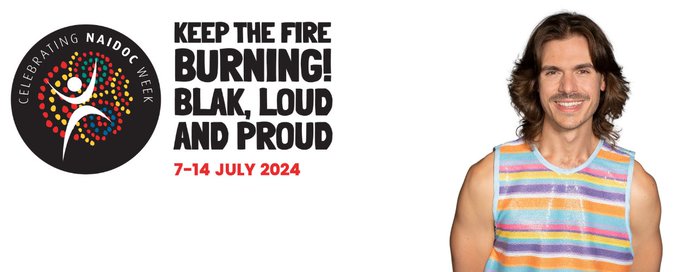
Co-presenting the Mardi Gras Parade for ABC TV during Sydney WorldPride, Jack Evans reached a new and appreciative national LGBTQIA+ audience beyond his day job hosting Behind The News. The Gamilaroi man discusses the expectations on Indigenous people in the media and lending a queer perspective on The Voice To Parliament debate. Interview by Nate Woodall.
To celebrate #NAIDOCWeek 2024 we’re posting articles from our First Nations issues. #NAIDOC
DNA: What was it like growing up gay in Newcastle?
Jack Evans: I was fortunate in that I went to a performing arts school, so there was a lot of gay representation around. It didn’t make it any easier, but at least there was some visibility within the school. Apart from that, it felt like I had to hide a lot of my identity or it felt like I couldn’t walk around and express myself the way I wanted to because there were constant fears of being attacked or being made a target, even though there were a lot of queer people about.
In high school, the bullying stopped as soon as you came out, which I found was interesting. It was like, “Let’s make fun of someone for their potential sexuality,” but then, as soon as you came out, it was, “Yeah, cool, great. Good on you.”

How did you pivot from a performing arts high school to your current career as a journalist?
I didn’t study journalism. I never even thought about journalism. I kind of just fell into it, which sounds quite obnoxious, but I did. I always wanted to be a performer, I wanted to act.
That’s what I really loved, and that’s why I went to a performing arts school. I did youth theatre around Newcastle and got into that scene, and then went to uni and studied performance [University Of Wollongong, BA, Performing Arts/Indigenous Studies). But the parallels between acting and journalism are in the storytelling, and I do a fair bit of both on Behind The News.

Did you carve that role out for yourself on Behind The News?
While I was at uni, I got a cadetship with the ABC in Archives, which was great. And while I was doing my cadetship, I sort of got to move around and do some stuff on the radio, which I felt was more within the realm of what I wanted to do. Then, a bit later down the track, I randomly got a phone call about coming over to work on BTN and they offered that I come over for three months, just to see if it works out. It’s been seven years, so I guess I did all right.
But, yeah, I went in and got my journalistic skills and training within the ABC, and then started pitching stuff that was a bit more out- there. Like what they do on BTN was already fun and over the top, and reporters were putting a lot of their own personality or their own sense of humour into it. So I sort of just took what they were doing and then injected what I do, which initially was a lot more skit-based – making characters, dressing up and wearing wigs. Typically, that might’ve been reserved for kids, for getting them to act in the stories, but I was like, ‘Well, I can do that!’ And I did.
That sort of unflappable confidence must be so integral to all aspects of performance, right? Is that something that you have mastered in front of the camera?
It definitely takes a lot of time and practice. I was very self-critical in the first few years. I still am. Like, I’d watch things back and be like, ‘Oh, I could have done that better’. For every story I love, there’s probably two that I’m like, ‘Oh God, I never want to see that story again’.
But when you’re churning out two stories every week and trying to be creative every day, you start to try anything and pick out what works and what doesn’t work. And, yeah, fortunately that helps build confidence.

Was that also the perfect preparation for presenting on the huge stage that was Worldride?
Yeah, so. I was fortunate enough to co-host the first hour of the ABC iView broadcast of Mardi Gras alongside Julie McGowan in 2022. Then they asked me back this year to do the main broadcast, on the main panel alongside Nate Byrne and Mon Schafter, which was awesome and extremely overwhelming. I remember getting a phone call from them saying they wanted me to do the broadcast… I got off the phone and cried because it was a lot to take in. It was also nice to know that I didn’t completely stuff up the year prior.
The whole week before I went over to Sydney (from Adelaide] I was feeling so much doubt, like, “Have they got the right person? What have I signed up for? What if I completely screw this up?” And then I got to Sydney and immediately all my fear went away. I had a week to bond with Nate and Mon, and they’re such lovely people and they’re such professionals and they’re so good at what they do that I was confident I could just say nothing and smile and be fine because those two would have it completely under control. It turned out to be a lot of fun.
WorldPride was so thoroughly queer but, also, seeing so many First Nations spaces and artworks at the forefront was so grounding and special. Since those celebrations, we’ve seen a lot of conversations on an international level about whether queer spaces have a right to exist and who belongs in them. Do you find this discouraging?
It’s sad and disappointing that we have to constantly come up against these hurdles and this sort of commentating on our lives. We’re just people trying to exist and be ourselves. It really lights a fire under my butt – to fight for our place and to resist being silenced. That comes from growing up and taking a long time to be comfortable within my own sexuality and my own identity and the way I present myself.
I also think about when I got the role on BTN – there’s a lot of kids watching the show and it’s better for me to be authentic to who I am as a queer person, as an Aboriginal man, to have that bit of representation and to not shy away from it all, in the hope that there are kids who are going to see that and maybe identify with themselves in that.
As we approach the Voice To Parliament referendum, are you finding similarities to the marriage equality debate?
When I was at uni I did Indigenous Studies and ended up doing a second degree because I found it so interesting. I also wanted to do it because I was so sick of being asked how Aboriginal I was. I didn’t even know what they were asking me – I’d tell Mum and she’d say, “Tel them your big toe!” But I wanted to educate myself and to be able to talk about that with people and have those sorts of conversations.
Through that journey and throughout my life, having to navigate conversations like that, it’s made me very aware that, at this point, especially when there is a referendum and this issue is up for debate by anyone, you have to protect yourself and you can’t go into every single battle. You can’t go in guns blazing, being angry at everyone. I personally can’t, anyway.
There are ways you can navigate these conversations where you are putting yourself out there to be more of a target, or to feel backlash, or to have people get angry at you because you’re confronting them about a certain topic. Wherever you stand on the Voice, ti needs to be a respectful conversation regardless. But, yeah, there are points where you don’t want to engage because it’s just too hard, definitely.
As a journalist, it can be hard to navigate that. You have to constantly report on these things. There are times where I’ve had to ask to not report on something for a week. I just need time away from it. I need to not be constantly reading things that make me upset, or have to be in that mindset more than I already am. I think it’s okay to be able to step away from that.
There is such pressure on Indigenous people in the media right now, particularly Indigenous journalists, to be a mouthpiece for our communities. But, as you said, it’s incredibly complex. There are so many diverse opinions within our own mobs. But, as Ben Graetz tells me elsewhere in this issue of DNA, our mob have been here for tens of thousands of years and endured the harshest of oppressions. So whatever side the vote lands on, we’ll endure through this as well.
Absolutely. I know this is a referendum, but we’ve been through so many stages throughout history where we’ve called for similar actions and have been denied them.
When you go back and look at the history of how we got to this point, of having a referendum, it has been so touch-and-go. This might be the first time we’re having a referendum on this question, but it’s not the first time that we’ve had these conversations and discussions. Even if we get the Voice, there’s still so many things that are going to come after that that still aren’t solved by just having a Voice. If anything, it’s there to open up conversations for other things to happen. Whether or not there is a Voice, those conversations still have to happen. We’re still gonna keep charging through and fighting.
Is the LGBTQIA+ world becoming a more welcoming place for Indigenous people? There was a time when it wasn’t.
I would like to think it is. For a lot of Queer Indigenous people it can be quite difficult navigating where and how you fit in within your two worlds, which is why it’s so important for the LGBTQIA+ community to be advocates and supporters of Queer First Nations people.
From my experiences in Kaurna Yerta (Adelaide) it is quite welcoming and there is a strong sense of backing when it comes to recognition of First Nations people. But, I would say, there is a still a lot of work to be done and I would love to see better representation in media, as well as more Queer First Nations stories being told. The Blak And Deadly Gala and Marri Madung Butbut at Sydney WorldPride were great examples of this.
On a lighter note, I’ll ask the question you ask many of your interviewees: what would your drag name be?
Well, I recently got a new one because I was transcribing some interviews for NAIDOC week with some elders and I was using an Al software and to translated someone saying, “I am Gamilaroi,” to “I am Camilla Roy”. I was, like, “Oh my God, that’s my drag name!’ So watch out Drag Race Down Under Season 24, Camilla Roy could be on it.
Finally, Rob Collins, Mark Coles Smith or Tony Armstrong?
What a tough question, especially considering they are all affiliated with the ABC, which means I’m in jeopardy of showing favourites or ending up with an HR complaint! But I’m going to go with Rob Collins. Having recently binged Queen Of Oz I would let him be my security guard any day! Then again, Mark’s smoulder and Tony’s charisma… gosh, way to make it easy, not!

Get DNA #285 ©



