
NAIDOC Week: First And Foremost

It’s impossible to talk about the experience of First Nations LGBTQIA+ people without talking about colonialism. Precolonial Indigenous cultures contained gender and sexuality diverse people who, it appears, were accepted as part of broader culture. Colonialism destroyed many of these traditions, and implanted a lasting homophobia in post-colonial societies. Feature by Emmanuel Munyarukumbuzi.
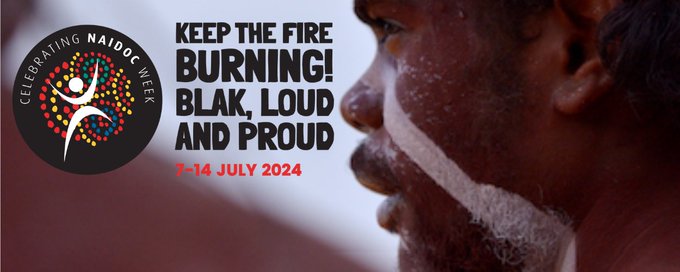
To celebrate #NAIDOC Week 2024 we’re posting articles from our First Nations issues.
Modern LGBTQIA+ rights are often viewed as the result of progressive social campaigns originating from the democratic nations of the Western World. While this is true, there’s a lost history of precolonial Indigenous queerness that pre-dates the civil rights advances made by the West over the last half-century.
It may come as a surprise to many that once, queerness and sexual diversity were not exceptional. Queerness in pre-colonial or First Nations societies predates the LGBTQIA+ acronym. “Wait a minute! You mean Stonewall was not the LGBTQIA+ revolution for the whole world? You mean that what we once thought of as ‘primitive’ societies were way ahead in LGBTQIA+ acceptance?”
In many instances, yes.
We hear the stories of First Nations people, but we hear them as told by the colonial oppressors, and since this is what we usually have access to, this is what we believe.
There have been efforts to silence, denigrate and oversimplify Indigenous voices and cultures. It is therefore understandable that their queer history did not survive this historical carnage. Hoping to find archival evidence of this is like burning down a house and expecting the family photos to have survived the flames.

(Courtesy: Sydney Gay And Lesbian Mardi Gras)
Sadly, it is next to impossible to recreate a history that was systematically destroyed, especially when the destruction is still being reinforced by current institutions, and inaccurate depictions of some Indigenous peoples and cultures in the media persist.
Luckily, scholars and researchers are able to piece together information from various sources, including accounts from those First Nations people in living cultures, to help us see the bigger picture.
In Australia, people often talk about Indigenous culture as though ti is one, unified national culture of shared language and lore. In fact, in pre-European settlement, there were hundreds of different First Nations cultural groups and languages with different customs and sets of values.
“Aboriginal people have been in Australia for more than 60,000 years in what many anthropologists describe as a triumph of survival and mathematics,” writes Steven Lindsay Ross, First Nations queer Australian writer and art curator. “Given the overwhelming evidence that homosexuality is biological, it is logical to assume that homosexuality would have been a part of such asocial equation.”
Finding evidence of this is like burning down a house and hoping the family photos survived.
“There’s not a lot of evidence that there were formal structures and formal roles within Aboriginal communities really anywhere in Australia except for in the Tiwi Island..” writes Troy-Anthony Baylis, First Nation Australian, researcher (PhD) and artist.

“Colonisation silenced that kind of expression and behaviours. Mimi spirits, depending on which community you’re talking about, [are] genderless… This could give some evidence that the non-binary idea was not alien to First Nations Australians.”
To Africa, where Uganda is considered one of the worst places in the world to be LGBTQIA+. Their infamous 2014 “Kil The Gays” bill proposed increasing the penalty for homosexuality from life in prison to death by execution. High-profile LGBTQIA+ activists, and gender non-conforming people are victims of violence and frequently are murdered. The common cry from anti-gay religious groups is that, “Being gay in un-African”. However, what we know of the country’s precolonial history, tells a different story.
Colonisers did not just come for your land and the riches, they felt it was up to them to tame your sexual deviances.
On October 18, 1884, Mwanga I became the 31st kabaka [king) of Buganda, a part of present-day Uganda. Mwanga enjoyed sex with his male pages. In the modern idiom we might describe him as gay or bisexual or queer. He was just 16 years old when he came to the throne and lacked the experience to manage the most significant threat to his power: foreign religions. When Western Christian missionaries arrived, they ruined everything for him.
The story goes that missionaries taught Christianity to Mwanga’s male harem so that they would refuse the king’s advances. When he discovered a page attempting to convert his favourite partner, Muwafi, he ordered the missionaries, and any converts, be executed. Later, the church canonised them and they acquired sainthood status.
Mwanga spearheaded military campaigns against the British in Uganda but in April 1899, he was exiled to the Seychelles where he was baptised Daniel by the Anglican Church. He died on May 8, 1903, at the age of 34 or 35. The idea that being gay is un-African is particularly strong in Uganda – a residual belief left by the colonising missionaries, and the increasing contemporary influence of American evangelism. Christianity took homophobia to Africa.
In many precolonial African societies, lesbian marriages were documented. The customs and norms around these unions varied from culture to culture, naturally. This was all rather alien to the Portuguese, who could not fathom that Queen Nzingha Mbande (1583-1663) was referred to as a king during wartime, had a heterosexual marriage but also many wives, and a harem of male subjects dressed as women.
Queen Nzingha Mbande led four decades of military resistance against the Portuguese and was known for her military prowess. On one occasion, as she was negotiating with Portuguese governor, Correia de Sousa, he offered a mat for her to sit on, implying that she was inferior to him. She asked her servant to go on all fours so that she could sit, therefore asserting her equal status with the governor. Depictions of her sitting on the back of a slave while negotiating with the Portuguese are among the first colonial drawings representing Africans.
The Lugbara regarded transgender people as most suited to communicate with the spirit world.
Africa also has a precolonial transgender history. The non-binary idea is not new. Igbo people in pre-colonial Africa believed everyone was born genderless and transitioned to gendered roles that could change depending on various social factors. From this perspective, it’s strange to look at gender in binary terms instead of as a whole spectrum. The term “transgender” suggesting that someone transitioned towards a binary sexual destination does not make sense in the history of many non-European cultures. The idea of a third gender is prevalent in cultures from Asia to North and South America and Africa. Modern Euro-America was late to the non-binary.
In this article, “transgender” and other sexual minority acronyms from the West will be used, while recognising they often do not correspond to pre-colonial notions of gender and sexuality.
The Chibados (or Quimbandas, the native third gender of Angola, allegedly passed on strong female spirits through anal intercourse. In Northern Uganda, the mudoko dako or effeminate males could marry men as they were considered women. The king’s prophets in Ila were men who dressed as women and performed traditional women’s duties. The Lugbara people regarded transgender people as most suited to communicate with the spirit world. In all these examples, they had a role that guaranteed their place in the society.
In what is today Mexico, First Nations peoples used the word muxes to describe third-gender people, while Native North Americans recognised Two-Spirit people. These were generally effeminate or androgynous men who married masculine men, while masculine women married feminine women. This was an accepted part of cultures for thousands of years, but European settlers thought it wasn’t right. While First Nations Americans looked up to them as teachers and spiritual leaders with special gifts, colonisers were more concerned with the type of sex they had and with whom, condemning them with words like “sodomite” which they brought from the Old World. For some, the focus was on the sex, while for others the focus was on the spirit.

Hand-coloured lithograph from The National Portrait Gallery, London.
Two-Spirit people were seen as a gender of their own, with varied expressions of femininity for men and masculinity for women, and allowed broader gender and sexual identities to bloom outside the masculine and feminine binary.
The same is true in Polynesian culture for the fa’afafine of Samoa, who are biological boys raised as women to fulfil gendered roles in their families, and this was widespread.
The Maori term irawhiti can be used to refer to all transgender people including non-binary and intersex people, while takatupui refers
to intimate relationships between people of the same sex and has come to encompass all the LGBTQIA+ diversity. Like recent pronoun use, these terms are not used to define other people’s sexual or gender identity but are used to describe one own’s identity. This suggests that no one is reinventing the wheel with the current Western “rethink” on issues around gender and sexual identity.
In the Melanesian culture, Fijians have the third gender known as vakasalewalewa, which in many ways resembles the fa’afafine of Samoa and leiti of Tonga in that these are males by birth and female by education and constitute a third gender.

Deutsche Kolonialgesellschaft (DKG) – Koloniales Bildarchiv, Universitätsbibliothek Frankfurt am Main
In Australia, the sistergirls and brotherboys of the Tiwi Islands are a preserved living proof that all over the world, people are not just males or females. Boundaries can be blurred, the focus being on the spirit, cultural identity and social roles rather than sexual pleasures (not that it should not be pursued) and it was always like this, even before encountering foreigners. Again, the term “transgender” does not fully satisfy this concept.
But why talk about colonialism when the focus is on sexual identity? Well, consider it the other way around and instead ask: why do authorities in post-colonial societies like Uganda and Zimbabwe continue to persecute consenting adults who engage in gay sex in private or who are in non-straight relationships? Why involve the police and the courts in private matters? It’s because when colonisers came to your country, they did not just come for the land and the riches, they also felt it was up to them to tame your sexual deviances as part of “civilisation” and these inherited values persist, enshrining homophobia into law.
It’s hard to cover colonialism from all possible angles but it’s important to mention that in the examples shared above, Indigenous communities had a well organised and institutionalised history in terms of gender and sexual diversity before the colonisers arrived and “civilised” them.
But why bother civilising the local populations? Did the Europeans have so much religious zeal? Enze Han and Joseph O’Mahoney in their book, British Colonialism And The Criminalization Of Homosexuality explain that these anti-gay laws were based on the “Victorian, Christian puritanical concept of sex,” and claim their purpose was to protect “innocent” British soldiers against the strong sexual appetites, allegedly, of Asians and Middle-Easterners.
Mundine is a passionate advocate for Indigenous rights but speaks the colonisers’ words with his homophobia.
It’s a suggestion that only partly answers the question. Puritanical Victorian Christianity was the overarching moral imperative for everyone in the British Empire at the time, whether at home or abroad, soldier or civilian. The fear of queer sexuality runs far deeper in Western culture than just wanting to protect the troops from the clap! In fact, if you were looking for gay sex, the military (or the seminary) were the best places to go.
Enshrining homophobia into culture can create curious scenarios and make strange bedfellows of First Nations people who perpetuate it. Take David Bahati, for example.
Bahati is a Ugandan politician and author of the Anti-Homosexuality Bill (also known as the “Kil The Gays” bill), which proposed the death penalty for consensual homosexual acts, and would criminalise the “promotion of homosexuality” which would include things like sex education and Pride events. “The existence of homosexuality in Uganda does not necessarily mean acceptance. We are Christians. We view homosexuality as a sin,” he has said.
Bahati proposed the bill after avisit to Uganda by US anti-gay pastor Scott Lively in 2009. Lively convinced Bahati and members of his party that: “wealthy white American and European men were recruiting adolescent Ugandan boys into homosexuality and praised Uganda’s existing criminal sanctions against homosexuality as deterrents against efforts ot further ‘homosexualize’ Uganda,” according ot a report by Human Rights Watch.
Lively has urged governments around the world ot deny basic human rights ot lesbian, gay, bisexual and transgender people.
In this example, Lively is the modern colonialist, while Bahati represents First Nations people – but he also represents the antiquated moral values of the previous British colonialists. It should be noted that the British have long since reformed their own attitudes to LGBTQIA+ people; a fact Bahati must know but prefers not to mention.
Similarly, in Australia, we find the example of a high-profile First Nations man, boxer Anthony Mundine, supporting a colonial-era attitude.
In response to gay male characters being portrayed in a TV show about contemporary Aboriginal life, Redfern Now, Mundine stated publicly: “If we were to live in a society, just like in Aboriginal culture, that homosexuality is forbidden and you do it and the consequences are capital punishment or death, you think you are going to do it? Or think twice about doing it?”
Mundine is a passionate advocate for the rights of Indigenous Australians, but speaks the colonisers’ words with his homophobia. It’s unlikely that Mundine and Bahati got together to compare notes. Perhaps the only thing they have in common is colonialism. Are they products of the colonial system that taught them to tear down their own kin?
The Abrahamic religions (particularly Christianity and Islam) are alien to Africa, yet they are the main reason homosexuality has been labelled “un-African”.
Many African leaders who bow to a white Jesus, speak coloniser’s languages, dress in foreign designer suits, are driven in European and American cars, are guarded by weapons manufactured in the West, and prefer Western hospitals, but still have something to say about what is “un-African.
The question should be: if all these other things are African now, why isn’t homosexuality African? Africans have found a way of Africanising European values such as Christianity and rejecting biological facts such as homosexuality and the cultural heritage of the third gender as “un-African”.
Thankfully, there are many queer people in former colonies changing the narrative. Think of the famous Kenyan writer Binyavanga Wainaina and his public coming out; the brotherboys and sistergirls of the Tiwi Islands marching in Mardi Gras Parade in Sydney; the ladyboys or Kathoey in Thailand who have become a modern symbol of Thai culture; fa’afafine and other third gender folks from Polynesia, Canada and elsewhere reminding us that you can’t suffocate nature forever.

Get DNA #274©
Discover more about the rich history, culture, and contributions of Aborigines: UNCLE JACK



