Love, Truth, Honesty

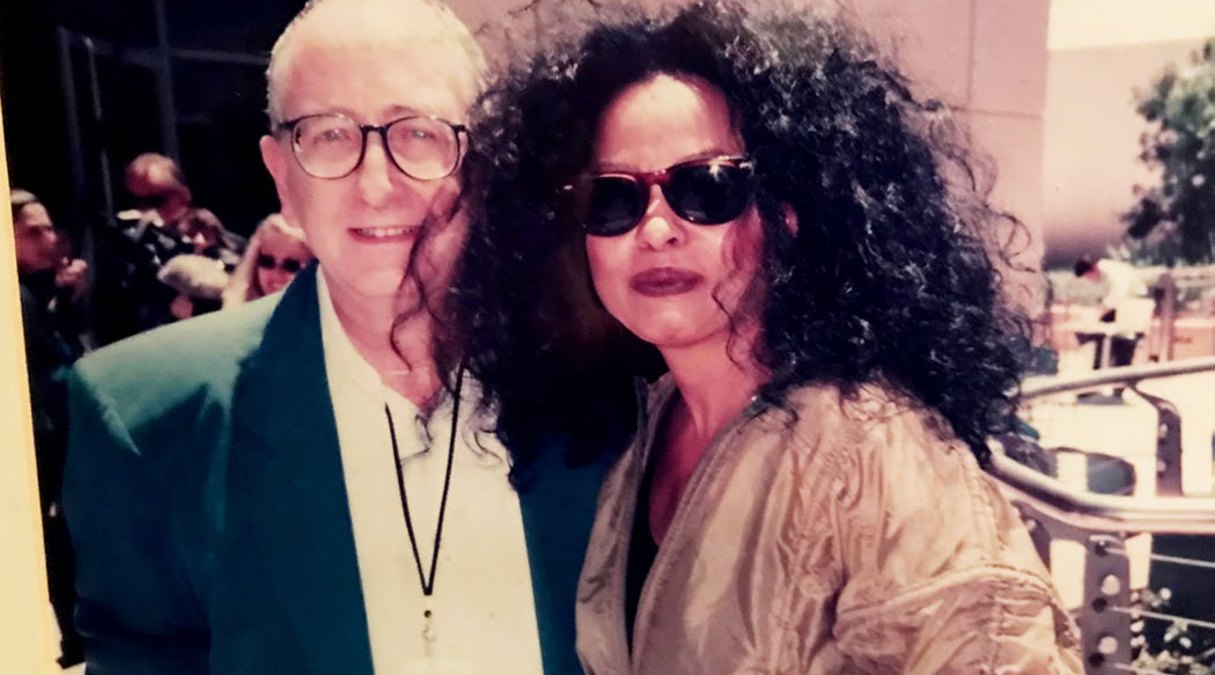
He worked with Barbra Streisand, charmed Diana Ross, butted heads with Liza Minnelli, and spent decades building the LGBTQIA+ community in Sydney. Now, at 78, retired publicist Bruce Pollack is telling some of the stories he has kept to himself.
The flat in Woolloomooloo is full of memories. It’s tasteful but certainly not minimalist, bursting at the seams with objets d’art, photographs and awards. Framed posters lean against walls waiting to be hung. A spoodle named B1 noses about for affection. On a side table is a stack of typed pages; the unfinished memoir of Bruce Pollack’s late Russian father, who escaped a revolution and barely spoke of it again.
In the kitchen, Pollack himself, a slight man in his late seventies, is fussing over a quiche, mustard pots and crystal glasses, dressing the table the way his mother taught him to.
He pours two glasses of white wine, hands one across, raises his own and offers a toast. “She taught me about everything fine in life,” he says of his dearly departed mother. “Art and culture and theatre and how to wash crystal and how to polish silver.”
She died of liver cancer when he was 14. “As far as I was concerned, the one person who loved me, not saying my father didn’t, and I cherished him, had died.
“She taught me the greatest lesson I have ever learned: to be honest with yourself. You can’t be honest with others until you’re honest with yourself. And that’s how I’ve got by in this world.”
I wonder why you’re interviewing me. I have no idea why anyone has any interest in me.
To say Pollack has “got by” is an understatement. For four decades, he was the publicist who helped deliver the world’s biggest stars to Australia. Streisand. Diana Ross. Bette Midler. Liza. Elton. He spent 19 years as the publicist for the Sydney Gay And Lesbian Mardi Gras and helped guarantee, with his own money, that the Gay Games came to Sydney in 2002. The Crown awarded him a Member Of The Order Of Australia; so he is now Bruce Pollack AM.
But the boy who became all of that began as something else entirely: an asthmatic, vegetarian Jewish child in the affluent Melbourne suburb of Malvern who could not, for the life of him, fit in.
The Pollack house had a tennis court and a swimming pool. No lesser neighbour than Robert Menzies (Australian Prime Minister from 1939 to 1941 and 1949 to 1966) lived up the road; the young Bruce played in his backyard. Prince Philip dropped in for the 1956 Olympics. Harold Holt (another Australian PM) was a family friend, and it was Pollack senior, Liberal Party bigwig, former City Of Malvern mayor and founder of the sport of fencing in Australia, who pushed for Melbourne’s Harold Holt Swimming Centre to be named after the prime minister who vanished into the sea.
“Everyone still jokes about it today,” Pollack says. “I drove past it the other day and had a little chuckle.”
But inside the silver-spoon house, things were less golden. There was an autistic older brother upon whom the household revolved. There was a father who wanted sportsmen for sons, “and got fat, bespectacled Bruce”, who hated sport and once ran down a Malvern street trailing yards of black satin behind him like a child possessed.
School at Scotch College, Hawthorn, where classmates included former Victorian premier Jeff Kennett, was 13 years of misery. Tellingly, Pollack says: “I do not have one friend from my 13 years of schooling, not one.”
Among the things that marked him out was a decision he made at the age of five, against his family’s wishes, to be a vegetarian, citing the example of Olympic swimmer Murray Rose. On one particularly bad day, he opened his desk to find his books soaked in blood from animal parts the boys had stuffed inside as a taunt.
What he did have was music and theatre and a beautiful treble voice. And a feeling, even then, that the theatrical world would somehow be his life.
Pollack worked his way through theatre in his twenties. In the mid-1970s, he went to England, where he worked for a not-yet-knighted Cameron Mackintosh on productions including Oklahoma, My Fair Lady and Rocky Horror. Mackintosh tried to keep him, offering the position of deputy general manager.
Pollack came home instead, to take the general manager job at the Nimrod Theatre in Sydney in 1979.
He spent three years as general manager and hated every minute of it. He asked, on arrival, to see the year’s budget. He was told there was no budget; the company opened a new bank account for each show and tallied the balances at the end. He brought in an accountant. He tried to introduce commercial discipline. He produced Death Of A Salesman with Mel Gibson and Warren Mitchell, which for many years was the most financially successful play ever staged at the Seymour Centre. Still the company wanted him gone.
“It was awful,” he says now. “The worst three years of my working life.” If he could excise that part of his brain, he says, he would.
And then a phone call changed everything. In mid-1983, Carrillo Gantner, a member of the retailing Myer family who ran Melbourne’s Playbox Theatre, rang Pollack out of the blue. The Playbox was bringing a production to Sydney and needed a publicist.
“You have never been a publicist in your life,” Pollack remembers Gantner saying, “but you’ve run big theatre companies with publicity departments. You must know something about being a publicist. You’re going to be our publicist.”
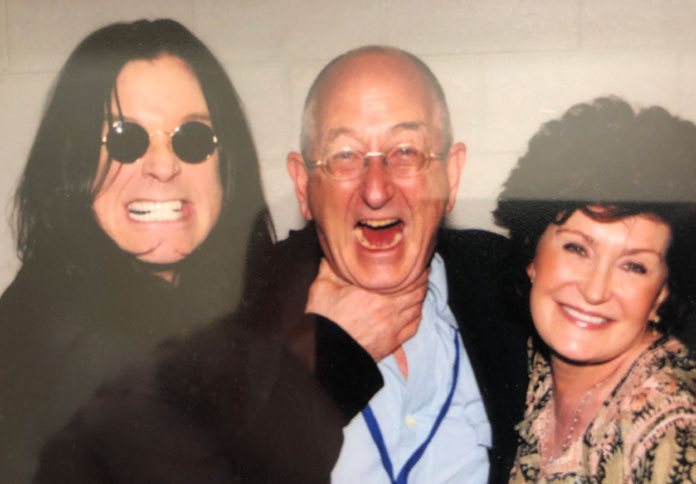
That call launched Bruce Pollack’s career in publicity. Stage productions at first. Then music tours. Then the international superstars whose Australian visits would come to define his name. By the time Barbra Streisand’s people came calling in 2000, Pollack had long been the publicist Australia reached for when the world’s biggest performers touched down.
The Streisand tour of 2000 is a thing of legend in Australian entertainment circles, and Pollack tells it with the weary precision of a man who lived through every minute of it.
Barbra demanded, and got, a forensic level of control. Her makeup station was set up a full week before her arrival. “There were the pencils fanned exquisitely in colours, and the pots of makeup,” Pollack remembers.
The hardest job came backstage. “We got a note: Ms Streisand will see eight people backstage after each show. Will you please put forward 100 names with a short paragraph of people who you suggest may be one of those eight?”
There was no brief. No criteria. The list went forward, came back edited, went forward, came back edited again. On the opening night at the Sydney Football Stadium, Prime Minister John Howard and his wife Jeanette attended, as did former Prime Minister Paul Keating. A meeting between the leaders and Streisand was choreographed in advance.
Pollack recalls the exchange: “Ms Streisand, may I introduce Mr Howard?” A wan smile of assent. “Good evening,” said Howard. “Good evening,” the diva replied, then a perfunctory nod – a cue to move on. “Ms Streisand, may I introduce Mr Keating?” A pause, before Streisand’s face lit up. “Mr Keating, I’ve heard so much about you!” “She knew the people she had to see,” Pollack says drily. “But she also knew who she wanted to see.”
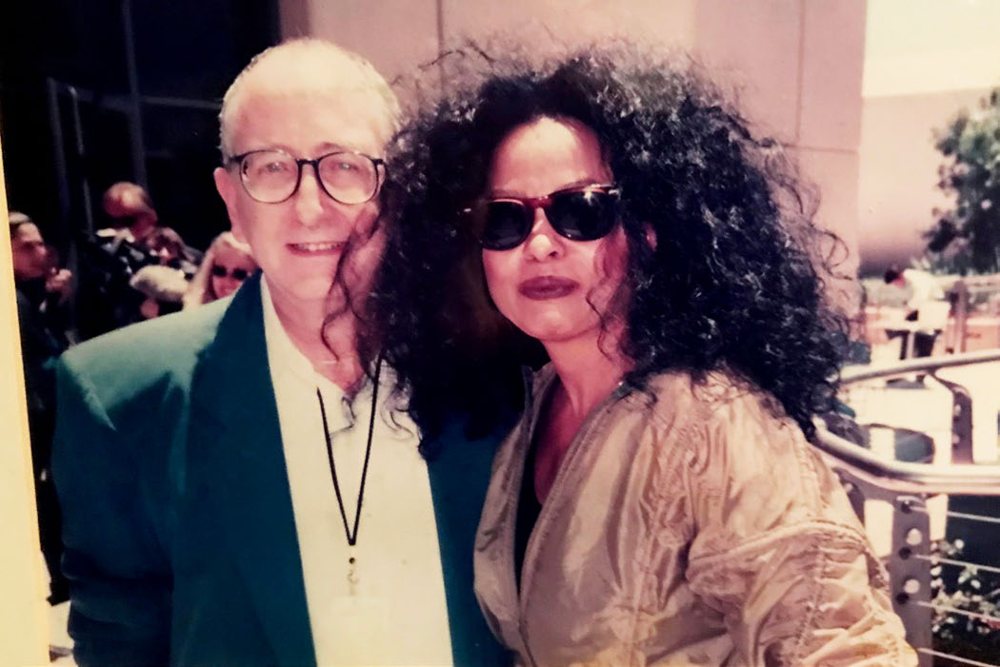
Another diva, Diana Ross, turned out to be a surprise. Pollack worked with her on the Star City casino opening, which saw Ross perform live for thousands gathered on the Sydney Harbour foreshore, with hundreds of thousands watching on television.
“The reputation of Diana Ross before she came here was that she’s miserable, you don’t look at her, you don’t maintain eye contact, you don’t speak first,” Pollack recalls.
He collected her in the limousine for her first interview and was halfway through closing the rear door when she stopped him. “Get in, Bruce, come and sit next to me.”
“She was just a dream,” he says. “Total and utter dream, really wanting to talk and learn about people.”
That Diana Ross concert was, in fact, only one of three Pollack jobs running simultaneously. At the same hour she was on stage, Michael Crawford was performing his solo show in the Lyric Theatre and Tom Jones was playing the Star City showroom. Pollack was the publicist for all three: three of the world’s biggest performers, in Sydney, on stage at the same time, on the same night.
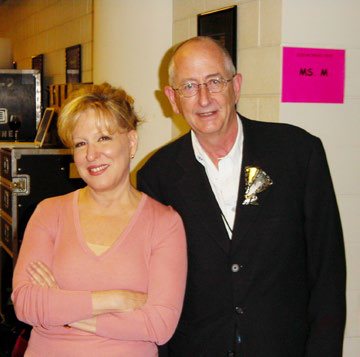
Bette Midler was, in Pollack’s telling, perhaps the most professionally generous performer he ever worked with. The photographers camped around the clock outside her hotel on Hyde Park. The first morning she came down for a walk, Midler stopped and addressed them directly: “I’m an old woman. I respect you and your job. I want to go for a walk. I’ll then come back inside, get ready for photographs, and I’ll give you whatever you want. But would you please accept me for who I am now?” They did.
Liza Minnelli was another matter altogether. “Liza was an incredibly difficult person,” Pollack recalls. “Overbearing and unpleasant. She went through managers instead of speaking with you directly.”
The interview suite at her hotel had to be set up just so, and the complaints came thick and fast. “She was very short with people,” he says. “By that stage of her career, more often than not, she had to be moved around by wheelchair, as it was too difficult to walk.” And yet, like so many of them, she lived for the lights. “They could be virtually on their deathbeds in the dressing room,” Pollack says, “but put them in front of a screaming audience, and it’s a different person. They live for that acclaim.”
Kylie is a joyous, happy, grateful, generous person.
Of Kylie, who he worked with through fundraising for HIV/AIDS charities, he is unequivocal. “Just a really joyous, happy, grateful, generous person. And it’s not fake, her love of, support of and involvement in the gay community.”
Of Elton, simply: “Adorable.”
But he didn’t let working with the world’s superstars go to his head. What he learned early, and clung to, was this: “We’re all the same. We all go to the toilet. And that’s how you have to treat the people.”
Pride And Publicity
It is the 10th of December, 1982. Bruce Pollack walks out of the Nimrod Theatre for the last time, into a Sydney evening and the rest of his life. His wife, Kay, is waiting in the car at the stage door. They had married because they wanted a child. He was from a Jewish family, she was a Catholic.
It is their tenth wedding anniversary. They sit. They look at each other. “Our lives really have changed, haven’t they?” she says. “I think we should separate. I think you want to pursue a different sexual direction.”
Three months later, they would host a dinner party for their closest friends and announce the news together. More than four decades on, they remain close. Their son Julien was protected from the whole thing (“I did not want him to be in a precarious position”), though he “always knew” and once shared a bedroom during a renovation with Pollack and his then-boyfriend Trevor “without it ever being a thing”.
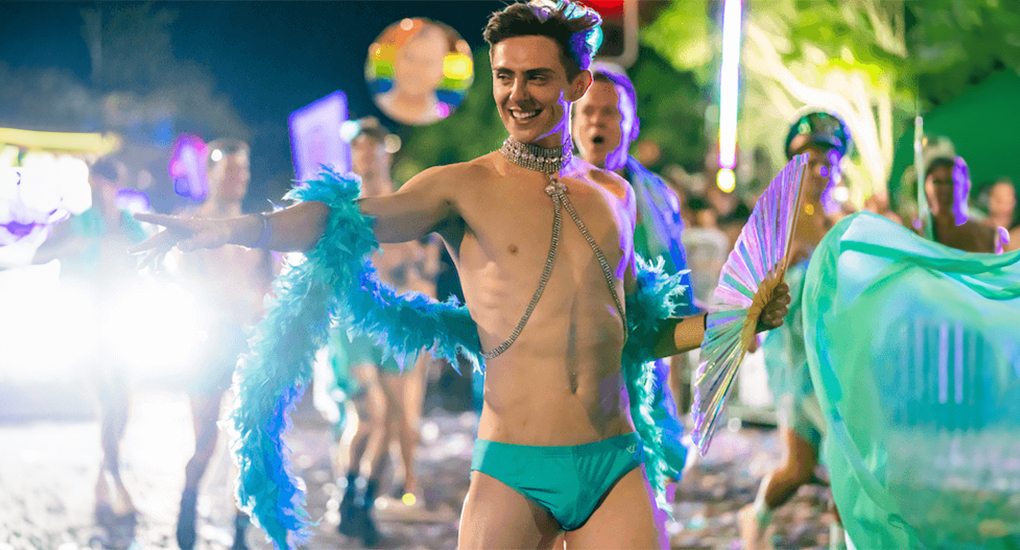
Pollack threw himself at the gay community with the devotion of a man making up for lost time. He joined the Gay and Married Men’s Association (GAMMA). He trained as a telephone counsellor at the Gay and Lesbian Counselling Service and stayed for nine years. He went to Mardi Gras Fair Day organising meetings. He went to the Albury Hotel after one GAMMA meeting and was charmed by the barman who somehow already knew his name, until he realised he was still wearing his GAMMA name tag. And he met Damien Furlong, then president of Mardi Gras, who cheerfully ambushed him at his very first board meeting by announcing to the room that Pollack was a publicist and would now tell them what he could do for the parade.
He told them plenty. But what he remembers most from that first year working for Mardi Gras was something committee member Peter Tully said to him. “He snapped at me one day: ‘All publicity is going to do is make the crowds bigger. We don’t care whether one person watches Mardi Gras or hundreds of thousands. That is not the reason for Mardi Gras. The reason for Mardi Gras is that gays and lesbians take over the streets of Sydney for one night. It is a political demonstration.’ I entrenched that in people over my whole 19 years of being Mardi Gras publicist,” Pollack says.
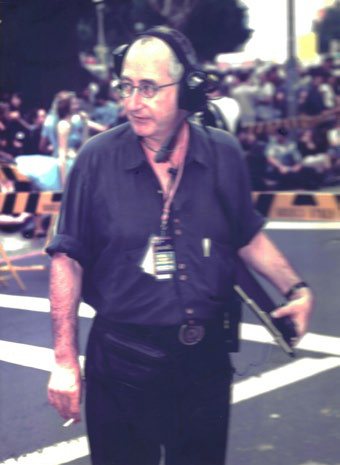
By the late 1990s, he had 34 film and TV crews on the parade route, 18 of them international. He insisted on attending every joint services meeting with police, fire crews and paramedics. Among the things he learned at those meetings: the most common medical problem on parade night was not drug overdoses or violence but damaged ankles sustained, Pollack says, by “silly queens” who had decided to walk the parade in high heels they had never worn before.
He cultivated the senior police officer who would command the night, and worked out a quiet ritual: when the parade had passed Taylor Square, the policeman would meet Pollack in a foyer on Oxford Street, the media would be ushered in, and the crowd figure – 400,000, half a million, whatever it was that year – would come from the officer’s mouth, never from Mardi Gras. “I always insisted on that.”
The counselling work was harder and quieter, and stayed with him. One call he never forgot was from a young man on a remote farm. The caller had been having sex with a man he could only see on monthly trips into town. He had just been diagnosed HIV-positive, revealing: “I have no one to talk to at all about my sexuality, sex or my HIV. I have nobody. My doctor doesn’t want to talk to me. I’m talking to you.” “He was so alone,” Pollack says quietly. “It was the most distressing…” He doesn’t finish.
When Sydney was awarded the 2002 Gay Games, it was Pollack who put out the press release announcing it. He didn’t take the publicist’s job (“I always said it was too big for me and my little company”) but he was one of several people who personally guaranteed the Games financially.
Respect is a favourite in the repertoire of Pollack’s beloved Diana Ross, and it’s a word that pops up again and again when figures associated with arts and entertainment or the gay community speak about him.
Michael Woodhouse, the CEO of ACON, the Sydney-based organisation specialising in LGBTQIA+ health, HIV prevention and community inclusion, first encountered Pollack when he moved to Sydney in 1997. “Even then, Bruce Pollack was a legendary and much-loved figure in the Sydney gay and lesbian community,” Woodhouse says. “He had already played important roles in every major community organisation and managed to be someone everyone trusted and respected.”
ACON gave Pollack its Honour Award in 2008, in recognition of what Woodhouse calls his “extraordinary contribution”, including fundraising for ACON and the Bobby Goldsmith Foundation, helping establish the Aurora Group and his work for the Sydney Gay And Lesbian Mardi Gras.
Kathy Pavlich, co-chair of Mardi Gras, has known Pollack since 1989, when she joined the organisation as parade director. “You could always find Bruce looking after the press before the parade and then working with police management afterwards,” she says. He is, she adds, a living memory bank for the organisation: “If I or other board members need to understand more about Mardi Gras history, we always reach out to Bruce first.”
Sam Turner, chair of Rainbow Giving Australia, speaks of Pollack as one of Aurora’s founding trustees. “What began as a small dinner amongst a group of friends, united by a shared passion for giving back, has grown into something truly extraordinary,” Turner says. Among Aurora’s earliest acts of support, Turner notes, was funding for LGBTQ+ youth support group Twenty10 and the then Gay And Lesbian Counselling Service, where Pollack spent nine years as a volunteer telephone counsellor. “He is,” Turner says, “in the truest sense, a community elder.”
He’s the consummate publicist, strategic, intuitive and exceptionally skilled… and one of my dearest friends. – Amanda Buckworth
For publicist Amanda Buckworth of AB Publicity, who worked alongside Pollack from 2005 until he retired in 2023, the assessment is more personal. When Pollack was unable to take on publicity for the national tour of the Sesame Street musical, he recommended Buckworth instead, a referral that, she says, “effectively launched my career as a freelance publicist. It’s something I will always be deeply grateful to him for.” Professionally, she calls him “the consummate publicist – strategic, intuitive and exceptionally skilled at shaping a story.” Personally, she calls him “one of my dearest friends.”
The man himself finds the praise faintly bewildering. “I wonder why you’re interviewing me,” he tells me at one point. “I have no idea why you or anyone has an interest in me. I lead my life the way I was brought up: to be good and charitable. And it gives me great satisfaction to do that. It’s not like giving myself a gold medal. It’s just to be able to do it.”
We met Barbra Streisand earlier in this story. The Mirror Has Two Faces (1996) was Streisand’s last film as a director, and she also starred in it. The title itself is from a French film of the same name, and it’s about a person learning to see themselves honestly.
Bruce Pollack, who once tiptoed around Streisand’s makeup pencils, would no doubt enjoy the symmetry. Because if there is a single thread that runs through his life – through the silver-spoon childhood and the schoolyard cruelty, through the marriage that became a friendship, the divas and parades – it is his mother’s truism: that you cannot be honest with others until you are honest with yourself.
The Pollack who emerges from all this is harder to grasp than the catalogue of his career suggests. He is a self-professed fence-sitter who refused to share his political opinions even with his closest staff. (“As a publicist, I am not paid to give an opinion. I’m being paid for somebody else to have an opinion.”) He’s a man who has spent decades working with police while quietly distrusting authority.
There is one political position, however, that he will state plainly. “I am totally and utterly not a Zionist.” It is simply not him, he says; a position harking back to a hippie-era refusal to support violent activities of any kind.
He is a Jew who has twice been made to feel deeply unwelcome in his own faith – once for marrying out of the faith, and once when a rabbi singled him and a male partner out in the front pew of Sydney’s Great Synagogue. Yet, he remains, in his bones, devout.
He has reasons for that. He remembers the gentle Reverend Ephraim Kowadlo, the cantor at the St Kilda synagogue (known to his congregation as “the sweet singer”) who had once tried to train Pollack as a cantor himself, before his treble voice broke. After Pollack returned from England with Kay, he was at synagogue for a family call-up when Kowadlo took him aside to ask about his life. Was there a woman in it? Yes. Was she Jewish? No. Kowadlo’s response was: “That doesn’t matter. God will love you anyway.” Pollack has carried those words his whole life.
“I am a Jew and I am a Jew totally,” he tells DNA. “There are certain ethics which I live by. I will be buried, not cremated, and my parents are buried in the Jewish part of Rookwood Cemetery.”
When his estranged brother Norman was struck by a car in Melbourne in August 2024, Pollack flew south. While Norman lay in hospital, he sorted out his brother’s affairs and discovered Norman had disinherited him, a cruelty that almost sent him home for good. But a Jewish vow kept Pollack coming back: “I swore that Norman would have a Jewish burial.”
He travelled back and forth from Sydney for the next two weeks until his brother died. At the hospital, he had also met Billy: a man, he learned, who had been his brother’s partner for 25 years and was now at the bedside, unable to cope. A quarter-century of inner life he had never known about.
Pollack is a man who has carried, and learned to manage, his share of survivor’s guilt. In the 1980s, when an HIV-positive support group politely asked him to leave their meeting because he wasn’t positive himself, the rejection cut deep. “In the early days, my arse was in the air as much as anybody else’s. Why I wasn’t infected, I don’t know. That was difficult for me for a long time.”
There is a much-loved son, Julien, who lives overseas and visits often. There is the spoodle, B1, originally meant to be half of a pair. B2 was to be a cat until Pollack and his then-partner separated. The spoodle remained with Pollack. There are the friends, many of them dead now, from AIDS or the various diseases that afflict people who live long enough. And there is the Order of Australia, still slightly mystifying to its recipient.
What does he want from the years ahead? “To be in the state of happiness I’m in,” he says, and his eyes brim a little, which surprises him. His voice breaks as he continues. “To be able to extend my services in charitable ways with the community and with others. To be able to share the joy of life with family and friends.” He pauses. “And to still get up every morning and look in the mirror and say I’m a good and honest person, which I do.”
Through the schoolyard, the loss, the marriage that became a friendship, the Mardi Gras parades, the dealings with superstars, his mother’s words have carried him through. “The greatest thing you can do is be honest with yourself,” he repeats. “You can’t be honest with others until you’re honest with yourself. And I am. That’s one of the reasons I’m still here, sitting before you.” •
Peter Hackney is a freelance journalist based in Sydney, Australia. Bluesky: @peterhackney.bsky.social
Images supplied.
________________________________________________________________________
DNA #317 ©