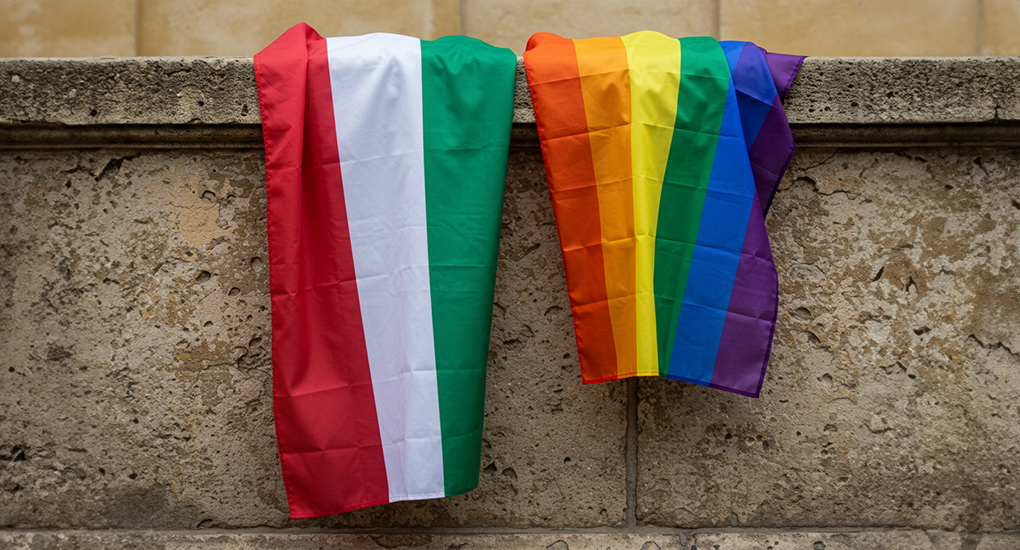
LGBTQIA+ Rights In Hungary Could Be Reshaped By The Upcoming Election

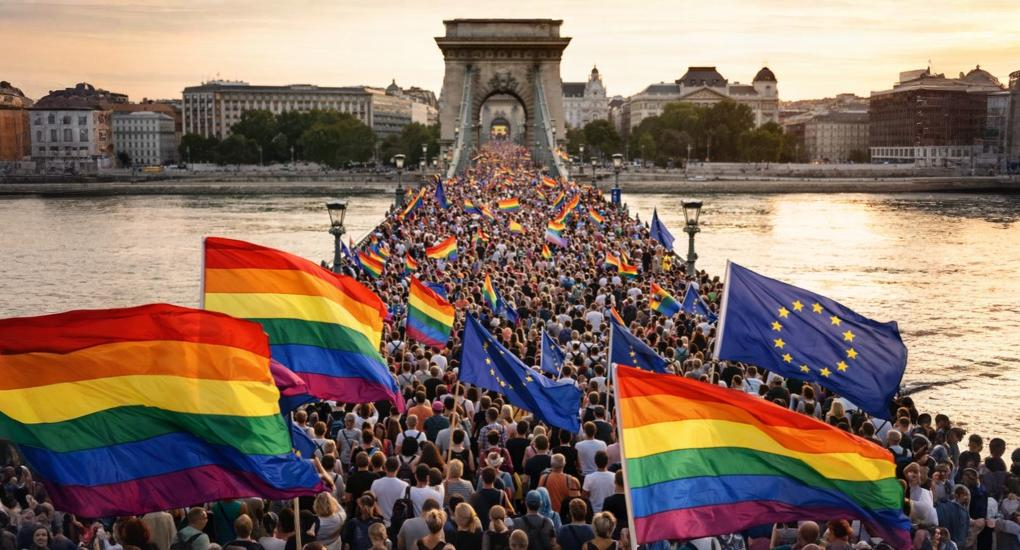
Hungary goes to the polls on 12 April 2026. For the country’s LGBTQIA+ community, the outcome could shift everything.
Orbán’s long record of targeting LGBTQIA+ Hungarians
Prime Minister Viktor Orbán’s Fidesz party has been in power since 2010. In that time, his government has systematically rolled back LGBTQIA+ protections. Same-sex marriage remains banned. Households headed by same-sex couples are not eligible for all of the same legal rights available to heterosexual married couples.
In 2020, parliament voted to make it impossible for individuals to change their legal gender. A year later came the so-called “child protection” law, which banned exposing minors to LGBTQIA+ content in education, media and advertising. Then, in March 2025, Hungary passed a law banning LGBTQIA+ public events, including the popular Budapest Pride. The law also allows authorities to use facial recognition tools to identify individuals who attend a prohibited event, with fines of up to 200,000 Hungarian forints (roughly $586). Organisers face up to one year in prison.
Budapest Pride happened anyway
In June 2025, tens of thousands took to the streets of Budapest for Pride, defying the government ban. Organisers said more than 100,000 people marched. Around 70 members of the European Parliament joined the march, along with European Commissioner Hadja Lahbib. No major incidents were reported.
It was a significant moment. According to an IPSOS 2023 survey, support for same-sex marriage in Hungary has risen from 30 to 47 per cent over the past decade, and support for adoption by same-sex couples rose from 42 to 59 per cent. Public opinion, it seems, has been moving in the opposite direction to government policy.
Record-breaking crowd gathers for Budapest Pride after Hungarian Prime Minister, Viktor Orbán, attempted to ban it and threatened legal repercussions. pic.twitter.com/oRxuASRxgb
— Pop Base (@PopBase) June 28, 2025
Who is Peter Magyar?
Magyar is a former Fidesz insider who broke with Orbán in early 2024. He now leads the Tisza Party (short for Tisztelet és Szabadság, meaning Respect and Freedom). According to a Median poll, Tisza leads Fidesz 55% to 35% among voters who say they’re certain to vote on 12 April.
His platform focuses on corruption, the economy, and unlocking billions in frozen European Union funds. But on LGBTQIA+ rights specifically, he has been careful. Magyar has consistently avoided getting drawn into identity-politics issues, in order to win the support of both liberal and conservative voters. He was not in Budapest for the 2025 Pride march. He condemned “the restriction of the freedom of assembly” in general, without specifically mentioning Pride.
No foreign leader has the right to threaten a Hungarian citizen. pic.twitter.com/6CqOXOoID3
— Magyar Péter (Ne féljetek) (@magyarpeterMP) March 5, 2026
What would a Tisza government mean?
There are no direct promises on LGBTQIA+ equality in the Tisza manifesto. As analyst Gabor Gyori notes, “LGBTQ+ issues are an obvious area which the manifesto avoids.” However, a commitment to allowing unmarried people to adopt children does implicitly open the way to restoring adoption by same-sex couples. Gyori sees this as a possible “coded signal of good-will towards sexual minorities” while denying Fidesz the chance to shift the election onto culture-war ground.
It is a calculated silence, and one that comes with real stakes.
Why this election matters beyond Hungary
Ádám Remport, a lawyer with the Hungarian Civil Liberties Union (HCLU), has warned about the broader impact of the Pride ban and facial recognition provisions. He said that the “chilling effect” on freedom of assembly arises “when people are scared to go out and show their political or ideological beliefs for fear of being persecuted.”
That concern extends well past one country’s borders. The tactics used here, including fast-tracked laws, surveillance provisions and framing LGBTQIA+ rights as threats to children, have been replicated elsewhere.
Whether a change in government would reverse the damage is still an open question.