
Indonesia Court Orders Public Caning Of Two Students After Park Kiss

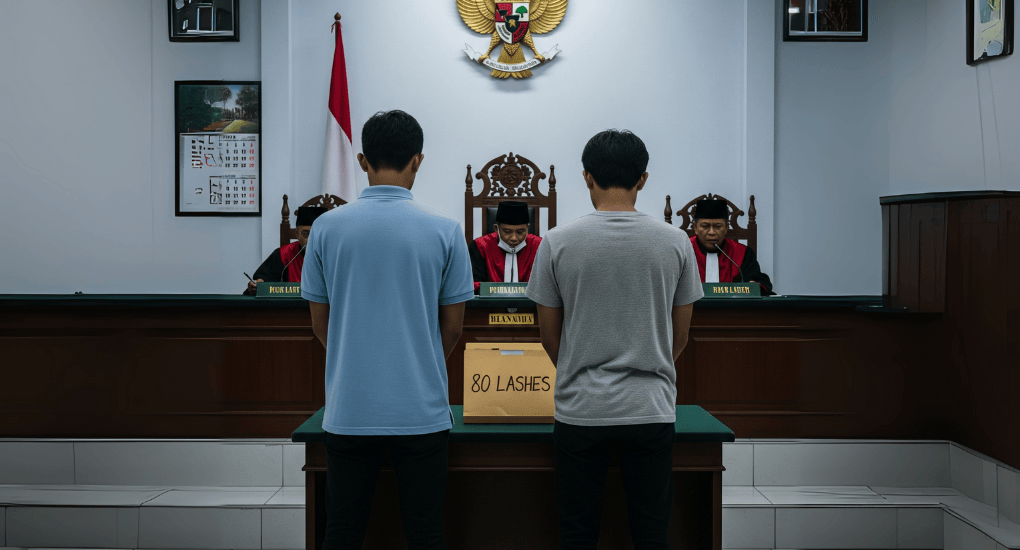
An Islamic court in Banda Aceh, a province of Indonesia, has sentenced two college students, aged 20 and 21, to 80 lashes of public caning after religious police said they were caught kissing and hugging in a public park toilet. The trial was closed to the public, and the time already spent in detention will reduce the total strokes by four. Prosecutors asked for 85, but judges cut the number after noting the men’s cooperation and clean records.

Residents reported the pair to patrolling religious police, who forced entry into the cubicle at Taman Sari city park. The court ruled that kissing and hugging were acts leading to same-sex relations under Aceh’s Sharia-based criminal code, which is enough to trigger caning.
Why Aceh can cane people.
Aceh is the only province in Indonesia allowed to enforce its own Sharia-inspired criminal code, a power granted as part of a post-conflict autonomy deal. The bylaw known as Qanun Jinayat took effect in October 2015 and prescribes up to 100 lashes for “morality” offences, including consensual same-sex intimacy. National Indonesian law does not criminalise homosexuality, which is why this provincial code is so significant.
Has this happened before?
Yes. Public canings linked to same-sex intimacy in Aceh were documented in 2017, when two men were flogged in front of a crowd in Banda Aceh, and again in 2021, when two men received 77 lashes after a vigilante raid. Earlier this year, a court again ordered caning for two students after neighbours broke into their rented room, with sentences of up to 85 lashes.
At DNA, we have tracked repeated enforcement actions against gatherings and suspected same-sex conduct in Indonesia, including large-scale raids in recent months. Our earlier reports on public caning and mass arrests provide further background on how policing targets perceived LGBTQIA+ spaces and behaviour.
Rights groups say caning amounts to cruel, inhuman and degrading treatment and urge authorities to repeal the bylaw. That position has been consistent since Aceh expanded its code a decade ago.
Why does a provincial bylaw carry punishments that clash with international human rights standards and differ from national law on private, consensual intimacy? That tension sits at the heart of every case and is why each verdict in Aceh draws international scrutiny.
What’s next.
Officials have not announced the caning date. The prosecutor indicated dissatisfaction with the lighter sentence but will not appeal, according to local reports carried by international wires. We will continue to monitor the case and update readers as authorities confirm the schedule.
