
First Openly Gay Imam Muhsin Hendricks Killed In Tragic South Africa Ambush

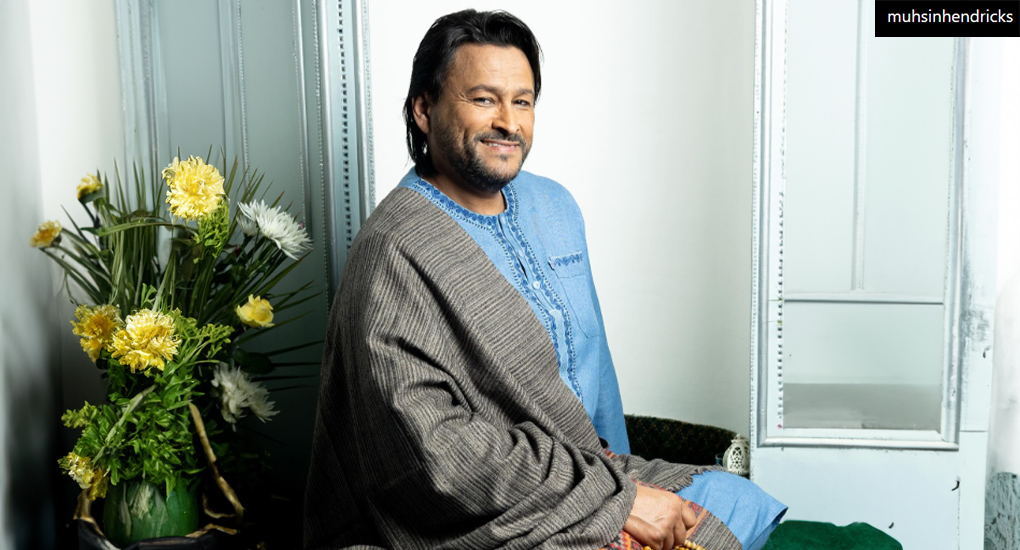
Muhsin Hendricks, a groundbreaking figure known as the world’s first openly gay imam, has been killed in a targeted attack in South Africa. The 57-year-old cleric, who devoted his life to building an inclusive space for marginalised Muslims, was ambushed on Saturday morning in Gqeberha, leaving communities around the world mourning his untimely death.
I am so devastated to hear of the murder of Imam Muhsin Hendricks, gunned down today in Gqeberha.
— Suntosh Pillay (@suntoshpillay) February 15, 2025
It is very likely a homophobic hate crime.
Hendricks (57) ran the Inner Circle, South Africa's first support group for LGBTQ+ Muslims.
My condolences to his loved ones 💔 🕊 pic.twitter.com/BTkPnVvktU
What Happened?
According to police, Hendricks was travelling in the back seat of a car when two masked attackers blocked the vehicle and opened fire. The shooting, captured on security footage, shows a chilling account of how the ambush unfolded. The attackers fired multiple rounds into the car, specifically targeting Hendricks, before fleeing the scene.
The Masjidul Ghurbaah mosque in Cape Town, which Hendricks founded as a haven for LGBTQIA+ Muslims, confirmed his death, describing it as a “targeted attack.” Some reports also suggest that Hendricks had just officiated a lesbian wedding, though this has not been officially verified.
A Leader Beyond Borders
Hendricks’ impact extended far beyond the walls of his mosque in Cape Town. He dedicated his life to challenging traditional interpretations of Islam, promoting acceptance and dialogue around faith and sexuality.
In 1996, he came out as gay, a bold move that sent shockwaves through religious communities locally and abroad. That same year, he founded The Inner Circle, a support network to help queer Muslims reconcile their faith and identity. Later, he established the Masjidul Ghurbaah, a mosque that welcomed all, regardless of sexual orientation or gender identity.
Hendricks’ courage and persistence often put him at risk. In the 2022 documentary The Radical, he said, “The need to be authentic was greater than the fear to die.” These words now echo as a chilling testament to his bravery.
This is truly heartbreaking💔. Rest in peace, Muhsin Hendricks.
— Revd Mother Jide ‘Emeka’ Macaulay HHH ™ (@RevJide) February 15, 2025
May Allah bring justice for those responsible for your untimely passing.
I first met you in 2009 when you led a retreat and study days in Cape Town. From that moment, we forged a deep connection—one built on shared… pic.twitter.com/rfBneJrbOW
Global Tributes and Mourning
Across the world, an outpouring of grief has followed Hendricks’ death. Julia Ehrt, Executive Director of the International Lesbian, Gay, Bisexual, Trans and Intersex Association (ILGA), called for a rigorous investigation into what she described as a potential hate crime. “His life has been a testament to the healing that solidarity across communities can bring,” she said.
The Reverend Jide Macaulay, an openly gay Anglican minister and activist, described Hendricks as an icon. “Your leadership, courage, and unwavering dedication to inclusive faith communities have left an indelible mark,” Macaulay said.
Sadiq Lawal, a gay Muslim man from Nigeria, credited Hendricks for making “the impossible possible” by openly embracing his identity as a queer imam. “He’s a mentor to many queer Muslims in Africa, especially in Nigeria, because of religious extremism,” Lawal told the BBC. “I’m still in shock and devastated.”
Rest in peace Imaam Muhsin 🤍
— chudai give up? (@ek_vat_vlam) February 15, 2025
Muhsin Hendricks, the world’s first openly gay Imaam and a South African queer icon and pioneer, was assassinated this afternoon after allegedly officiating a lesbian wedding in Gqeberha. pic.twitter.com/LzMZ2Ye2Xx
South Africa, celebrated for its progressive stance on LGBTQIA+ rights, is still grappling with violence and discrimination. The country became the first in Africa to legalise same-sex marriage in 2006 and has a constitution protecting people from discrimination based on sexual orientation. Yet, with one of the highest murder rates in the world, safety remains an ongoing concern.
Hendricks’ work was as revolutionary as it was dangerous. He bridged the gap between faith and identity, proving that religion could be a source of healing rather than rejection. His commitment to interfaith dialogue and mental health advocacy for LGBTQIA+ individuals broke barriers that many thought were impenetrable.
At the ILGA World Conference in Cape Town last year, Hendricks urged people to rethink their perception of religion. “It is important that we stop to look at religion as the enemy,” he said.
As the investigation into Hendricks’ death unfolds, questions linger. Was this a hate crime? What can be done to protect individuals who, like Hendricks, push for inclusivity in the face of danger?

