
Does AI Think Gay Football Players Look Like This? The Results Will Make You Look Twice

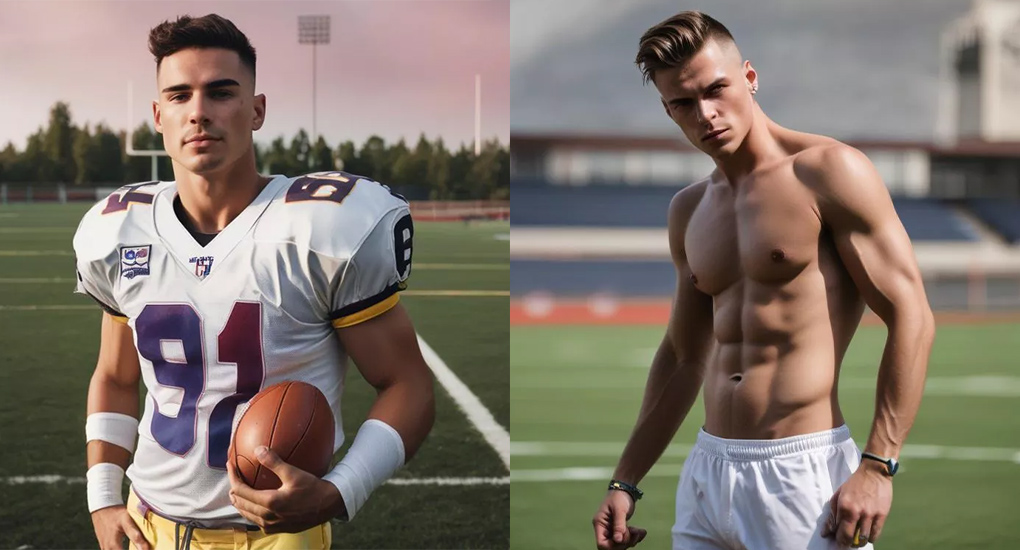
The future isn’t just about robots taking over. It’s about them deciding what we look like, and honestly, we’re here for the tea. Credit to Outsports for inspiring this fascinating look at how AI visualises gay football players.

Sculpted Abs and Rainbow Dreams
AI doesn’t hold back when asked to create its vision of a “gay football player”. Davinci presented a striking figure on a football field – six-pack, intense jawline, and a gaze that could stop any game. When asked to go shirtless (you’re welcome), it added earrings and a confident stance, looking like he’s walked off a magazine cover.

Confidence took centre stage in ChatGPT’s output, too. Whether in a rainbow jersey or shirtless beneath a glowing stadium sunset, the theme was clear: bold, striking, and proud. But does this align with how real athletes navigate sports spaces? That’s another story.

While AI leans heavily on idealised aesthetics, real-life athletes like Michael Sam, Carl Nassib, and Byron Perkins bring something deeper – authenticity and resilience. It’s one thing to look the part, but breaking through the heteronormativity and pressures of professional sports takes true strength.

Even when tasked with creating linemen, AI couldn’t resist slipping in sculpted physiques. Canva’s version included a player with the jersey number “G,” while Davinci added a generous highlight to the player’s uniform. Entertaining? Yes. Inclusive? Maybe not so much.

AI’s vision of gay football players highlights how tech mirrors society’s biases. It opts for flashy, idealised visuals while overlooking the emotional depth and individuality of real athletes. But we can’t ignore the progress that trailblazing players like Ryan O’Callaghan and Esera Tuaolo have made, creating room for more authentic queer representation in sports.

What would your perfect version of a gay football player look like? Would they be the chiseled stars AI depicts or someone who breaks stereotypes entirely? Either way, this entire experiment reminds us how far we’ve come and how much further we can go.



