Come Again? The Resurrection Of The Gay Sauna


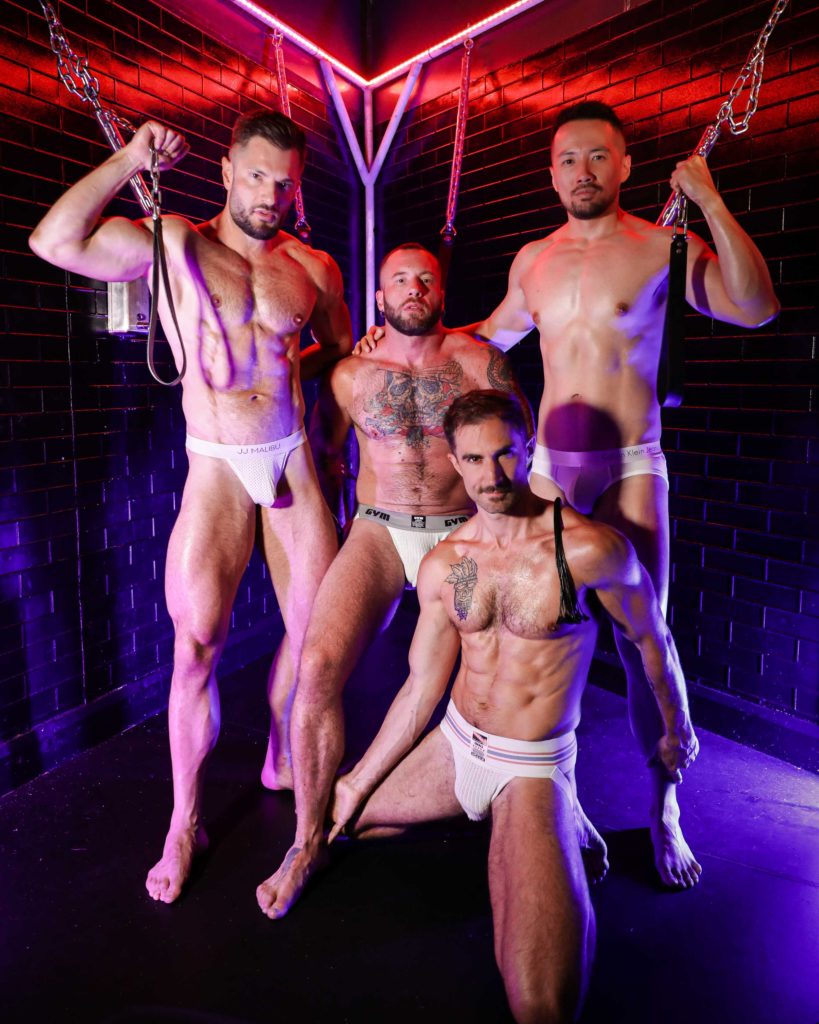
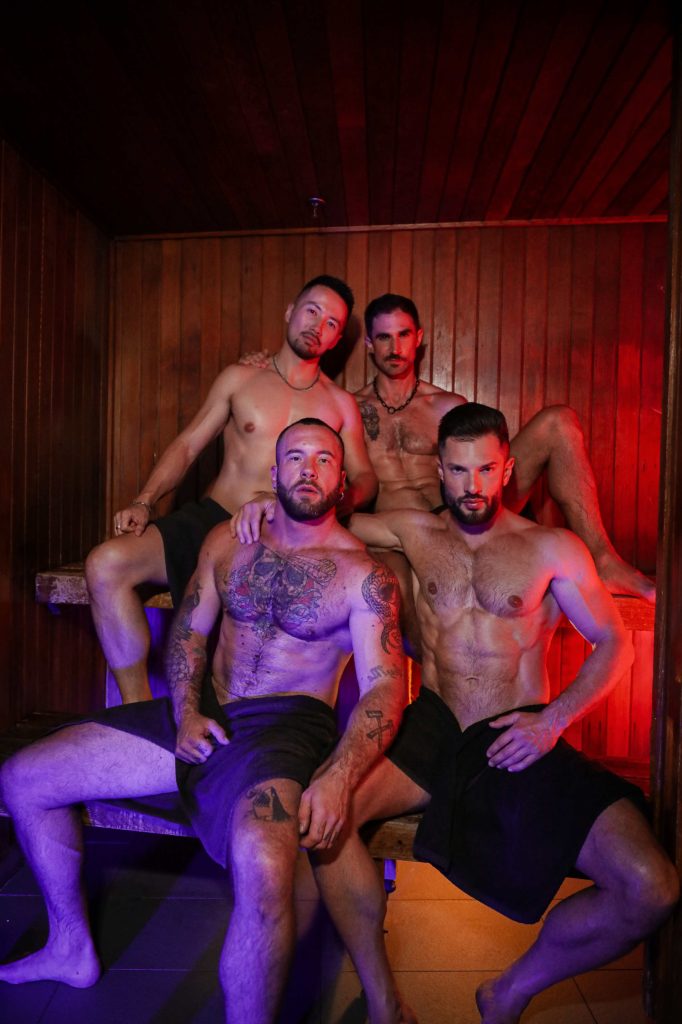
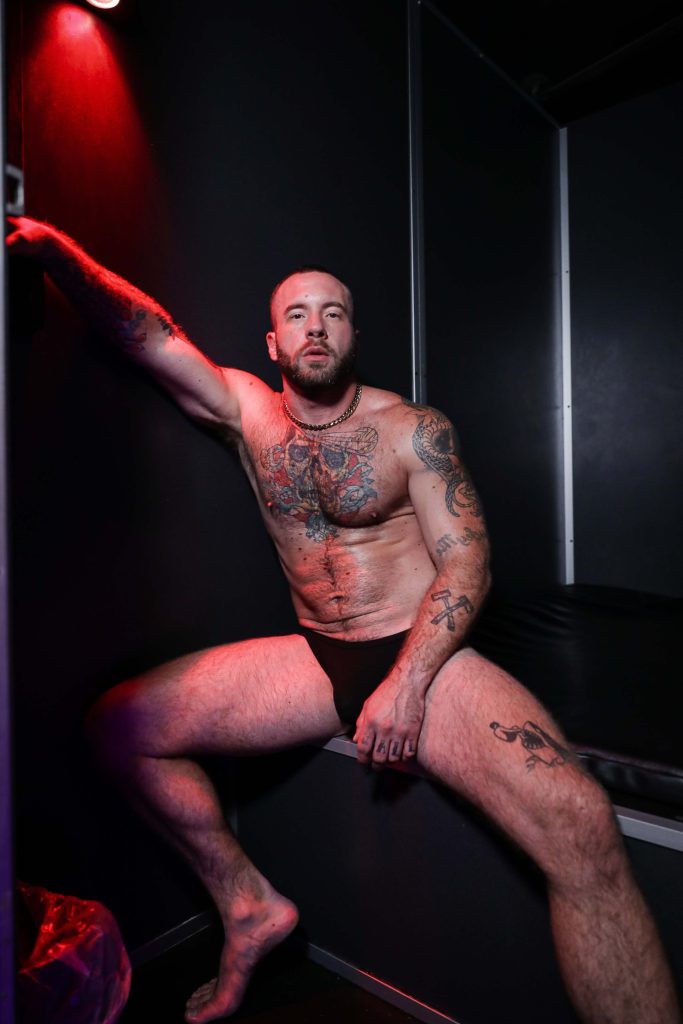
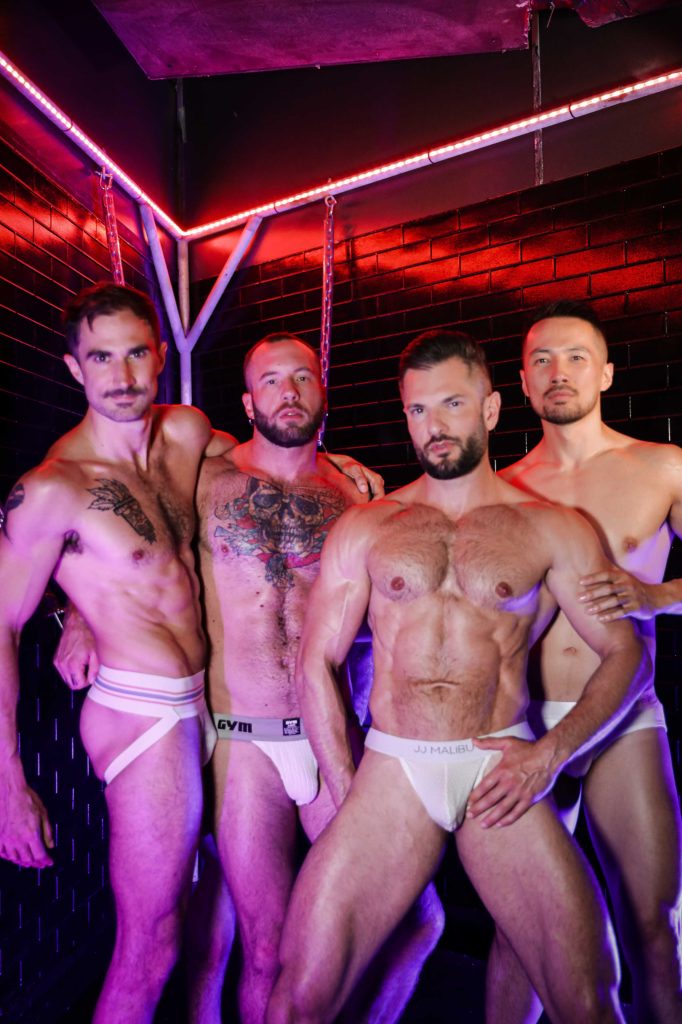
FEATURED: Sydney Sauna | Instagram
PHOTOGRAPHER: Louie Guerrero | Instagram
MODELS: Zac | Instagram | Adam | Instagram | Jim | Instagram | Lockie | Instagram
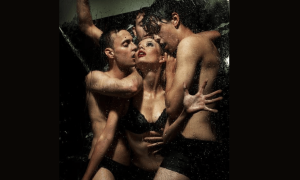
Gay saunas have weathered every imaginable storm. From being illegal to epidemics, the rise of dating apps, the rise of rents, and social changes. But the new gay saunas look very different to their most immediate predecessors. In fact, they now have more in common with the big-city bathhouses of bygone eras, offering something gay men crave as much as sex: connection and community.
In February 2024, a 91-year-old New Yorker, an acclaimed opera singer, died in his adopted home, Sydney. This man deserves to be remembered in LGBTQIA+ history. You may not immediately recognise his name, Steve Ostrow, but he left an indelible mark on our culture.
To some, Ostrow was the man who “discovered” Bette Midler, who went on to become an all-round gay icon. But, more significantly, in 1968, he founded the world-famous Continental Baths, a judgment-free haven for men who liked sex with men, nestled beneath the frenetic, brutal streets of New York City. Here, Ostrow booked Midler to entertain the all-male clientele at his infamous sex venue.
Ostrow’s gay “bathhouse”, as they’re called in the US, or sauna as they’re called everywhere else, had a sense of community and of being an entertainment destination that sauna visitors in more recent years might find strange. People actually talked. They smiled and laughed. They even danced as the singers sang – live. In short, they connected outside of just sex.
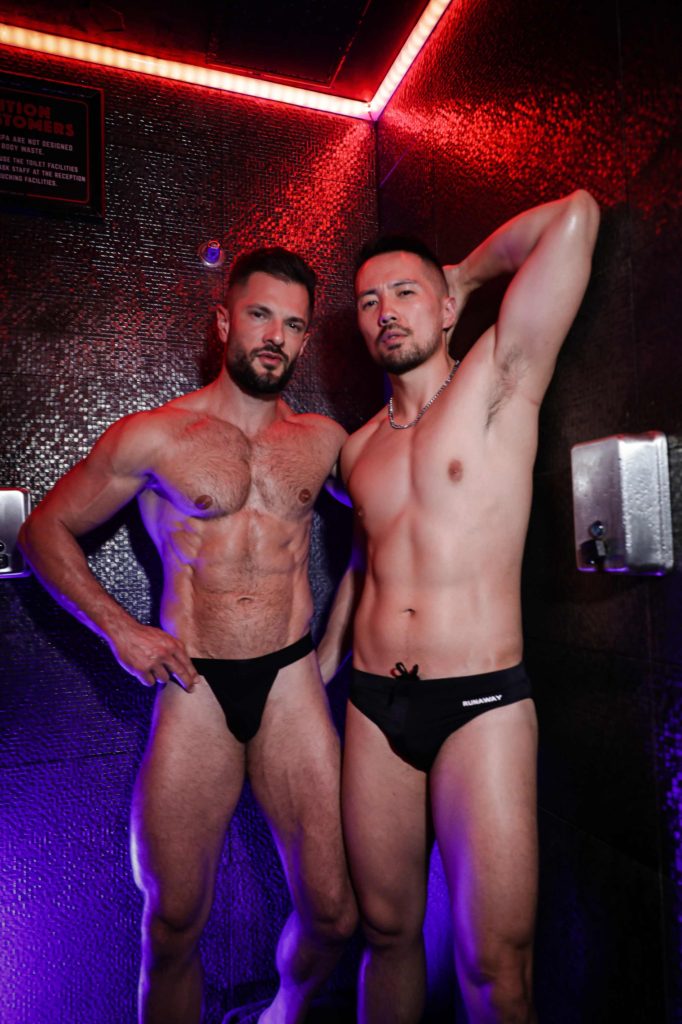
But somewhere along the line, some unwritten rule of sauna etiquette became “no talking”. Men also stopped smiling. Happy grins were replaced with silent, smouldering glares – perceived to be sexier, perhaps. The reluctance to chat may have prevented any chance of “gay voice” sneaking out, which might make some sauna-goers less attractive. Saunas were silent except for the faked orgasmic grunting of porn stars on screens, and the genuine grunts of married men who’d snuck away on “business trips” to get their butt pounded by a dom, top, twink! The overall tone was one of discretion – masculine and mute.
In effect, what it created were sex dungeons full of zombies. Still hot, but was it as much fun? That depends on who you talk to. So, we talked to them: sauna-goers, sauna owners, and those who’ve recently been tempted back. From these conversations, one thing is clear: saunas are changing. Or are they just reverting back to a time when we connected on more than just one level?
“People actually talked. They smiled and laughed. They even danced as the singers sang – live.
Bette And The Boys
Steve Ostrow first met Midler when she was waiting tables and telling outrageous jokes in an NYC coffeehouse that had a stage where waiters would do brief stints before returning to serving customers.
“She was fat and she wasn’t pretty,” Ostrow told Channel 10 in 2008. “But then she got on that stage, they shined the light on her, and she was beautiful. And when she sang… just wow.”
Bette Midler approached Ostrow’s table, apron on, notepad and pen in hand, and said, “Whatdy’awant?” He told her he ran a club downtown and would like to book her to sing. She wanted to know how much. He offered $25 a night. She accepted on the spot. What she didn’t discover until later was that it was a bathhouse where gay men met for sex.

She asked for a piano accompanist. “There is a guy,” Ostrow said. “He runs around the baths and plays.” His name? Barry Manilow. “Put them together,” Ostrow says, “and magic happened.” It’d take another 50 years for Barry Manilow to publicly come out as gay, in 2017, almost three years after he married his husband and manager Garry Kief in a private ceremony.
Clips show Bette Midler performing, interacting with the audience and telling gay-friendly jokes. Noticing her own rising popularity, she negotiated a deal with Ostrow: her pay doubled after every 50 performances. The gig lasted three years. Ostrow was dismayed by other gay bathhouses’ lack of cleanliness and lack of entertainment other than sex. He decided to make a bathhouse with a difference. In his memoir, he described it as “the first gay establishment to treat gay people as equals and not exploit them”.
Hank Trout, a 46-year resident of San Francisco, wrote in 2021 about American gay bathhouses in the 1950s and ’60s: “They existed in just about every major city, but they were operated clandestinely, sometimes in the basements of hotels, sometimes in the most potentially dangerous neighbourhoods. This suited most of the deeply closeted patrons of those years.”

At the Continental Bathhouse, Ostrow installed a restaurant, opulent decor, a DJ booth, a stage, and a dancefloor so visitors could be treated to more than just sex, although, of course, a lot of that happened, too. Incredibly, it had about 400 private rooms and 2,000 lockers. Their advertising campaign was brilliant: “Come once. And you’ll come again.” It was tremendously popular, attracting up to 400 people a day. Then the raids began.
“Their advertising campaign was brilliant: Come once. And you’ll come again.
The Prettiest Cops In NYC
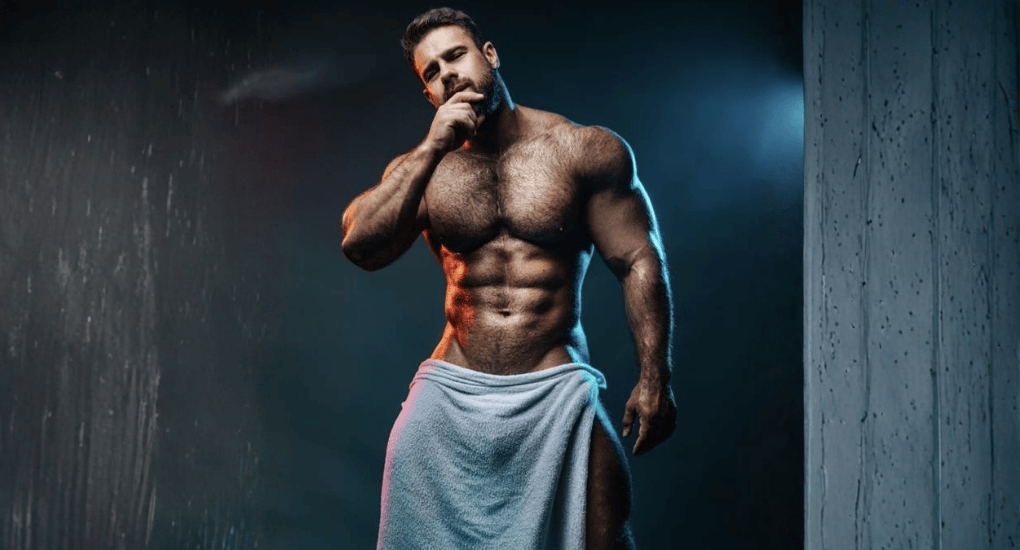
The New York Police Department would “send in one of their best-looking guys,” Ostrow recalls. He’d get into a towel and go into the steam room. The minute someone touched him sexually, he’d whip out the handcuffs and arrest them. After that, he’d arrest every single person in the venue. This happened regularly. In 1970s America, homosexuality was still a crime.
Becoming infamous and known as a place of hedonism and great entertainment, the venue began attracting a straight clientele. Mick Jagger turned up one night, but it’s said that “hard drugs irrevocably changed the mood of the venue”. In 1976, Ostrow closed The Continental Bathhouse and opened a similar venue in Montréal.
Then the HIV/AIDS crisis changed everything, and New York City shuttered bathhouses citywide in 1985. It was the end of a unique era. Later, Ostrow moved to Sydney, where he continued to perform as an opera singer, and founded Mature Age Gays (MAG), a peer support group for older gay men. Today, fragments of the Ostrow era are returning to sauna culture.
London’s Saunas Dry Up
As a global gay phenomenon, the sauna/bathhouse has looked increasingly like an endangered species.
First, they were illegal. Then came the long shadow of AIDS. Grindr and other hookup apps made quick anonymous sex as easy as dialling a pizza. Rising rents, gentrification and development – a hallmark of most major global cities – caused the degradation of gay neighbourhoods, and such businesses were squeezed out, or owners were presented with offers they’d be nuts to decline.
The chemsex scene means some men prefer to stay at home and host sex parties. More than one person interviewed for this feature named ice or crystal meth as the reason some gay men “stay at home for three days having sex” rather than leaving the house.
Even increasing gay equality and acceptance around the world has also been a factor. While a welcome social development, it has had a detrimental effect on some pink businesses and gay venues. Younger generations of gays feel increasingly at ease at home with mum and dad, with straight friends, living openly gay lives in the suburbs. Baby gays no longer feel the need to seek out and inhabit gay-only places to feel safe and meet others. With so many young people now identifying as queer, meeting in mainstream venues is easier and safer than ever before.

Then came the covid pandemic. It closed down the last remaining of the famous Chariots brand of saunas in London. Vauxhall Chariots went into liquidation in 2021. Vauxhall’s Chariots had been synonymous with muscle marys popping in after visiting one of the once-very-gay area’s superclubs. But, one by one, those clubs have been closing, and Vauxhall has fallen victim to development. Waitrose, an upmarket supermarket now sits where gay clubbers once swanned past, club-hopping over the weekend, sleepless from ecstasy. It became a symbol of the area’s gentrification.
Chariots was the titan of the gay sauna scene, almost ubiquitous in London, known for its glamorous “Roman spa” branding and less discrete entrances than other saunas, with big rainbows a part of its shop-front branding. Chariots ran six gay saunas across London: Vauxhall, Limehouse, Waterloo, Farringdon, Streatham and Shoreditch. Shoreditch was the jewel in its crown, its flagship, a vast former warehouse featuring a huge maze of group action rooms, private cabins, a gym, a swimming pool and a café/bar, over three floors.
You hadn’t had the full gay London experience until you’d visited Chariots Shoreditch, the first Chariots to open in London in 1996, a time when this vast venue may’ve been the only place many felt safe to explore their sexuality.

It was often packed with men you rarely saw in the bars and clubs. If you talked to them, you discovered some had travelled from other cities in the UK especially to visit. You’d notice the difference inside, too: Hasidic Jews, men wearing nothing but a turban and a towel, wedding rings.
A Time Out feature reviewing the sauna in 2015, the year before it closed, said its proximity to Liverpool Street Station meant men visiting from out of town would spend the evening in Chariots and get the first train back as a cheaper option than checking into a hotel. A regular is quoted as saying: “One guy got too sleepy to last the wait, so laid down and fell asleep in a cabin. Everyone could hear him snoring!” Chariots, it seemed, has something in common with Marriotts, the journalist noted wryly.
“App fatigue: people don’t look like their pics, ghosting, bullshit… Plus, increasingly, there are safety concerns.
At 1,858-square metres, it was the biggest gay sauna in Europe and one of the biggest in the world. It wasn’t unusual to see ten- to 20-man orgies in its larger group rooms on any weekday, and more at weekends. You’d often leave hours after you’d planned to, having been shocked in new ways you didn’t realise you were capable.
The usual sauna etiquette applied. Rather than chatting someone up, you eyed them up or consensually, gently touched them up to express interest. The Time Out feature quoted one Londoner as saying: “Chariots is like the tube – people don’t tend to talk to each other.” He also comments on the reassuring ubiquity of its cleaners. “They’re like ghosts with mops,” he said. “You’ll be halfway through, and someone will glide in with a Vileda.”
Just a handful of gay saunas remain in London’s once bustling sex venue scene, two of the largest and most well-known being Sweatbox in Soho and Pleasuredrome in Waterloo. But both are a fraction of the size of Chariots Shoreditch. For London, it seems, that era has been coming to a slow end.
Chad Teixeira, 28, tells DNA that he feels Grindr has made sauna activity fizzle out, coupled with judgement and attitudes from gay people themselves.
“These days, I find that going to saunas is looked down on by people within the community,” he says, but… “It wasn’t always about sex. It was a place for like-minded individuals to connect, and it made for a fun pastime once in a while.”
Where once he enjoyed intimate (but quiet!) conversations in saunas with like-minded men, these days he finds it harder to connect and says the chemsex scene is partly to blame.
“Previously, there was such a diverse range of people who visited the saunas, and there was literally something for everyone. That doesn’t seem to be the case anymore. Alcohol and chems are super prominent nowadays.”
The knock-on effect of this is that one of London’s prominent remaining gay saunas now insists it isn’t, in fact, a gay sauna at all. When I invited Pleasuredrome Waterloo to be interviewed for this feature, its proprietor, Charles Hill, said he’d answer my questions “in principle” but with an important caveat. “We’ve completely moved away from the concept of a gay sauna,” he says. “The offering is different. We have a 24-hour liquor-licensed bar, for example, and the clientele is different; many would simply not identify as gay in the sense that I know it.”
When I spoke to Pleasuredrome’s brand manager, Chris Amos, he said. “Yes, we don’t call it a sauna anymore,” he says. “We call it a spa bar.”
For 26 years, the busy sauna had been open 24/7 including Christmas Day. So during Covid, big renovations were made. Amos says the demographic is now much younger than it once was. One reason may be the cost-of-living crisis. People can’t afford to move out of home and are still living with mum and dad later than previous generations did, so they can’t “host”.
Another thing depleting London’s sauna scene is the fact that sex-on-premises exists within nightclubs. Major weekly gay nightclub Roast has a darkroom, as does more occasional gay night Adonis. Legendary gay nightclub Fire has a large play area every Saturday night.
As for the threat from apps, Amos says some customers log onto Grindr from within the venue to set up their next catch.
Australia Bucks The Trend
In Australia, it’s a different story. Sydney Sauna, Perth Steam Works, Melbourne’s Wet On Wellington, and Brisbane’s Wet are doing very brisk business.
The legendary-but-now-closed Ken’s Of Kensington in Sydney set the tone. It started life as an underground drag venue, The Purple Onion, back when it was illegal to cross-dress in the ’70s. Drag queen Kandy Johnson ran it as a sauna for 40 years, initially under the alliterative but clandestine name Ken’s Karate Klub, as homosexuality was illegal in NSW. Ken’s was the most infamous, but many saunas have come and gone in the meantime.
In Sydney, there are several saunas very close to popular gay clubs and, given you’ll be chucked out of these nightclubs if you’re caught having sex there, conveniently located sex premises are thriving.
Currently, the top choice for Sydney men is Sydney Sauna on Oxford Street, right in the heart of the gay entertainment district. With a large spa, sauna, open showers, cruising rooms, private rooms, sling rooms, video booths and suckatoriums, it offers everything men seeking men could want. But more, live DJs on weekends, themed party nights, a café, and masseuse, make the venue more of an entertainment destination than just a “blow and go” venue.
But there’s another factor at work here: app fatigue. Convenient as they sometimes are, hookup apps come with downsides. Ghosting, people showing up who don’t look like their pictures, hookups taking so long to arrange, you’re just no longer horny, and sometimes the travel involved is off-putting.
Plus, increasingly, there are safety concerns. Violent attacks against gay men have been orchestrated by gangs of homophobic thugs posting fake profiles and luring men to isolated locations. Australia has witnessed multiple instances of these hate crimes in Canberra and Melbourne recently. It’s a widespread problem across the US, too. And in the UK, the serial killer Stephen Port, dubbed the Grindr Killer, lured young men to his flat where he drugged, raped and murdered them. In a sauna, everyone is in one place with one prevailing agenda, and with staff members around for safety.

The revolution in sexual health treatments has also helped revive sauna culture. We live in the age of U=U (undetectable = untransmittable) and PrEP. They’ve ushered in a new age of sexual confidence with less of the hard, cold fear of previous generations who suffered under the threat of HIV/AIDS.
A new tone can be heard. Where once gay men slinked off discreetly to a sauna and giggled at the mere mention of it, today, younger gay men talk openly about making plans to go with friends. It has created an atmosphere that’s more social than seedy.
Perth’s Steam Works sauna recently underwent a major renovation. Owner and manager Michael Drummond tells DNA that business is “steadily picking up”. He’s also noticed a younger demographic. “With the positive shift in sexual perspectives, we are finding more and more younger guys are exploring the venue and facilities for the first time,” he says.
He also cites app fatigue as a factor for the upswing in customers. “People are getting sick of the bullshit on apps,” he says. “We’ve gone through something of a sexual revolution. Slut shaming is very much frowned upon. PrEP is only assisting with this journey. Many saunas have evolved into more than just a space to blow and go, offering bars, dance floors, amazing DJs, and more. The hot guy that you would’ve previously chased on an app is now there on the dancefloor with his shirt off – or in the sling, best to check both.”
It’s not just Australia’s inner-city saunas that are going strong. Arrows in Western Sydney is a sex venue that’s not just for men. It also has special nights for swingers, transgender, and BDSM. On Sundays it’s men-only and, apparently, that’s the best time to enjoy the company of a suburban dad on the downlow. A major feature of Arrows is its discretion. Demographically, the club is smack-bang in the heart of the areas that voted strongly No to marriage equality. “Discreet entry is located via the rear car park,” assures the website.
More Than Blow And Go
Phillip F, 51, from Sydney, enjoyed the sauna scene of Spain’s gay meccas in the European summer of last year.
“The sauna scenes in both Barcelona and Sitges were thriving – maybe because I was there in peak season – August,” he says. “Both were much more social than Sydney’s were at the time, due to a large bar area with music and very friendly Spanish boys.”
Back in 2019, according to US publication Metrosource, NYC gay bathhouses were making a comeback for the first time since they were all closed in 1985 due to HIV, after which, the city’s once-thriving bathhouse scene had never truly recovered.
“Europeans who are used to more elegant and upscale atmospherics might look askance at some of the [bathhouse venues],” it reported. “They still project the same aura of seediness and danger as they did in Tom Of Finland’s heyday. And you won’t find spots where performers like Bette Midler and her then-piano-playing musical conductor Barry Manilow entertained boys clad in towels for tips and drinks, either.”
Then the covid pandemic hit NYC hard. Today, sources report that just a tiny handful of NYC bathhouses remain. In this city, extinction feels much closer.
Meanwhile, in San Francisco, a seemingly joyous piece of news was reported in January 2021’s Bay Area Reporter: “For the first time in nearly four decades, operators of traditional gay bathhouses can once again seek permits to open in San Francisco,” it read.
Restrictions (no private rooms, no locked doors, sex must be monitored as it happens) that prevented bathhouses from effectively operating since the 1980’s AIDS crisis were finally moved: 40 years later. They’d amounted to a de facto ban.
The gay community had protested. Hank Trout, wrote: “[We argued that] instead of closing the baths, they could be used to disseminate information about HIV and how to avoid acquiring it, to provide ample lighting and to take the doors off private rooms. Utilize the baths, don’t close them, the argument went. Unfortunately, to little avail.”
Harry Breaux, activist and long-term survivor, said: “Closing the baths in 1984 was like shutting off the internet today. Our lines of communication in the war on AIDS were severed here in this city.”
He argued that the solutions “were in our faces: information, condoms, sanity.” Instead, “Mayor Dianne Feinstein exercised her power from the basis of her fear, interests and prejudice.”
The pandemic shuttered one of the area’s final remaining bathhouses, so the new changes removing restrictions were welcomed. Hank Trout writes:
“We can at least celebrate the fact that a time-honoured staple of gay culture will be given new life in this fair city. It took overcoming nearly four decades of prejudice and faulty information, but we have prevailed.”
But it may just be a symbolic change. Today, just one longstanding bathhouse (of sorts), Eros, remains in San Francisco. Trout reflects on what the bathhouses have meant to the gay male community over the years. “These bathhouses were a place for networking before cell phones. In addition, there was a peace and basic kindness there with men all exposed as equals in their towels,” he writes. “No brand-name shirts or plaid to identify who or what you are. We were equals. The connections and the equality of the towel provided many career paths up and down.”
The naked body, or at least draped in a towel, is an equaliser. Saunas level the playing field. Young or older, no matter your shape or size, chances are you’re somebody’s hot choice for now – and maybe later. You’re with your people and can feel safe. Leave your phone, your Rolex and your attitude in the locker, and go exploring the possibilities. And enjoy yourself.
Sydney Sauna, 38-42 Oxford St, Darlinghurst NSW 2010
Tel: 02 9360 3431
Looking for the hotter pics? We’ve saved the uncensored gallery from inside Sydney Sauna for our members. Visit the Subscriber Zone to see what you’re missing.