
Brisbane’s 2032 Olympic Stadium Puts A Hidden 1900’s Gay Love Story On The Map


Brisbane’s road to the 2032 Olympic and Paralympic Games has sparked the usual debates about venues and budgets. But one detail has attracted a different kind of attention: the main stadium site sits in Herston, a suburb whose name is widely linked to two powerful men from Queensland’s earliest political era, Robert Herbert and John Bramston.
Who were Robert Herbert and John Bramston.
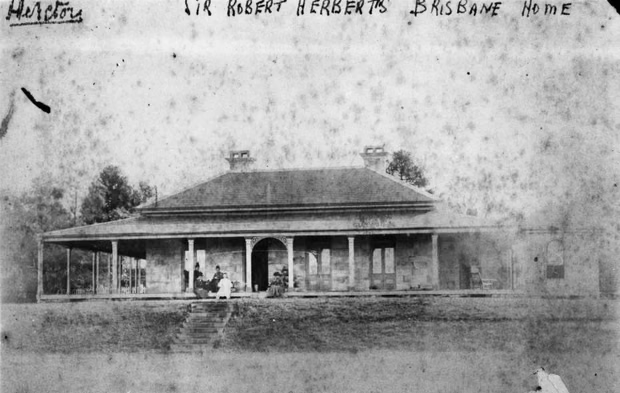
Herbert became Queensland’s first premier in 1859. Bramston served as attorney-general. Historians have long argued the pair were more than political allies. They met at Oxford, shared rooms, and later lived together, naming their home “Herston” by blending their surnames, a story recorded in Clive Moore’s 2001 history book Sunshine And Rainbows: The Development Of Gay And Lesbian Culture In Queensland.
What the letters suggest.
The cleanest evidence sits in Herbert’s own words. In a private letter about marriage, he wrote:
“A man or woman should not if it can be helped exchange a serene and happy existence for a life entirely different, and possibly not suited to previous tastes and habits.”
It reads like someone defending a life already chosen, not someone shopping for a conventional future.
Where this story meets the Olympics.
Herston is not just a trivia answer. It is where the proposed Brisbane Stadium is being planned for the Games, according to the Games Independent Infrastructure and Coordination Authority (GIICA), the body overseeing venue planning and approvals.
The original Herston House no longer exists, and the site is now part of the Royal Brisbane and Women’s Hospital precinct, which adds a strange layer to the story’s afterlife.
So why does any of this matter in 2026? Because the Olympics has a habit of turning local stories into global ones, whether organisers intend it or not.
The messy parts are part of it.
It is tempting to frame Herbert and Bramston as clean-cut heroes. The reality is harder. Herbert was a colonial political leader in a system that displaced First Nations people, and that cannot be brushed aside. Queerty itself flags that tension, noting how complicated it is to celebrate figures tied to colonial power.
At the same time, the period’s legal and social climate matters too. The Guardian reports that Herbert’s government oversaw Queensland becoming the first Australian state to remove the death penalty for male sodomy.
That does not make him a modern-day ally, but it does show how queer history often sits in uncomfortable places, even inside the people we are handed by the archives.
If Brisbane 2032 is serious about telling local stories, well, this one is sitting in plain sight, stamped on a map and tied to decisions still being made. Herston is not a museum plaque. It is a living suburb, and soon it may be a stadium address seen by millions.
