
Berlin Pride Attack Suspect Shot Dead As Second Man Held

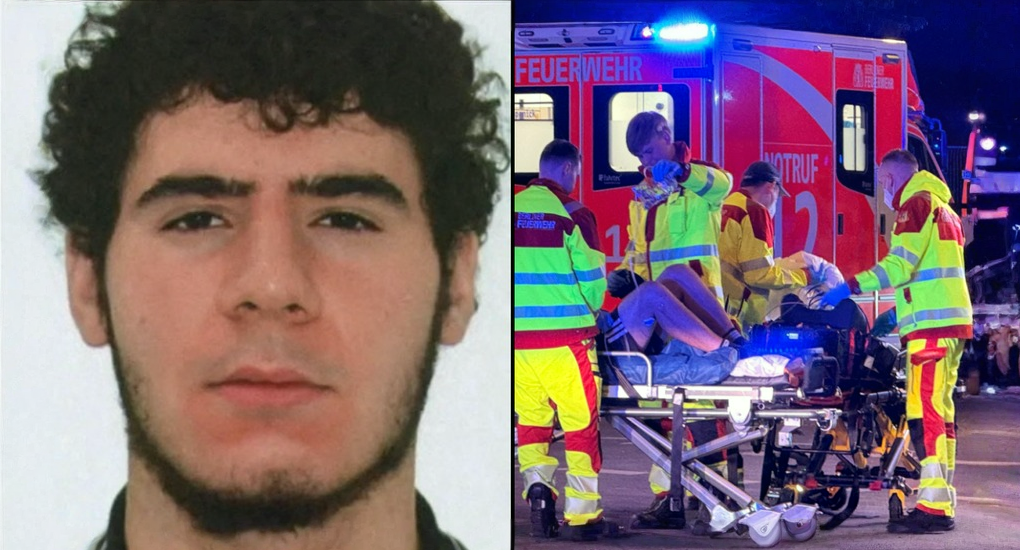
German police have shot dead the man suspected of driving a van into a crowd near Berlin Pride, about 20 hours after the attack. One woman was killed and 29 people were injured on Saturday night. A second man is in custody, and police have not said what role, if any, they believe he played.
Shortly before 10pm on Saturday 25 July, a white van drove along a path in Berlin’s Tiergarten park, struck a number of people and hit a tree, police said. Some of the injured had stab wounds. Federal Interior Minister Alexander Dobrindt said the driver is believed to have used a machete.
The Associated Press reports that the attack did not happen at the festival site, on the parade route, or at the closing party, but a few hundred metres away on a track through the park. The crowd that was hit was probably a mix of Christopher Street Day festival-goers, locals and other visitors.
Organisers shut the closing party down at about 10.15pm. A band’s set was cut off and police told the crowd to leave and stay out of the park. Earlier that day, hundreds of thousands of people had come into the city for the parade, which ran behind roughly 80 trucks. Berlin’s Christopher Street Day is one of the largest queer events in Europe.
By Sunday afternoon, Berlin police said none of the injured remained in a life-threatening condition. The woman who died has not been publicly identified.
How Police Found The Suspect
Berlin police published a photo on Sunday morning and named a 21-year-old suspect, warning the public he might be armed. Dobrindt said the man was born in Germany to a mother who was naturalised in 2002, three years before his birth, and that he was already known to police through the city’s Islamist scene.
Officers tracked him to an allotment garden in Spandau, in Berlin’s west, at about 6pm on Sunday. Police said he ran at them with a bladed weapon, officers opened fire, and he died at the scene despite attempts to resuscitate him.
Dobrindt said everything pointed to an Islamist terrorist attack. Germany’s federal prosecutor general has since taken over the case, which is the step German law takes when something is treated as serious terrorism.
The detail causing the most anger in Berlin is that he was walking free at all.
Berlin prosecutors said he travelled to Lebanon in 2025 hoping to reach Syria and join Islamic State, and was jailed there for three months before being arrested on his return to Berlin. In May a Berlin youth court convicted him of preparing a serious act of violence endangering the state, along with further offences, and handed down a suspended sentence of one year and 10 months. Prosecutors appealed for something longer. He was released while that appeal sat unheard.
As a condition of release he was ordered to attend 26 counselling sessions with a deradicalisation service. He had been to two, in June and July. The third was scheduled for Monday.
Mardi Gras Stands With Berlin
Sydney Gay and Lesbian Mardi Gras chief executive Jesse Matheson has written to the community.
“We stand in solidarity with everyone impacted by the recent attack and extend our deepest support to those who have been injured, their families and friends, the organisers, and the wider LGBTQIA+ community,” Matheson said.
“Acts of violence, hatred or intimidation will never diminish the strength, courage and unity of our movement. To our friends in Berlin: we stand with you.”
Berlin’s Own Organisers Have A Warning
Thousands gathered at Pariser Platz on Sunday afternoon, a few hundred metres from where the van stopped. The vigil hit capacity roughly half an hour after it began, in on-and-off rain, and police had to cap numbers.
“We are simply stunned by what happened,” said André Lehmann of LSVD+, Germany’s main national queer association. “This suspected attack hits the heart of the queer community.”
Berlin’s Christopher Street Day organisers have asked people not to let the attack be turned into a weapon. A spokesman said the group does not want the act used for political ends, or whole communities placed under general suspicion, because violence like this is meant to split society and set people against each other.
That warning is landing in the middle of a loud argument. Berlin Mayor Kai Wegner has publicly criticised the courts over the suspended sentence, and figures in the governing Union have called for radicalised offenders to be kept out of the juvenile justice system altogether.
Dobrindt said he expects security at major events across Germany, Pride included, to be reviewed and lifted where needed. Amsterdam is midway through WorldPride 2026, with its canal parade on 1 August and the main march on 8 August. Mayor Femke Halsema said extra measures will be added where necessary, and that she hopes visitors notice as little of it as possible.

