
Australia’s Gay And Bi Population Is Officially Growing

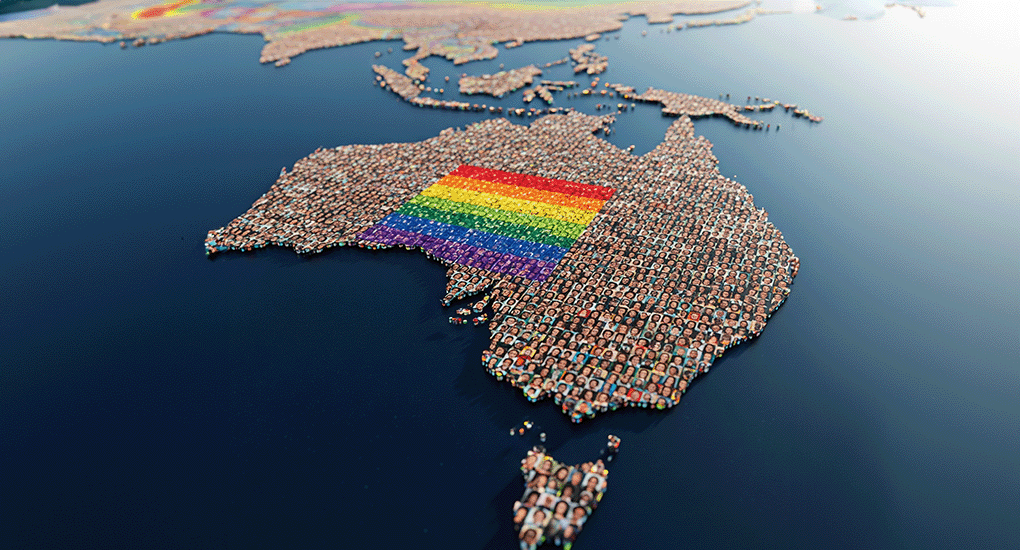
New research shows the number of Australians identifying as gay, lesbian, or bisexual has jumped significantly over the last decade, pointing to a major shift in how we see ourselves.

A study from researchers at Charles Darwin University (CDU) looked at data from the long-running Household, Income and Labour Dynamics in Australia (HILDA) survey. The findings are pretty clear. In 2012, just 3.3 per cent of Australian adults in the survey group identified as gay, lesbian, or bisexual. By 2020, that figure climbed to 5.8 per cent. That is just over one in every 20 Australians.
A Post-Vote Burst Of Acceptance
So, what has changed? According to CDU Research Associate Fiona Shalley, a major reason could be the “burst of acceptance” that followed the 2017 marriage equality vote. This moment seems to have mirrored the social shifts around sexual freedom from fifty years ago.
“The growing confidence of people identifying as LGB+ is likely influenced by the number of visible positive role models, social media attention, and in our storytelling,” Shalley said. “If you think about the ’60s and the ’70s and the big revolution of sexual freedom then, maybe it’s happening again.”
Women Are Leading The Charge
Interestingly, the research points to one group in particular driving this growth. Shalley’s research found the biggest increase was among young women who identify as bisexual.
“This research identified that the biggest driver of the growth in the Australian LGB+ demographic over the eight-year time frame was young women who identified as bisexual,” Shalley noted.
While she mentioned that women’s patterns of attraction can change over time, the current trend is undeniable. If it continues, Shalley projects our community could grow to about 1.7 million people by the time 2024 data is analysed.
What The Official Count Says
While the HILDA survey provides valuable insight, it is not the only source. The 2021 Australian Census was the first to ask a question about sexual orientation. Because the question was voluntary, its numbers are more conservative. It reported just under 80,000 people identifying as gay or lesbian and about 87,500 identifying as bisexual.
Whichever set of numbers you look at, the story is the same. More of us feel comfortable enough to put a name to who we are, and that is a trend we can all get behind. Increased visibility and acceptance are not just feelings, they are showing up in the data.
