
Are Americans Finally Over Their Speedophobia?

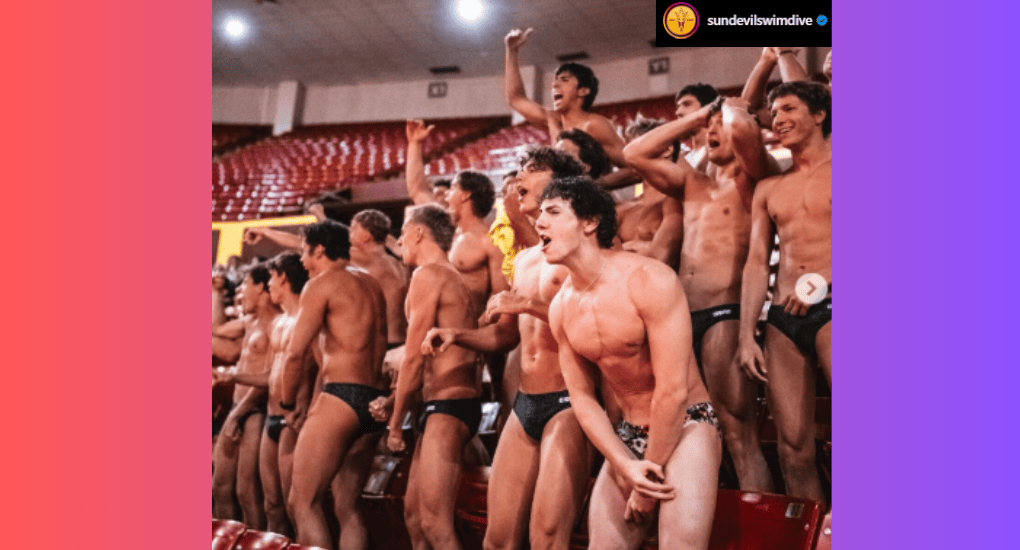
A men’s swim and dive squad turned a college volleyball match in Tempe into a cheeky pep rally, packing the stands in tiny briefs and winning plenty of converts in the comments. The clip has raced across social media feeds and garnered strong engagement, which tells its own story about where tastes are headed.
The brief is having a moment. The New York Times ran a June piece with a headline that says it all, Skimpy Men’s Swimsuits Are Making a Splash. GQ posed a question a lot of blokes are asking their group chats: “Are Straight Guys Ready for Speedo Summer?” Together, they mark a shift from shy to thigh.
Big names in tiny briefs.
Celebs are pushing the look mainstream. The White Lotus favourite Walton Goggins went full yellow brief for a Cultured cover shoot, later laughing on late-night TV about how the Ferris wheel shot “wasn’t legal at all.” Theo James, also from The White Lotus, stripped to a white brief for a Dolce & Gabbana fragrance campaign and sent timelines into meltdown.
Winning in and out of the pool.
Performance heroes are part of the appeal. Canadian butterfly star Ilya Kharun left Paris 2024 with two Olympic bronzes, one in the 200 metre butterfly and another in the 100 metre butterfly. He then opened the October World Aquatics World Cup stop in Carmel with a medal haul that included gold in the 50 and 200 fly and silver in the 100 fly. If you want proof that briefs read as powerful, look at the podium.
Short shorts, shorter swimwear.
Fashion’s thigh-high run has pushed men’s hemlines up, and briefs have followed. That arc runs from runway to locker room to student section, and it is gathering speed.
Australian designer Peter Travis designed the speedo cut for the Speedo company, and it first appeared on Australian beaches back in 1960. Surf lifesaving clubs soon adopted it as official beachwear, and by the 1970s, it was standard beach gear for the average Aussie male.
So, are Americans over their fear of the brief gear yet?
Signs point to yes. When student athletes show up in briefs to cheer other teams, when magazines put tiny swimmers front and centre, and when Olympic medallists keep winning in them, the old fear starts to look dated. The vibe is simple: less fabric, more fun, no apologies. And if the stands are any indication, that confidence is catching.

