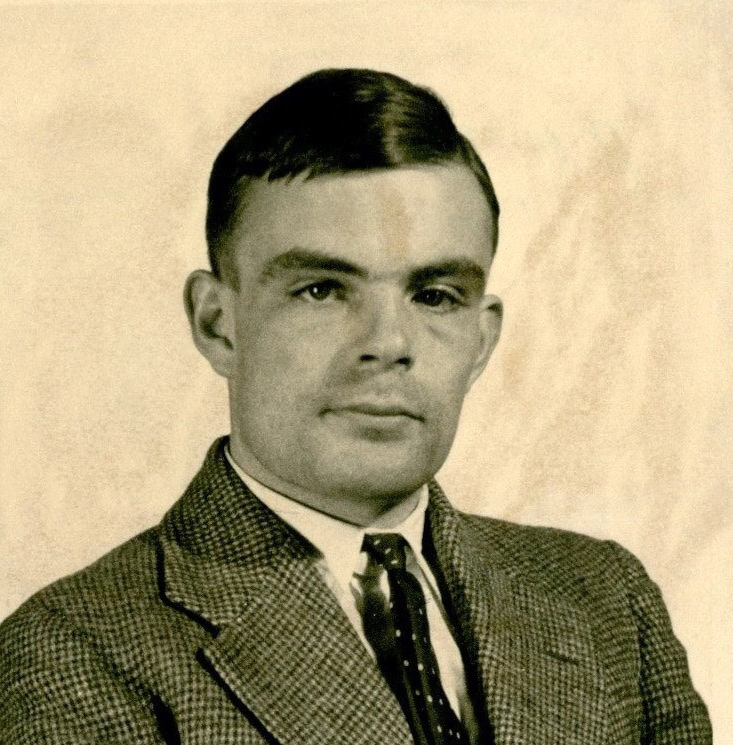
Alan Turing’s Lost Gay Short Story Reveals A Playful Man Who Loved Sex And Books


A newly studied short story by Alan Turing shows the codebreaker was playful, funny, cheeky and openly gay, a man who, in the words of the researcher who transcribed it, “really liked sex.”
The six-page fragment, called ‘Pryce’s Buoy’, was written around late 1952 and has now been examined in full for the first time by Professor Sarah Dillon of Cambridge, with her findings published in The Review of English Studies.
The Man Behind the Myth
We think we know Turing. The lonely genius. Socially awkward, all logic and numbers, the version The Imitation Game sold to millions. Sound familiar? Dillon’s research pulls that apart. “We’ve distilled a version of Turing that is a two-dimensional stereotype,” she says. “His short story reveals a very different man: playful, funny, cheeky, literary and someone who really liked sex.”
The story follows Ron Miller, a broke, working-class rent boy, and Alec Pryce, a gay scientist famous for a youthful invention called Pryce’s buoy. Alec is Turing himself, and Dillon reads the story as a direct fictionalisation of the 1951 encounter with Arnold Murray that led to Turing’s arrest and conviction for gross indecency in March 1952.
The writing is sharp and funny. Ron, sizing up a possible customer, reckons that if he let someone “take him under the arches for 10 minutes he might get five bob.” A glance seals it. “Ron caught Alec’s eye and gave him a half-hearted smile,” Turing writes. “It was enough though.”
The Novel That Set Him Free
Months before writing his story, Turing read Hemlock and After, a bold 1952 gay novel by fellow Bletchley Park veteran Angus Wilson. Dillon found that Turing “copied” a section of Wilson’s book closely, reusing its structure, phrasing and shifting narrative technique. It mattered because Wilson wrote homosexuality as ordinary. For a man freshly convicted and forced onto hormone treatment, that read like permission.
The fragment breaks off in a restaurant, mid-sentence, on the words “Ron wouldn’t.” Nobody knows what happened to the rest, or whether Turing’s mother censored it.
“Did it get more sexually explicit? How did it end?” Dillon says. “That’s frustrating, but everything else is so exciting.”
What survives is enough to change the picture. Turing died at 41, and in his final years he used writing to make sense of himself and the world around him. “This was the moment when he really felt a release,” Dillon says, “a chance to be more creative and playful.” Not the cold machine of legend. A whole, funny, complicated man.